
The challenges of entering the Premier League’s top six.
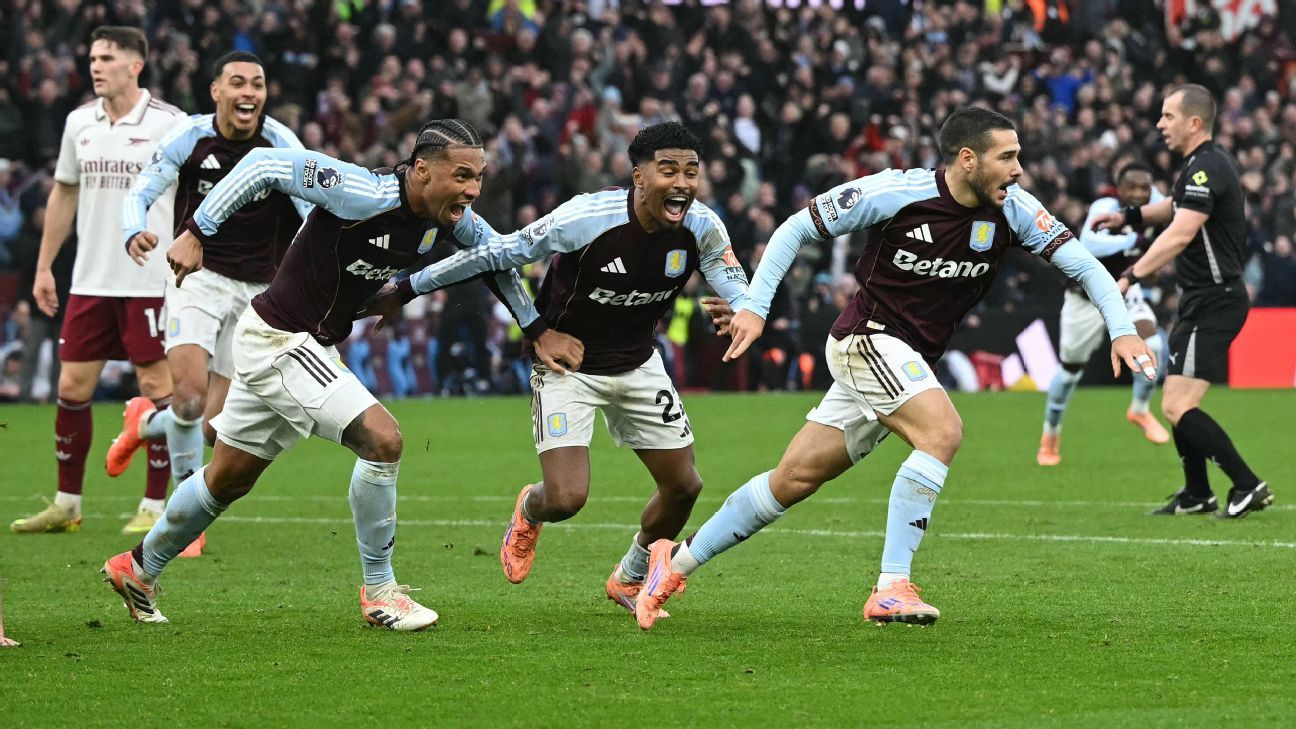
The term “Premier League big six” may have its shortcomings — observing Tottenham Hotspur and, to a degree, Manchester United’s standings over the past year illustrates this — yet it exists for a reason.
From 2016 to 2022, six teams — Arsenal, Chelsea, Liverpool, Manchester City, United, and Spurs — consistently filled the top six slots in the league four times during that period. In the three subsequent seasons, at least four of these clubs have maintained their positions, although United (15th) and Spurs (17th) faced significant challenges last season.
This dominance has created a barrier that limits the realistic aspirations of most other clubs in the league, and while some occasionally break through, they often find themselves reverting back down.
One clear reason for this is the challenge of competing consistently against rivals with significantly greater financial resources. Additionally, there is a complex tactical aspect, as clubs frequently undergo a difficult transition that often leads to failure.
Many teams manage to achieve step one (climbing into the top seven) but struggle to progress further. In recent years, Aston Villa and Newcastle United have notably entered the upper echelon, but their situations appear somewhat distinct.
So, what makes it so challenging to disrupt the Premier League’s dominance?
How to exceed expectations: Prioritize counter-attacking over possession
Most clubs that threaten the “big six” do so by honing a counter-attacking approach. They find a balance between defensive strength and a clear threat on the counter, often securing victories against top teams, which helps them rise to around … seventh place.
A straightforward metric like average possession percentage illustrates the common strategy employed. Over the past decade, Leicester City, Burnley, Wolverhampton Wanderers, West Ham United, Aston Villa, and Nottingham Forest have all ascended to seventh or higher by adopting a “reactive” style of play.
This does not imply they all utilized the same tactics. Leicester relied heavily on counter-attacking football, utilizing striker Jamie Vardy’s speed during their remarkable title run in 2015-16; Burnley adopted a highly defensive stance in 2017-18, scoring just 36 goals while conceding only 39; meanwhile, both Villa and Forest have excelled at scoring early and managing the game thereafter.
None of these teams embraced a possession-heavy strategy — although there are two instances where such an approach proved effective. Brendan Rodgers’ Leicester was notably proactive in 2020-21, while Brighton & Hove Albion dominated possession in 2022-23, achieving the league’s third-highest average figures.
While playing reactively is not the sole method to exceed expectations, there is a discernible trend indicating it is the most likely route to success.
This season, Brentford is striving to disrupt the top six. Their average possession? 46.5%, ranking 14th in the league.
To accomplish this, a manager adept at organizing a defensively solid team is essential (like Claudio Ranieri, Nuno Espírito Santo, or Sean Dyche), along with quick counter-attacking forwards (such as Vardy, or West Ham United’s Jarrod Bowen and Adama Traoré) and the advantage of a fixture schedule free from European commitments.
However, the real challenge is just beginning.
 play1:55Hislop: Aston Villa’s inconsistency could cost them UCL place
Shaka Hislop expresses concerns regarding Aston Villa’s squad depth following their 1-0 loss to Brentford.
The downside: Opponents adapt to your style
If you consistently perform well and rise in the Premier League standings, opponents will adjust their tactics accordingly. This has been the case for every team in the last decade, except Leicester City in 2015-16, who maintained the same counter-attacking strategy for 38 consecutive weeks, seemingly without anyone devising a specific game plan against them. (It was indeed a peculiar season; City were adapting to Pep Guardiola’s style in his inaugural year, Liverpool finished eighth, and Chelsea ended up 10th.)
However, all the other teams faced newfound respect from their opponents, manifesting as a tactical adjustment: they allowed these teams to have possession. For teams accustomed to not having the ball, this presents significant challenges.
Players are suddenly faced with very different demands. Attackers like Bowen transition from sprinting into open spaces to maneuvering in tighter areas; defenders shift from protecting their box to playing higher up the pitch; and midfielders are tasked with being progressive and creative against the low blocks they themselves had previously employed.
In essence, it represents a considerable cultural shift.
Another complicating factor is the additional burden that European matches impose on a squad. Finishing seventh or higher qualifies a team for continental competition, resulting in an extra 6-15 matches added to their schedule. If a club has exceeded expectations to reach those positions, they likely have a lean squad, relying on 14-15 players, and now must either adjust their lineup or significantly invest in the transfer market to meet the heightened physical demands.
The Leicester team that clinched the title in 2015-16 finished 12th the following season; Burnley’s seventh-placed squad in 2017-18 dropped to 15th the next year. In 2022-23, West Ham (rightly) focused all their efforts on winning the UEFA Conference League, finishing with only 40 points in the Premier League, just six points above the relegation zone.
Most recently, there is Nottingham Forest. Despite bolstering their squad and spending £180 million during the summer transfer window, they have been embroiled in a relegation battle all season, currently sitting 17th and having appointed their fourth manager of the campaign.
This combination of an overloaded schedule and opponents compelling a shift from “reactive” to “proactive” play creates a challenging scenario. More often than not, clubs find themselves descending back down the table.
How can you maintain your position?
The crucial factor is to navigate what has become an exceptionally challenging tactical transition that most clubs mismanage: you must quickly adapt to being a possession-oriented team capable of playing out from the back without errors and breaking down deeper defenses. This is fraught with challenges and risks.
The only team to successfully make this transition and sustain it is Aston Villa. They finished seventh in 2022-23, qualifying for the Conference League, and then secured fourth place the following season while managing a continental campaign.
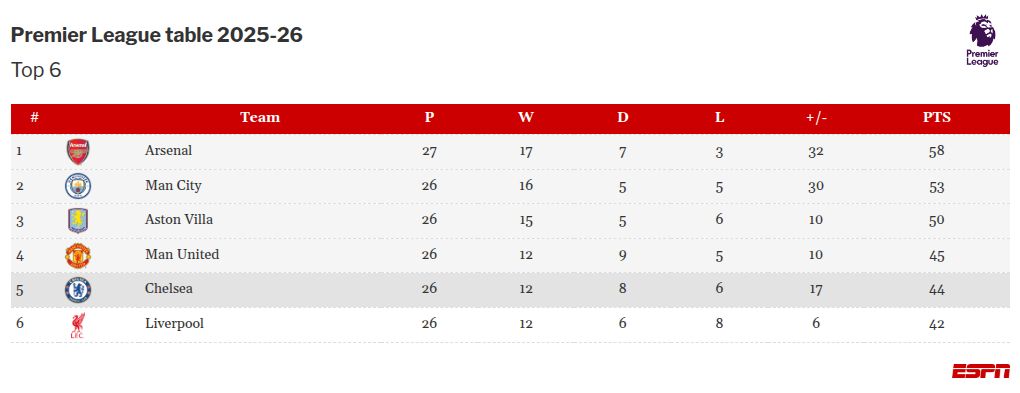
In 2024-25, they reached the Champions League quarterfinals and finished sixth in the league, narrowly missing out on the UCL again due to goal difference. As of now, they are third in the league — a position they have held since early December — and have advanced to the Europa League knockout phase with seven wins from eight matches.
In the Premier League table that begins in 2023-24 [and covers the last 102 games], they are fourth — eight points ahead of Chelsea, 37 points above Manchester United, and 51 points above Spurs. It is evident they have established themselves among the elite. But how?
Manager Unai Emery joined midway through the 2022-23 season and initially employed relatively cautious tactics, focusing on securing an early lead and managing the game’s tempo. However, in his first summer transfer window, he acquired ball-playing center back Pau Torres for £31.5 million, who became instrumental in the team’s adoption of a possession-based philosophy.
Many of Villa’s existing players, who had either underperformed or been mismanaged under previous leadership, adapted well to Emery’s demands for a different style. The presence of Emiliano Martínez, a World Cup-winning goalkeeper with Argentina who excels with the ball at his feet, undoubtedly facilitated the transition more smoothly than it might have otherwise.
From 2022-23 to 2023-24, Villa’s average possession increased from 49.1% to 52.8%. They recorded 13 league matches with 60% possession or more, winning six, drawing four, and losing just two.
No one would be surprised if Villa comfortably won a Premier League match while dominating possession these days, but just over three years ago, they were 17th in the standings and looking over their shoulders.
 play0:51Pep Guardiola: Man City are 7th in the Premier League net spend table
Manchester City manager Pep Guardiola has responded to assertions that his team only secures trophies due to their spending in the transfer market.
Who miscalculated, and why?
Even Villa’s success story offers insights into why this transition is so challenging.
They were already in a favorable position with their squad, as evidenced by the fact that eight of the players Emery inherited contributed to a 3-2 victory over Paris Saint-Germain in the Champions League knockout stages two years later. They simply required the right coach to develop them and guide them to a new style, making them somewhat of an exception.
Newcastle United has also (mostly) successfully ascended into the modern top six, but they did so by hiring a possession-oriented manager, Eddie Howe, when they were at the bottom of the league in November 2021. Typically, this would not be an ideal time for such a change — they had zero wins from 12 matches — but the club had just been acquired by Saudi Arabia’s Public Investment Fund and invested £85 million on new signings in the January transfer window, including star midfielder Bruno Guimarães.
In most other instances, there are additional complications at play.
The primary issue is that a squad designed for defensive and counter-attacking play is unlikely to transform into a possession-dominant attacking unit overnight. New players will be necessary. However, if you assign them to a tactically reactive manager, will he be able to maximize their potential?
So, should you change the manager? That presents its own challenges. They have likely just enjoyed a very successful season and carry significant goodwill from the fans. They may argue they deserve the opportunity to take the next step with the club … but the reality is, it often does not succeed.
Nottingham Forest exemplifies a particularly intriguing case in this context. They spent £180 million last summer after climbing to 7th from 17th and, in doing so, signed players — notably Douglas Luiz on loan — who evidently did not align with manager Nuno’s style. Those who suspected this might foreshadow trouble were quickly validated, as just four matches into the season, Nuno was replaced by Ange Postecoglou — a manager who advocates a possession-based approach.
The issue here was the timing. With European matches congesting the midweek schedule, when would Postecoglou find the opportunity to train and implement his ideas, which were significantly different from Nuno’s? He wouldn’t. Consequently, he lasted only eight matches before being succeeded by Dyche … a tactically reactive manager.
Forest’s struggles illustrate the immense difficulty of transitioning into the top six. They clearly anticipated the challenge and attempted to get ahead of it — perhaps even recruiting players with the future manager in mind — yet still stumbled significantly.
