
Return to the Bernabéu: Is there a possibility of Mourinho managing Real Madrid once more?
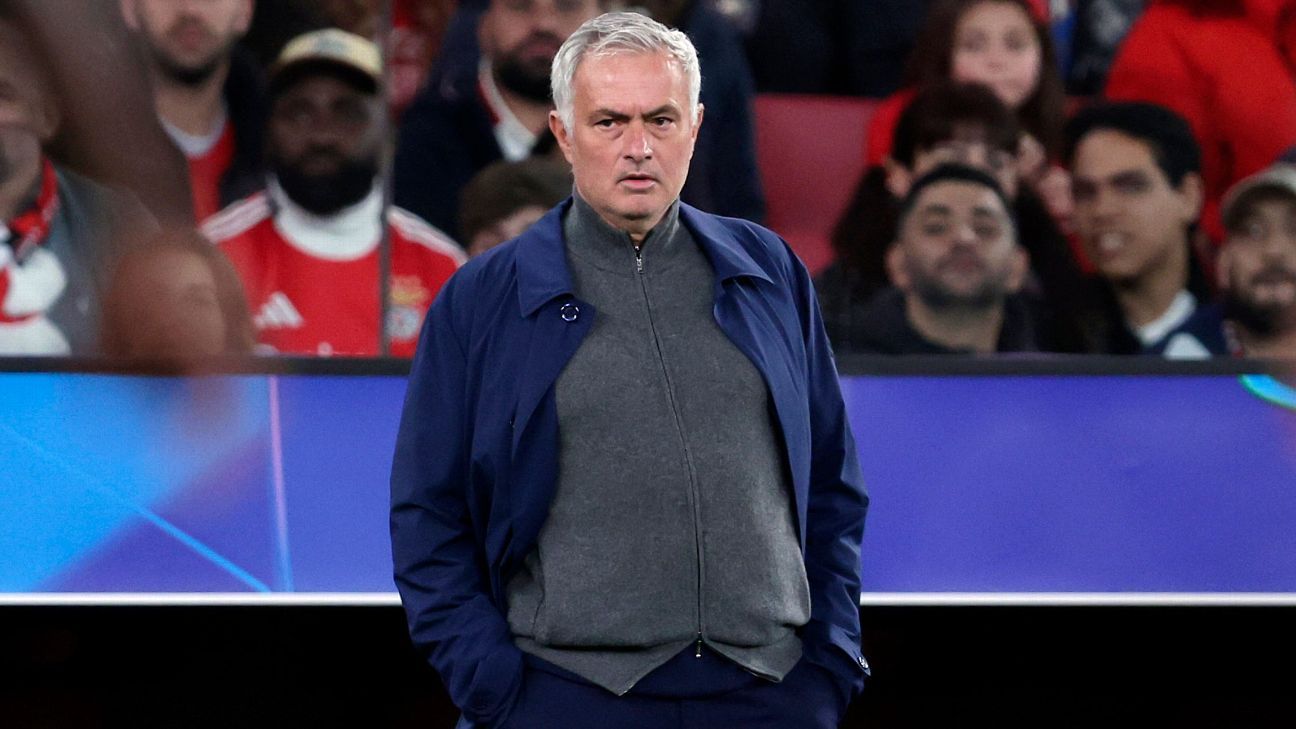
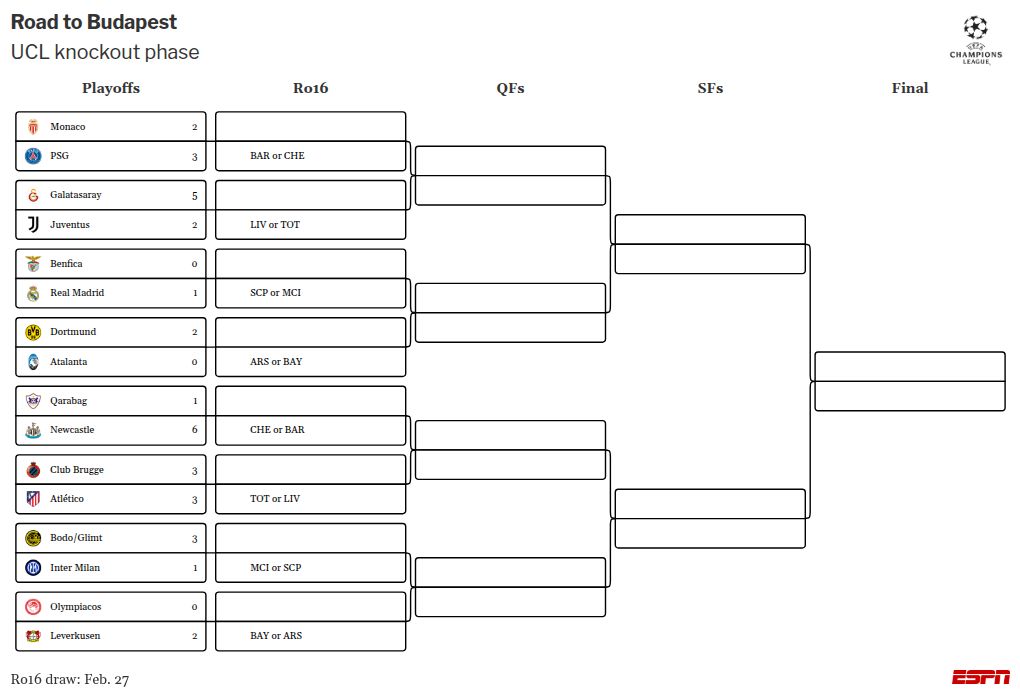
I may be in the minority, but I still hold the view that Real Madrid president Florentino Pérez has not ruled out the idea of José Mourinho taking charge of the LaLiga club next season. This possibility would gain momentum if Mourinho’s Benfica manages to overturn their 1-0 first-leg deficit at the Santiago Bernabéu on Wednesday and eliminate Álvaro Arbeloa’s unpredictable squad from the UEFA Champions League.
Even though Mourinho is prohibited from coaching Benfica from the sidelines upon his return to the venue where he managed for three seasons, this marks the first chance for the “Special One” to prepare for a significant, competitive match at the Bernabéu since he lost the Copa del Rey final to Atlético Madrid there as Los Blancos manager in May 2013.
Before considering how Benfica can address their poor away record in the Champions League this season (four matches played, one win, three losses, -4 goal difference) and how they will cope without Gianluca Prestianni — provisionally suspended by UEFA following allegations of racist language directed at Vinícius Júnior in last week’s first leg — it is crucial to assess the relationship between Madrid’s president and his former star player.
– Marcotti’s Musings: Real Madrid are off the rails (again)
– UCL talking points: Can Arbeloa lead Madrid to UCL glory?
– Madrid keeper Courtois buys stake in ‘French Wrexham’
Let’s begin with the 78-year-old billionaire Pérez, as there are notable parallels between the time he brought Mourinho from Inter Milan in 2010 and the current situation.
Pérez undoubtedly enjoys witnessing his club secure trophies, and he has maintained his ability to generate commercial success. However, he also becomes frustrated when he perceives a “love-in” with Barcelona.
This sentiment is shared with Sir Alex Ferguson. When the Scot joined Manchester United from Aberdeen in the 1980s, he framed his mission not as building an empire at Old Trafford, but as “knocking Liverpool off their f—ing perch.”
Pérez has always been astute enough to understand that, in purely actuarial terms, if he can somehow distract and weaken Barcelona, the route to winning LaLiga becomes significantly easier. Atlético Madrid are sporadic title contenders, and no other club outside the dominance of Madrid and Barça — since Valencia 21 years ago — is genuinely in the running.
At times, the initial step toward victory is not enhancing your own performance, but undermining that of your primary rival. Mourinho served as Pérez’s “scorched earth” manager previously in that anti-Barcelona campaign, and he could fulfill that role again now.
The Portuguese was a formidable presence whose arrival did not immediately trigger a surge of trophies (though he did secure the Copa del Rey, LaLiga, and Spanish Supercopa over three seasons), but it certainly exhausted Pep Guardiola, compelled much of the Spanish sports media to take sides, provided Madrid with a more combative spirit, and at least laid the groundwork for the influx of European trophies that followed in the subsequent years under the more talented, less abrasive Carlo Ancelotti and Zinedine Zidane.
The first witness in my argument is Aitor Karanka, a Champions League-winning center-back with Madrid in 2000 and 2002. Currently, he serves as the Spanish FA’s director of football, but he was Mourinho’s assistant at Madrid during those years. Just a month ago, he appeared on the Spanish football podcast “Cafelito,” where he was asked if Mourinho had ambitions to return to Real Madrid.
Karanka attempted to maintain a serious demeanor but broke into surprised laughter before responding: “What do you want me to say?” He then continued, unprompted: “I think he’s already had a chance or two to come back to Madrid, but as often happens in football, things didn’t quite pan out at those times. Right now, Madrid has a promising young Spanish coach whom we [the Spanish FA] hope will remain in the position for a long time.”
When asked the follow-up question: “Were Madrid and Mourinho close to something?” Karanka replied: “From what I understand, yes … but I can’t recall exactly when.”
The final question on the topic was: “Why didn’t it work out?”, to which Mourinho’s friend and former assistant responded: “Football has moments like that … perhaps it was midseason, or maybe José was deeply involved in another project … but nobody should be surprised by the relationship between José and the president…”
Now, regarding Mourinho. I wouldn’t be surprised if NASA astronauts, during their training, were informed that among the objects visible from space, such as the Great Barrier Reef, the Grand Canyon, and the Great Wall of China, Mourinho’s ego was also mentioned.
This shouldn’t be automatically viewed negatively: The 63-year-old exudes confidence, bravado, and a “follow me” attitude that has sometimes resonated well with talented, coachable players, enthusiastic fans, and the insatiable global media. Every top athlete requires a robust ego.
I would wager everything I own that he can sense “opportunity” calling to him from the Santiago Bernabéu. Not just this week, but in terms of usurping Arbeloa.
Yes, Benfica is a recognized name in European football. Yes, there is a possibility that the Portugal national team job might come his way after the World Cup. That is all well and good. However, he departed Madrid feeling unfulfilled: only two major trophies, no Champions League title, drained from the psychological battle he had intentionally instigated with Guardiola (among others), and ultimately forced to watch, with his nose pressed against the window, as Ancelotti and Zidane guided largely the same squad to four Champions League trophies in the following five years.
Which competitive, aggressive, compulsive, and fame-seeking individual wouldn’t desire another chance to rectify that?
 play1:37Kompany slams Mourinho for ‘huge mistake’ with Vinícius Jr. comments
Vincent Kompany discusses Jose Mourinho’s comments regarding Vinícius Júnior experiencing alleged racist abuse against Benfica.
Now, is there a concern regarding Mourinho’s actions during the previous two Benfica-Madrid encounters this year potentially affecting his standing in the eyes of president Pérez? I think not.
In January’s 4-2 victory in the league phase that propelled Benfica into the playoffs, Mourinho significantly outmaneuvered his apprentice and protégé Arbeloa. Score one for José. However, his comments following Vinícius Júnior’s report to the referee about experiencing racial abuse during the first leg of this playoff only served to exacerbate the situation, even though he attempted to retract his statements.
My belief is that Pérez, deep down, will have recognized the same combative spirit that initially drew him to Mourinho. There is a downside to that characteristic — he is suspended for this week’s rematch for, by Mourinho’s own admission, directly accusing the first-leg referee, François Letexier, of failing to book Madrid players who were one yellow card away from suspension for the second leg. Just as he was suspended for his conduct during the Champions League semifinal first-leg home loss to Barcelona in 2011, and just as he was sent off during his final significant Madrid match — that 2-1 defeat at the Bernabéu to Diego Simeone’s Atlético in the Copa del Rey final.
True to form, Mourinho declined to attend his final few press conferences in the days leading up to his departure from Madrid in 2013. What this meant back then was that Arbeloa, in the media mixed zone, was left not only to defend his departing boss but also to attempt a farewell tribute.
“Mourinho has always prioritized Real Madrid above all else; he has considered Real Madrid before himself, and many times, that has harmed his image,” Arbeloa stated at the time. “I don’t know if anyone at this club, including the players, can say the same.
“What I am saying starts with me. I look out for myself first. I want things to go well for me, and then for the club. I believe there are many individuals like that. Many of us may be concerned about receiving negative media coverage, about maintaining a good image, about always speaking in our own best interest. Because this club is very complex, especially when things are not going well, it becomes very challenging here.
“It has been a tumultuous season, particularly towards the end, and there are individuals who have disagreed with some of the manager’s decisions.”
Ironically, nearly 14 years later, much of those sentiments apply to the current scenario. Arbeloa’s influence has been largely positive, sometimes with remarkable clarity — including the standout performance in Lisbon. However, Madrid remains susceptible, hindered by key absences and uncertain whether Kylian Mbappé can overcome his knee discomfort, along with a recent decline in form, to guide them into the round of 16.
A 2-1 loss at Osasuna over the weekend will have intensified Pérez’s concerns about Arbeloa’s readiness to be the sole leader. A defeat to Benfica would not only amplify those concerns but also reaffirm Mourinho as a potential candidate.
This week, banned and without Prestianni, Mourinho enters as a slight underdog. How will the Santiago Bernabéu respond to him in his absence? Will there be longing applause and chants of his name? Or will there be haughty, “never-going-back” attitudes and silence?
Thus, he may be an underdog in competitive terms this week, but that does not imply that, by the summer, Mourinho cannot once again emerge as the leading figure at the world’s most successful and high-profile club. This match is not merely a rite of passage into the Champions League knockout phase; it serves as a referendum on how Madridistas view their former hero and a trial by fire for the current occupant of the hot seat, Arbeloa.
