
Reasons the Philippines has the potential to make history at the Women’s Asian Cup
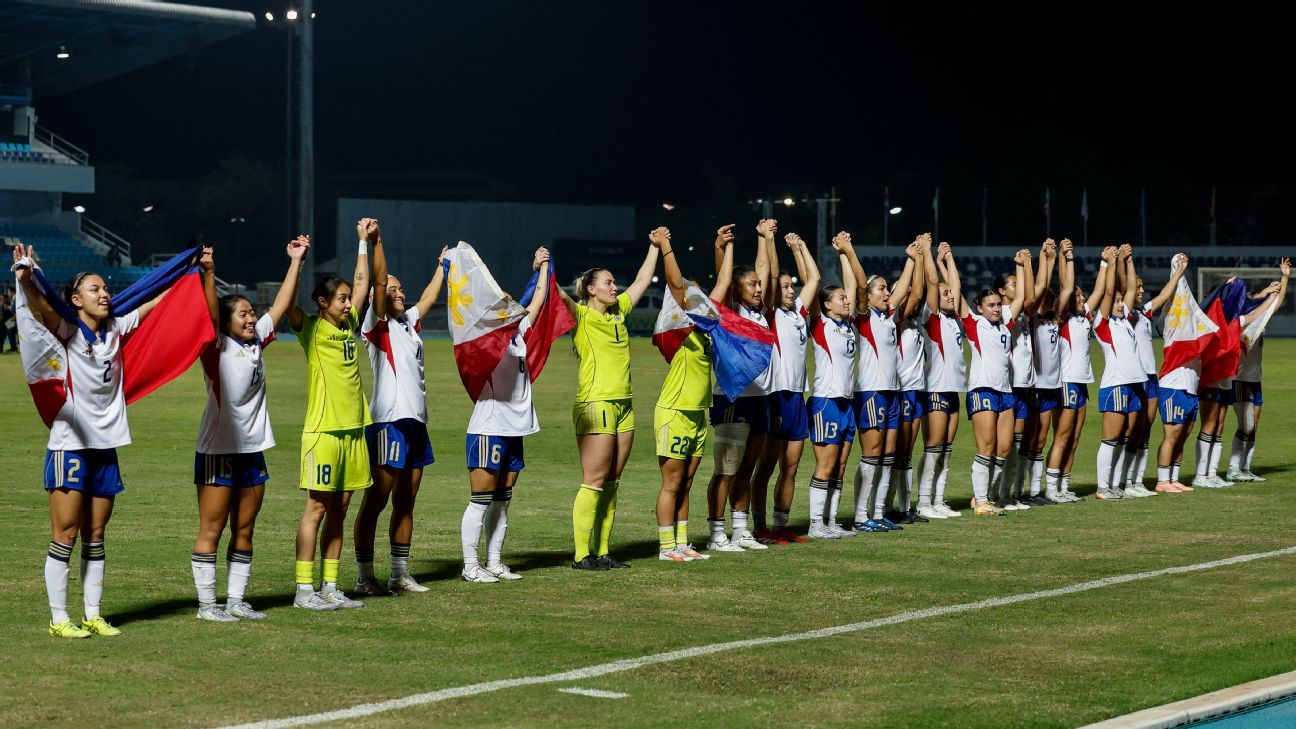
Last December, goalkeeper Olivia McDaniel dove to her left to block Trần Thị Thu’s penalty, quickly got back up, and cleared the ball before being surrounded by her teammates. After 120 minutes of play had failed to produce a winner, the Philippines triumphed over Thailand in a penalty shootout, securing their inaugural Southeast Asian Games gold medal in women’s football. This victory not only marked a significant achievement for the nation but also provided a boost in momentum as they prepared for this year’s Women’s Asian Cup.
The event at Chonburi Stadium was historic, as it was the first occasion the Philippines had reached the SEA Games final, let alone claimed the gold medal. The women’s tournament had previously been largely dominated by Vietnam, with eight titles, and Thailand, with five. However, the Filipinas have consistently broken new ground in recent years and are now looking forward to the opportunity to do so again as the premier Asian football tournament approaches in Australia.
Under the guidance of former Matildas coach Alen Stajcic, the team reached the semifinals of the 2022 Women’s Asian Cup in India, which earned them a spot in the subsequent Women’s World Cup in Australia and New Zealand—the first time either a men’s or women’s team from the Philippines qualified for the global event. During the tournament, Sarina Bolden netted her country’s first-ever World Cup goal, contributing to a historic victory over New Zealand in Wellington.
Since then, the landscape for the Filipinas has shifted significantly. Stajcic has been succeeded by another Australian, Mark Torcaso, who led them to victory in Chonburi. The squad has seen several changes, and Bolden is aiming for a return to the Asian Cup following an ACL injury sustained last April. Long-time supporter Jefferson Cheng left in 2024, and there is an ongoing demand for enhanced resources and support. Nevertheless, defender Angie Beard, who currently plays for Brisbane Roar in the A-League Women, believes the team has elevated its performance level.
“The turnover we experienced after the World Cup, in terms of staff and players, was quite significant, and it’s remarkable to consider,” Beard, one of the few players still with their clubs and not participating in a pre-tournament camp in the Philippines, shared with ESPN in an exclusive interview. “However, the inclusion of younger players and new recruits, along with those who have secured overseas professional contracts for the first time in a while, means many of our players are now competing at high-level colleges, semi-professional leagues, or, like myself, in professional teams. I believe this will help elevate our team further.”
“[The SEA Games] was an important showcase for us. Competing against strong teams like Vietnam, who will also be in this upcoming Asian Cup, allowed us to assess our strengths and weaknesses. Having a tournament like that right before the Asian Cup was incredibly beneficial.”
– Tan: Ten players to watch at the 2026 AFC Women’s Asian Cup
– Lordanic: Can this Matildas squad lift the 2026 Women’s Asian Cup?
– Women’s Asian Cup 2026: How to watch, fixtures, all you need to know
“In that tournament, we lost our opening match, which was definitely our poorest performance [a 2-1 defeat to Myanmar], but we rebounded. We defeated the reigning champions, Vietnam, and scored [six goals] in our next match [against Malaysia], leading into the semifinal and final, which showed a clear upward trend throughout the tournament.”
“I truly believe that if we maintain our focus on our systems and philosophy of play, this Asian Cup can present a significant opportunity for us to create history once again. Achieving a second consecutive World Cup would be something that neither the men’s nor women’s teams from the Philippines have accomplished before, which would be extraordinary.”
In this year’s Women’s Asian Cup, the Philippines is placed in Group A and will commence the tournament against Australia in Perth on March 1, followed by matches against South Korea and Iran in Queensland. To progress to the quarterfinals, they must finish in the top two of their group or be one of the two best third-placed teams from the three groups, which will also secure their spots in the qualifiers for the 2028 Olympic Games in Los Angeles.
For the last time before the AFC transitions to dedicated qualifiers, a victory in the quarterfinals would ensure advancement to a second consecutive Women’s World Cup. Conversely, a loss would lead them into a mini-tournament with the other quarterfinal losers, where two additional spots for Brazil 2027 would be available, with the losers of those matches moving into inter-confederation playoffs.
Reaching the knockout stage will be a challenging task. The Taegeuk Nangja eliminated the Philippines in the semifinals of the previous Women’s Asian Cup, while the Matildas, competing on home turf, will likely be favored against any team other than Japan. Indeed, the last encounter between the Filipinas and Australia in Perth occurred during the Olympic qualifiers for the 2024 Olympic Games in Paris, where Torcaso’s squad faced an 8-0 defeat.
“In my view, that last match against Australia stands out as a significant low point,” Beard remarked. “It was the complete opposite of what this team represents. Our identity is built on being strong defensively, organized, and difficult to break down, and I feel that was not demonstrated to our fullest potential.”
“I know what this team is capable of, as do the fans and coaching staff. The players are aware of our potential. Therefore, that last performance is certainly not something we take pride in or expect to repeat.”
“I’m uncertain how many times the Philippines has faced Australia, the U.S., Spain, or other top teams, but when you compete against players you admire or the best in the world, showing them excessive respect can limit your performance. It’s a disservice to yourself not to perform at your highest level due to the opponent’s reputation.”
“Personally, I feel that I can face anyone at this stage in my career without fear. I am committed to giving my all in every match. If we can collectively approach high-ranked teams with that mindset, it will be a crucial factor for us.”
Born in Queensland and a three-time Matilda, Beard transitioned to represent the country of her mother’s heritage ahead of the 2023 Women’s World Cup, noting that she has become “a different person” since making this change.
“One thing about the Philippines is their openness and warmth,” she expressed. “Whether it was the players, the community, or the country, I felt incredibly welcomed. For much of my life, I hadn’t truly experienced that aspect of myself, and my mother has extensive family, history, and culture in the Philippines that I had never explored. I fear that if I hadn’t embraced this opportunity, I would never have fully connected with that part of my identity.”
In the coming weeks, Beard and her teammates will aim to seize a new opportunity and continue to make history for the Philippines.
