
Morocco’s AFCON Championship Victory Was Justified, Yet CAF’s Delay Raises Questions.
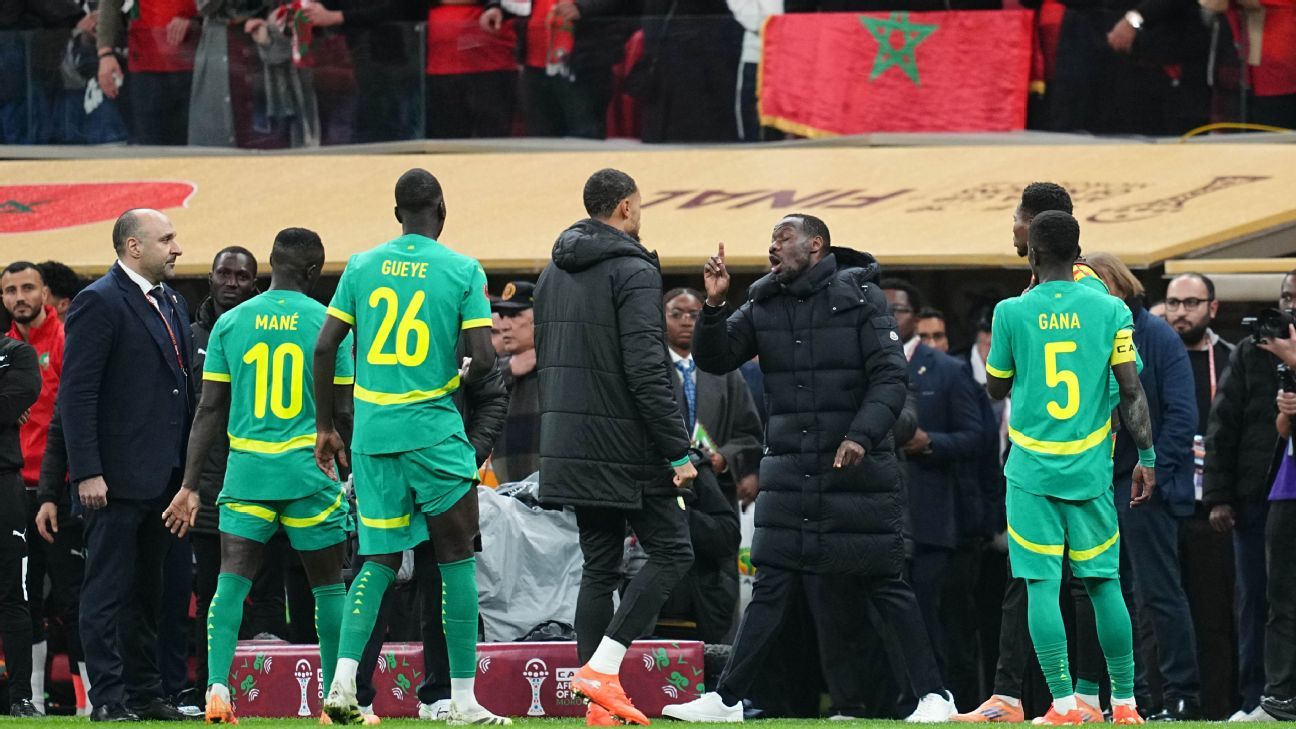
On Tuesday night, a significant change occurred as Senegal was officially stripped of the Africa Cup of Nations title that they, along with many others, believed they had secured in January. Fifty-eight days later, the title of African champion has been awarded to Morocco, following a decision by the appeal body of the Confederation of African Football (CAF).
The final match was marked by notable controversies, including a disallowed goal for Senegal. Additionally, Morocco, the tournament hosts, received a highly disputed penalty through the Video Assistant Referee (VAR) in the dying moments of injury time. Senegal’s players expressed their discontent and, almost unanimously, left the pitch, led by their coach, Pape Thiaw. They returned approximately 10 minutes later, reluctantly rejoining the match.
Play resumed 17 minutes after the interruption, with Morocco’s Brahim Díaz attempting a poorly executed “Panenka-style” penalty that was easily saved by Senegal goalkeeper Édouard Mendy, leading the match into extra time. In the first period of overtime, Pape Gueye netted the goal that secured a 1-0 victory for Senegal amidst a backdrop of fan unrest, chaos, and disputes between players and ballboys.
All of this is now in the past, and based on a strict interpretation of both the tournament regulations and the Laws of the Game, the decision is justified. While it took longer than it should have, justice has been served.
Article 82 of the CAF regulations is unequivocal: “If, for any reason whatsoever, a team … leaves the ground before the regular end of the match without the authorization of the referee, it shall be considered a loser [sic] and shall be eliminated from the current competition.” Article 84 further states that contravening Article 82 results in a “loss [of the] match by three-nil.”
That summarizes the essential information. Abandoning the field without permission during a match results in forfeiture. This principle is straightforward and universally accepted: if you refuse to play, you lose. Factors such as refereeing errors, hostile crowds, or frustration do not justify leaving the field.
The pertinent question is not whether CAF’s appeals body made the correct decision; they did, as the regulations leave little room for debate. Instead, one should consider how the situation escalated to this point and why it took so long to resolve.
The referee, Jean-Jacques Ndala Ngambo, had the authority to declare the match a forfeit that night. If players exit the field without his permission, he is expected to issue yellow cards, and if they do not return within a “reasonable amount of time,” he can abandon the match in favor of the opposing team. However, the definition of “reasonable amount of time” is not specified; common sense would suggest it is significantly shorter than what transpired that night.
The reason for the referee’s inaction remains unclear. He had made some questionable decisions earlier in the match, and perhaps he felt he had the discretion to avoid ending the premier event of African football in such a manner. In those moments, he appeared to be isolated in his decision-making.
What should have occurred (and seemingly did not, though we may never know) is that someone—whether it was CAF’s head of referees or another official—should have communicated with him, reminding him that it was his decision to make and encouraging him to enforce the rules. If that did not happen, it is understandable that he would strive to complete the match.
However, this does not absolve CAF of responsibility for the subsequent events.
The day after the match, on January 19, Morocco submitted their appeal to the CAF disciplinary board, requesting a forfeit from Senegal. Nine days later, the board announced their decision, which included suspensions for several players and officials, significant fines for both teams and players (including a five-match ban for Senegal’s coach Thiaw), but notably, they rejected Morocco’s appeal for a forfeit.
The reasons behind this decision remain uncertain, but it appears that the chaos surrounding the match and allegations of favoritism towards the host nation, Morocco, along with negative global publicity, may have influenced their reluctance to strictly apply their own rules.
A week later, on February 3, Morocco formally submitted their appeal to the CAF appeals board. It took six weeks for them to reach a conclusion: Senegal forfeited the match, and Morocco was declared champions, although they may want to delay their celebrations.
Senegal has already exercised their right to appeal this decision to the Court of Arbitration for Sport (CAS). It is expected that they will argue that since the referee opted not to abandon the match after the walk-off and the players eventually returned, Article 82 should not apply, and that a 17-minute delay—from the moment the penalty was awarded to when it was taken—does not warrant the revocation of a title. This process may extend the timeline by another two to three months.
Regardless of the outcome, it will be definitive. There is no possible CAS ruling that will satisfy both parties or be perceived as “just” by all involved. (One CAS arbitrator, Raymond Hack, believes this appeal will conclude in favor of Senegal.)
For now, the key takeaways for CAF are clear.
The first is that disciplinary procedures should not extend over such a lengthy period. This situation is not overly complex, and there is not an abundance of evidence to review. One must either believe that Senegal’s walk-off warranted a forfeit (as I do) or not, given that they ultimately returned and the referee did not abandon the match.
The second takeaway is that officiating under such circumstances is challenging and, above all, isolating. Allowing the match official to make such a significant decision alone should never occur again.
