
Messi achieved a milestone, yet the Concacaf Champions Cup remains out of reach for Inter Miami.
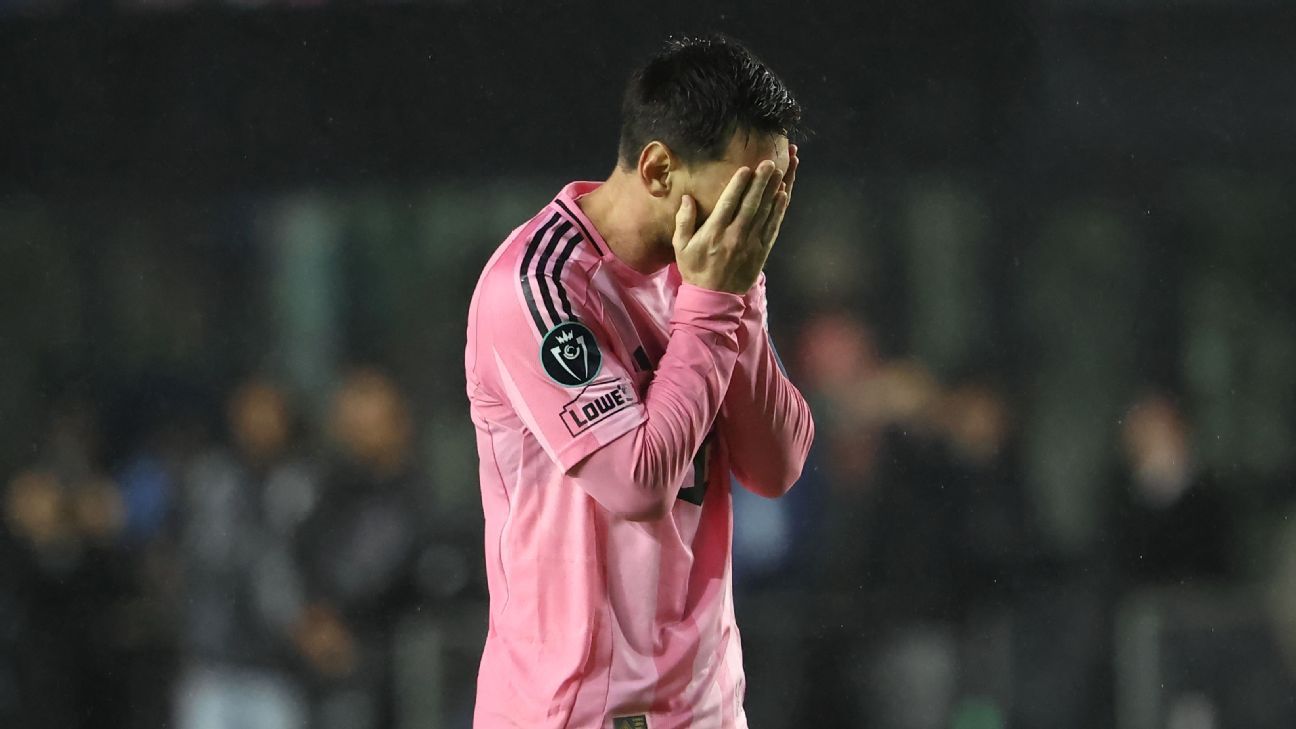
On a night when Lionel Messi achieved the milestone of scoring his 900th career goal, Inter Miami CF was unable to match the performance of their captain, resulting in their exit from the Concacaf Champions Cup.
For the second time within a week, Inter Miami drew with Nashville SC in the Concacaf Champions Cup. However, this time, the 1-1 outcome in Fort Lauderdale meant that the Herons’ aspirations of winning the continental tournament were dashed, as they were eliminated based on the away goals rule.
While some players lingered on the field, visibly affected by the outcome, the majority retreated into the stadium tunnel with downcast expressions to avoid any interaction.
The reigning MLS Cup champions entered the 2026 edition of the Concacaf Champions Cup with hopes for a different outcome. On the pitch, Inter Miami finally fielded a well-rounded starting lineup backed by a robust bench. Off the pitch, co-owner Jorge Mas’ insistence on winning the competition allowed Javier Mascherano and the coaching staff to focus on Champions Cup matches by resting players from MLS games to prepare them for midweek contests.
– Lionel Messi scores 900th goal, but Miami eliminated from CCC
– Messi reaches 900th career goal, but can he achieve 1,000? Can he surpass Ronaldo?
– Tracker: All Messi’s goals, assists, key moments
Despite a strong start to the match, seemingly overcoming the challenges of the first leg to gain an early lead against Nashville, Inter Miami could not meet expectations and suffered a round of 16 exit, marking their earliest departure from the tournament since their CCC debut in 2024. What went wrong?
The team had previously learned to leverage momentum for success on the field, securing victories in the Leagues Cup and MLS Cup among other honors, yet Miami appears to continue to struggle with this tournament format.
The Concacaf Champions Cup implements a segmented structure by scheduling two-legged series over several months, which can lead even the strongest teams into challenging situations.
In 2024, injuries severely impacted the roster, culminating in a defeat against Monterrey in the quarterfinals. Without Messi in the first leg against the Mexican side and adhering to roster regulations, former head coach Gerardo “Tata” Martino cited a lack of squad depth as a reason for the elimination.
The following year, the tournament proved overwhelming for Inter Miami as they lost to the Vancouver Whitecaps in the semifinals while attempting to juggle multiple competitions. By April, the Herons were engaged in both MLS and the Concacaf Champions Cup concurrently while also preparing for the FIFA Club World Cup and Leagues Cup.
Now, in 2026, it appears that the tournament’s commencement caught Inter Miami during a transitional phase, particularly as the club embarks on a new chapter without veterans Jordi Alba and Sergio Busquets.
In the defense, Mascherano began the match with Sergio Reguilón, a player who joined Inter Miami ahead of the 2026 season with the aim of filling Alba’s role. Despite the significant expectations, the player appeared capable of handling the pressure.
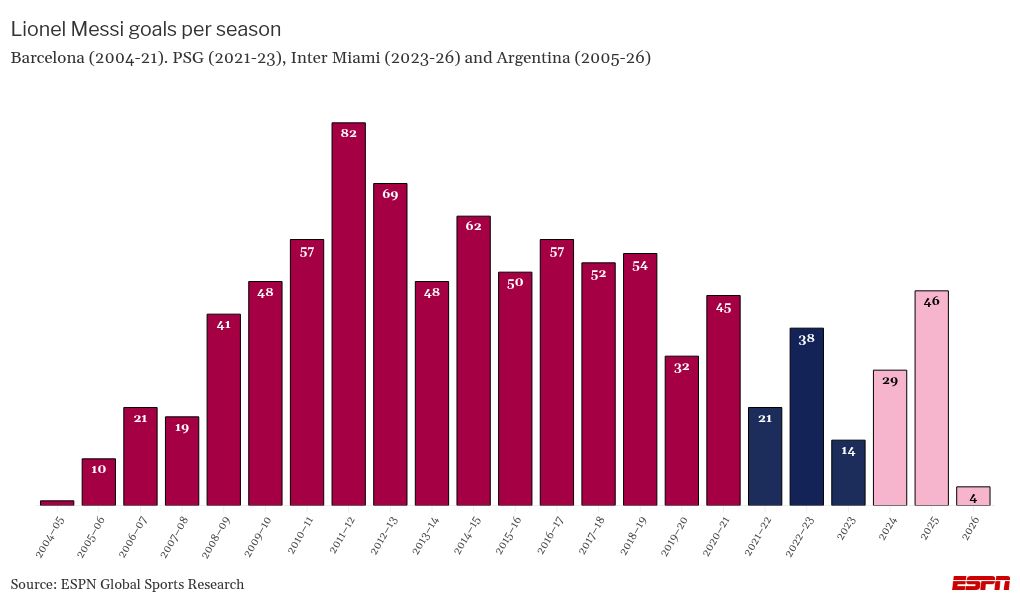
In just the seventh minute, Messi linked up with the new addition to score a left-footed strike into the net for his historic 900th career goal.
Reguilón, who made his second official start for Inter Miami on Wednesday night after a gradual recovery from injury during the preseason, quickly established a rhythm to dominate the left wing, reminiscent of his predecessor Alba. He recorded two interceptions and made one crucial clearance defensively, contributing to the backline’s confidence.
However, just as Reguilón was gaining traction, he went down clutching his leg due to a familiar injury, necessitating his exit from the match. Noah Allen stepped in, and although the seasoned MLS defender tried to ensure a smooth transition, Inter Miami lost their offensive effectiveness on the left flank that had been connecting with Messi.
In midfield, the team continues to adapt to life without Busquets to orchestrate play. While Rodrigo De Paul and Yannick Bright are developing their partnership and taking on responsibilities previously held by the Spaniard, Busquets’ absence was particularly noticeable in the second half.
As Nashville advanced into the final third during the second half, forcing Miami into defensive mistakes, Bright struggled to manage his role, leaving dangerous gaps in midfield for Nashville to exploit.
On one occasion, Bright vacated space in midfield, allowing striker Hany Mukhtar to make a clear run into the final third and attempt a shot on goal.
In the attacking phase, new signing Germán Berterame faced challenges in fulfilling the role of an associative No. 9, struggling to connect with teammates and failing to generate goal-scoring opportunities himself. It was not merely that Nashville effectively neutralized Berterame, but rather that the player was unable to distinguish himself in a system he has been part of for only two months.
Ultimately, mistakes across the field in every position culminated in Nashville’s goal in the second half, which proved to be the decisive moment of the series. Micael, Facundo Mura, and Bright, all out of their designated positions, ended up surrounding Dayne St. Clair in the net, allowing Cristian Espinoza to score from a rebound, leaving the Inter Miami goalkeeper unable to react to the second attempt.
Mascherano alluded to the potential for errors prior to the match, stressing that even skilled players can make mistakes, but the key to improvement for the Argentine coach lies in continuity, which these players currently lack.
“Often what you have to try to do is give it continuity, give it continuity, try to ensure that if it doesn’t work the first time, it may not work the second time, keep trusting,” he stated. “Clearly, everyone’s asking about Busquets’ absence; I think the team itself has stepped up. There are players who have taken charge, like Rodrigo, Yannick…
“We have players who perform well; we need to instill confidence in them. We shouldn’t criticize them at the first sign of error. They make mistakes because football is a game of errors, and we must adhere to our beliefs. They’ve already demonstrated to me that they can play football. We’ve had lapses in some matches. Well, avoiding those gaps means striving for much more continuity.”
However, the Concacaf Champions Cup does not allow time for continuity. In a tournament that rewards teams for being prepared when called upon, Inter Miami fell short once more.
Now, the Herons must focus on qualifying for the next edition of the tournament through Leagues Cup and MLS play, aiming for another opportunity at the only trophy that remains to be claimed by the South Florida team.
