
Liverpool thrives on late excitement. Can Slot address their sluggish beginnings?
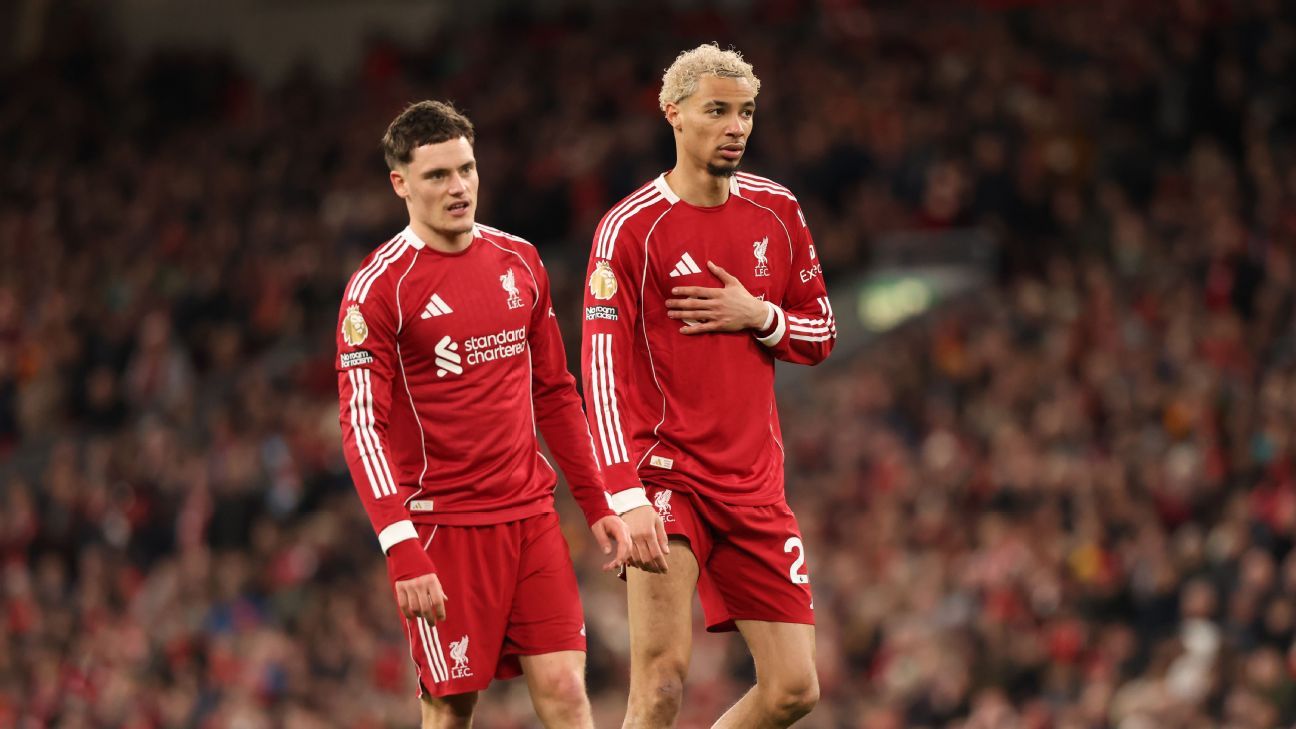
No team excels in late-game excitement quite like Liverpool. This was the sentiment expressed by club icon Jamie Carragher after midfielder Alexis Mac Allister netted a crucial goal in the 97th minute, securing a vital 1-0 win against Nottingham Forest on Sunday afternoon.
The Argentina international’s dramatic stoppage-time strike at the City Ground added to a Liverpool season marked by thrilling last-minute victories. This trend has brought both elation and despair to head coach Arne Slot’s squad, as their title defense has taken a troubling turn.
Out of Liverpool’s 27 league matches in the 2025-26 season, seven have seen a winning goal scored after the 90th minute, the highest number recorded by any team in a single season of the competition. Four of these late goals have been scored against Slot’s team, highlighting the risks associated with consistently engaging in tightly contested matches—especially in a season where confidence has often been fragile and the lack of impactful substitutes has been evident.
“My feelings were ones of joy and relief,” Slot remarked following the match on Sunday. “We did not perform well today. The display, particularly in the first half, was not reflective of our usual standards this season. However, we have often found ourselves on the wrong side of the scoreline despite good performances. Today, I believe we got more than we deserved. A draw would have been a more just outcome than our victory.”
This was a thoughtful evaluation from the Dutch coach, who has frequently seen his team suffer from narrow margins this season. With UEFA Champions League qualification on the line, Liverpool must discover a way to assert control and reduce the necessity for late comebacks. But what accounts for the prevalence of late goals in their matches? And what strategies can Slot implement to address this?
‘Mentality monsters’ face their own challenges
Liverpool’s tendency to secure late victories is not a recent phenomenon. The club has amassed 48 winning goals scored in the 90th minute or later in the Premier League, at least 12 more than any other team in the league.
This relentless spirit has been a defining feature of the Jürgen Klopp era, with the German manager famously dubbing his team “mentality monsters” following a late comeback win against Southampton in April 2019. The label has endured, encapsulating the resilience of a club and, more broadly, a city that has frequently risen from adversity.
– Hamilton: How James Milner set a near-unbreakable Premier League record
– Olley: Premier League clubs look to U.S. to fund big-money signings
– Onuoha: What players really think when a manager arrives midseason
This intangible quality has been fundamental to much of Liverpool’s domestic and European success, with captain Virgil van Dijk asserting on Sunday that it was the team’s determined mindset that enabled them to prevail against Forest, especially after Mac Allister’s goal was disallowed for handball in the 90th minute.
“I completely agree [that we demonstrated strong mentality] because when the goal is ruled out, the momentum shifts, and the [Forest] fans become energized,” Van Dijk stated. “They might feel this is their chance to recover from a bit of disappointment.”
“However, I think we handled it well; we created chaos with the throw-ins we had and managed to score the winner. Our resilience has certainly been questioned at times this season, but I believe that today and in the last few matches, we have shown consistency in our performance.”
 play1:35Slot: Liverpool ‘got more than we deserved’ in Forest win
Arne Slot acknowledged that Liverpool benefited from some fortune during their 1-0 victory over Nottingham Forest, thanks to Alexis Mac Allister’s last-minute goal.
While Liverpool’s determination is commendable, their inability to control matches has also left them vulnerable to late setbacks. Earlier this month, Manchester City came from behind to secure a 2-1 win against their Anfield rivals, with Erling Haaland scoring the decisive penalty in the 93rd minute.
Liverpool’s record of conceding four stoppage-time winners is tied for the most by any team in a single Premier League season, alongside Watford in 2017-18 and 2021-22, West Ham United in 2021-22, and Southampton in 2024-25. The Reds have also allowed injury-time goals against Leeds United and Fulham, turning potential morale-boosting victories into costly draws. The eight points lost in stoppage time this season is the highest in the league, significantly impacting Liverpool’s campaign.
Slot conceded after the defeat to City that it is challenging to pinpoint a single reason for his team’s late collapses. “Each time it’s a different goal, of course,” he remarked. “I have stated numerous times that the next step for us is to avoid relying on a specific pass or decision. We are making progress. When you compare this to three or four months ago, you can see significant improvement, but the problem is that this improvement is not reflected in the league standings, which is always the most crucial indicator of your position.”
Even during their title-winning season last year, Liverpool often had to fight hard for their points. Only seven of their last 20 league matches in 2024-25 were won by a margin of two or more goals, and only two matches resulted in victories by at least three goals. An internal desire to secure more comfortable wins was one of the motivations behind Liverpool’s record spending of nearly £450 million last summer, although this substantial investment has yet to yield the expected results.
While there is optimism that the club’s recent signings can contribute to long-term success, significant injuries to Alexander Isak, Jeremie Frimpong, and Giovanni Leoni have limited their effectiveness this season, and star midfielder Florian Wirtz has taken time to adjust to the demands of the Premier League.
Slow starts and a lack of goals hinder Liverpool
One of Liverpool’s most significant shortcomings this season has been their tendency to begin matches sluggishly. They have netted only 13 first-half goals in the league, with their current average of 0.48 first-half goals ranking as their second-lowest in the Premier League era and the third lowest in the club’s entire history.
Only seven teams have scored fewer goals than Liverpool in the opening 45 minutes of matches, with five of those teams positioned in the lower half of the table. Slot’s team has also managed just three goals within the first half-hour of league games this season, with two of those occurring in the same match (the 2-1 victory over Merseyside rivals Everton in September).
 play1:29Hutchison: Forest win won’t build Liverpool’s Champions League confidence
Don Hutchison evaluates Liverpool’s chances of qualifying for the Champions League amid competition from Manchester United and Chelsea.
These statistics sharply contrast with Liverpool’s performances in the second half. Only league leaders Arsenal have scored more goals than the Reds after halftime. However, on several occasions in recent months, Liverpool has found themselves in a position where they have too much to accomplish, particularly given the lack of impactful players on the bench.
Against Forest, an injury to Wirtz during the warmup weakened an already thin bench, leading to Curtis Jones stepping in to replace him in midfield. The fact that Liverpool’s most influential substitute was 17-year-old winger Rio Ngumoha, who made a notable impact after his late introduction at the City Ground, underscores the limited options available to Slot.
This lack of depth has frequently resulted in the Reds struggling in the final stages of matches, making them susceptible to late surges from their opponents. The Premier League’s increasing emphasis on set pieces has also been detrimental late in games, although Liverpool’s fortunes in this area have begun to improve since the start of the year.
In the first 26 matches of the season across all competitions, Liverpool conceded from 13 set pieces while scoring from eight, leading to the departure of set-piece coach Aaron Briggs in December. Although Slot has recently stated that Briggs is not solely to blame, the fact that they have conceded from two and scored from eight in the 13 matches since his exit has undeniably contributed to the club’s recent improvement.
It is also important to note that, while late goals have been plentiful this season, Liverpool’s overall goal tally is lower compared to previous years. Currently, the Reds have scored 42 league goals, their lowest total at this stage of a season since 2015-16.
Mohamed Salah, Liverpool’s leading scorer in eight of the last nine seasons, has not found the net in the league since November 1 and has gone nine league matches without scoring for the first time in his career. Meanwhile, Cody Gakpo has netted only two goals for the club since October 25, a stretch of 17 games.
With goals in such short supply, it is perhaps unsurprising that many of Liverpool’s matches are decided in the closing moments.
No straightforward solutions for Slot
For Slot, it is evident that there is no immediate remedy for his team’s late-goal dilemma. The anticipated return of key players in the coming weeks will be beneficial, with both Wirtz and Frimpong expected to be available for selection against West Ham next weekend, and Isak on track to resume team training next month.
Isak has surpassed the 20-goal mark in each of his last two seasons with former club Newcastle United and could provide Liverpool with the additional scoring threat they require to take control of matches. His return would alleviate some pressure on Hugo Ekitike, who is currently the club’s top scorer with 15 goals in all competitions.
Beginning matches with greater intent—especially at Anfield—could also help reduce Liverpool’s ongoing reliance on late goals, while utilizing the talented Ngumoha earlier in games could add a new dimension to the Reds’ attack. Ultimately, however, another summer of significant changes may be necessary before Slot’s squad is fully prepared to perform at a high level for the entire 90 minutes.
Prioritizing the recruitment of pace on the flanks should be a focus for the Anfield management, while Liverpool would also benefit from a more robust presence in midfield. Until the transfer window opens, the Reds can expect to continue experiencing late drama.
For neutral observers, they remain the most captivating team in the Premier League.
