
Is Iran qualified for the 2026 World Cup? What is Iraq’s playoff situation?
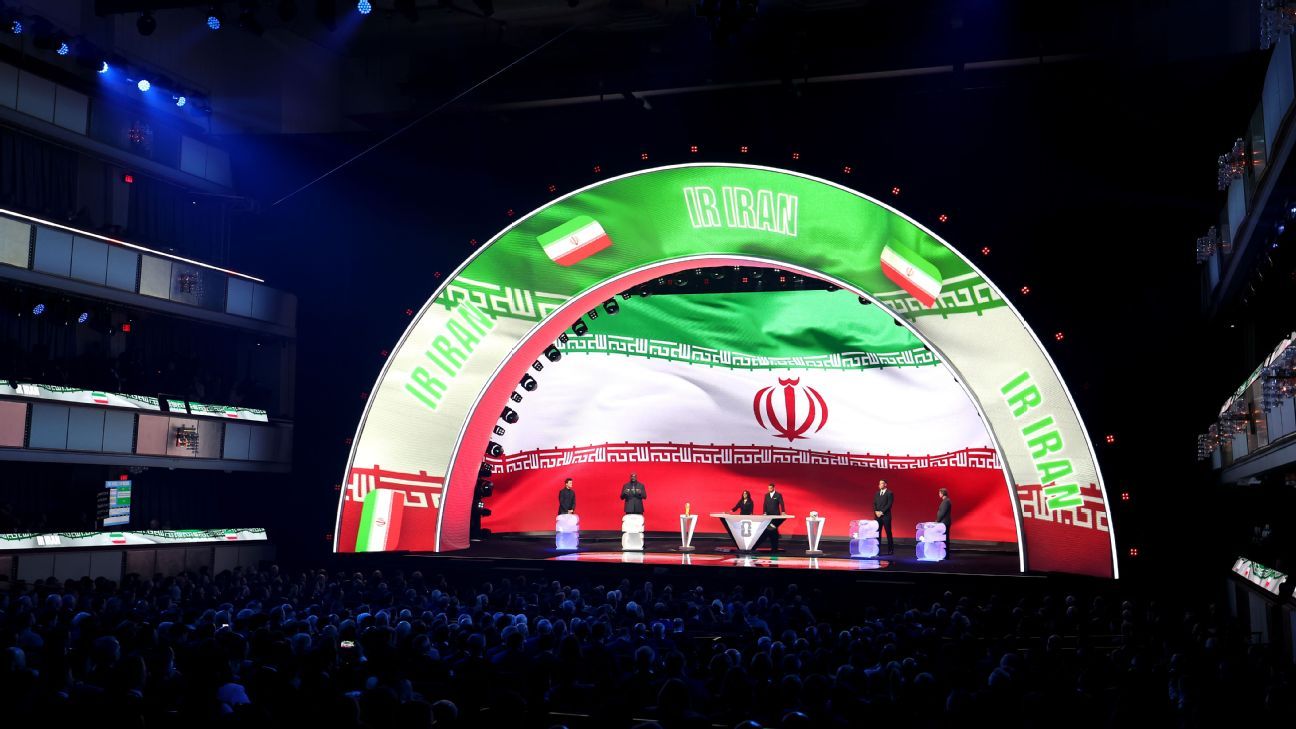
The 2026 FIFA men’s World Cup, set to take place in the United States, Mexico, and Canada, is scheduled to commence in under three months. However, the ongoing conflict in Iran and its neighboring nations, following President Donald Trump’s declaration on March 1 regarding “major combat operations” against the Iranian government, has created increasing uncertainty regarding the participation of teams from that area.
The conflict has already resulted in the death of longtime Iranian leader Ayatollah Ali Khamenei due to airstrikes in Tehran, alongside missile and drone retaliations from Iran targeting Israel, U.S. bases in the region, and Gulf countries. While Iran’s participation in the World Cup has been in question since hostilities began — they are placed in Group G, facing Belgium, Egypt, and New Zealand — the instability in the Gulf has now raised concerns about Iraq’s capability to compete in this month’s intercontinental playoffs in Mexico.
What is the current situation, and when can we expect clarity regarding which teams will participate in the World Cup?
What’s the latest with Iran?
Within a day of the initial missile strikes on Iran, a high-ranking official from the Islamic Republic of Iran Football Federation (FFIRI) expressed a lack of optimism about the national team’s prospects of competing in the tournament, as they were the first non-host nation to qualify for this year’s World Cup.
“What is clear is that following this attack, we cannot anticipate the World Cup with optimism,” stated FFIRI official Mehdi Taj, who also serves as a vice president of the Asian Football Confederation.
– World Cup Power Rankings: Which teams are favored to win it all?
– Roster projections for World Cup 2026 contenders, hosts
– Carlisle: Why have U.S. host cities not received $625M of vital funds?
FIFA’s initial reaction was to “monitor” the situation, with sources indicating to ESPN that there is confidence the matter will be resolved before the World Cup, which kicks off with Mexico facing South Africa in Mexico City on June 11. Despite the ongoing conflict in the Persian Gulf, FIFA president Gianni Infantino provided a positive update on Wednesday, stating after a meeting with President Trump that Iran would be “welcome” at the tournament in the U.S., where they are scheduled to play two matches in Los Angeles and one in Seattle.
“During the discussions, President Trump reiterated that the Iranian team is, of course, welcome to compete in the tournament in the United States,” Infantino remarked.
However, shortly after Infantino’s comments, Iran’s sports minister, Ahmad Donyamali, declared that the national team would not participate in the World Cup. “Given that this corrupt regime has assassinated our leader, under no circumstances can we participate in the World Cup,” Donyamali stated.
Does that mean Iran is definitely out?
No. This is evidently a rapidly evolving situation, and since the FFIRI is governed by the Iranian government, the ultimate decision regarding Iran’s participation in the World Cup will rest with political figures in the nation.
President Trump has indicated that he anticipates the conflict to last between four to six weeks. Should the outcome of the conflict result in a governmental change in Iran, it will affect the football team and those overseeing the federation. However, while it would be imprudent to speculate on the situation four to six weeks from now, that timeframe allows FIFA to postpone any decision until the FIFA Congress in Vancouver on April 30.
Sources have indicated that FIFA continues to observe the situation, but no decision regarding Iran needs to be made at this point. If the conflict remains ongoing at the time of the FIFA Congress, contingency plans for Iran’s potential withdrawal from the World Cup and its replacement will need to be established.
What are the likely backup options?
<pShould Iran withdraw from the tournament, sources have indicated that their replacement would almost certainly come from the Asian Football Confederation (AFC), specifically the nation that came closest to qualifying. Currently, that nation would be Iraq, but they can secure qualification by winning their intercontinental playoff against either Bolivia or Suriname in Monterrey, Mexico, on March 31.
If Iraq loses the playoff final, they would take Iran’s spot at the World Cup in the event of their neighbors withdrawing from the competition. Conversely, if Iraq wins the playoff and qualifies for the World Cup for the first time since 1986, the next Asian team in line would be the United Arab Emirates, following their AFC playoff final defeat to Iraq last November.
What is the complication with Iraq right now?
Due to the conflict in the Gulf, Iraq’s players and their Australian coach, Graham Arnold, are unable to travel outside the region, and players based in Iraq cannot obtain Mexican visas necessary for their trip to Monterrey.
Iraqi players located in the United Arab Emirates, Saudi Arabia, and Qatar have been able to secure visas by visiting the Mexican Embassy in those countries, but with Iraqi airspace closed until at least April 1 and Mexico lacking an embassy in Iraq, domestic players cannot travel to an embassy in a neighboring nation.
As a result of the challenges facing his team, Iraq coach Arnold has canceled a planned training camp in Houston, Texas, and has urged FIFA to postpone the playoff until closer to the World Cup. FIFA has not responded to an ESPN inquiry regarding that request.
“At this moment, we are struggling to get our players out of Iraq,” Arnold stated. “In my view, if FIFA were to delay the game, it would provide us time to prepare adequately. Let Bolivia play Suriname this month, and then a week before the World Cup, we can face the winner in the U.S. — the winner of that match advances, while the loser goes home.”
Arnold expressed that such a delay could also give FIFA additional time to make a decision regarding Iran’s participation and potential replacement.
“In my opinion, it also provides FIFA more time to determine Iran’s course of action,” Arnold said. “If Iran withdraws, we enter the World Cup, allowing the UAE, whom we defeated in qualifying, the opportunity to prepare for either Bolivia or Suriname.
“Our federation’s president, Adnan Dirjal, is working tirelessly to plan and prepare to fulfill everyone’s dreams in Iraq, so we need this decision made swiftly.”
How long can FIFA wait before making a decision?
There is no recent precedent for a team withdrawing or being removed from a World Cup. However, in 1992, Denmark was granted a spot at Euro ’92 by UEFA just ten days before the tournament began in Sweden after Yugoslavia was disqualified due to United Nations sanctions stemming from military conflict in the Balkans. Denmark ultimately won the tournament.
Sources have informed ESPN that FIFA is willing to wait for the situation in Iran to resolve itself before making a final decision. In terms of critical dates, the outcome of the playoffs on March 31 — if they proceed — will be significant, but definitive decisions are unlikely before the FIFA Congress on April 30.
