
With the exception of the teams participating in the playoffs, European squads were finally able to compete against teams from other continents during the late March FIFA dates. Consequently, all South American teams preparing for the World Cup had the opportunity to challenge the Europeans, with one notable exception.
Argentina was scheduled to face Spain in the Finalissima, which is the clash between the champions of the Euros and the Copa América. However, the ongoing conflict in the Middle East rendered Qatar an unsuitable venue, and efforts to secure an alternative fell through.
– Ranked: All 48 teams that can win the 2026 World Cup
– One thing to know about each of the 48 World Cup teams
– Does Casemiro have the legs to power Brazil’s two-man midfield?
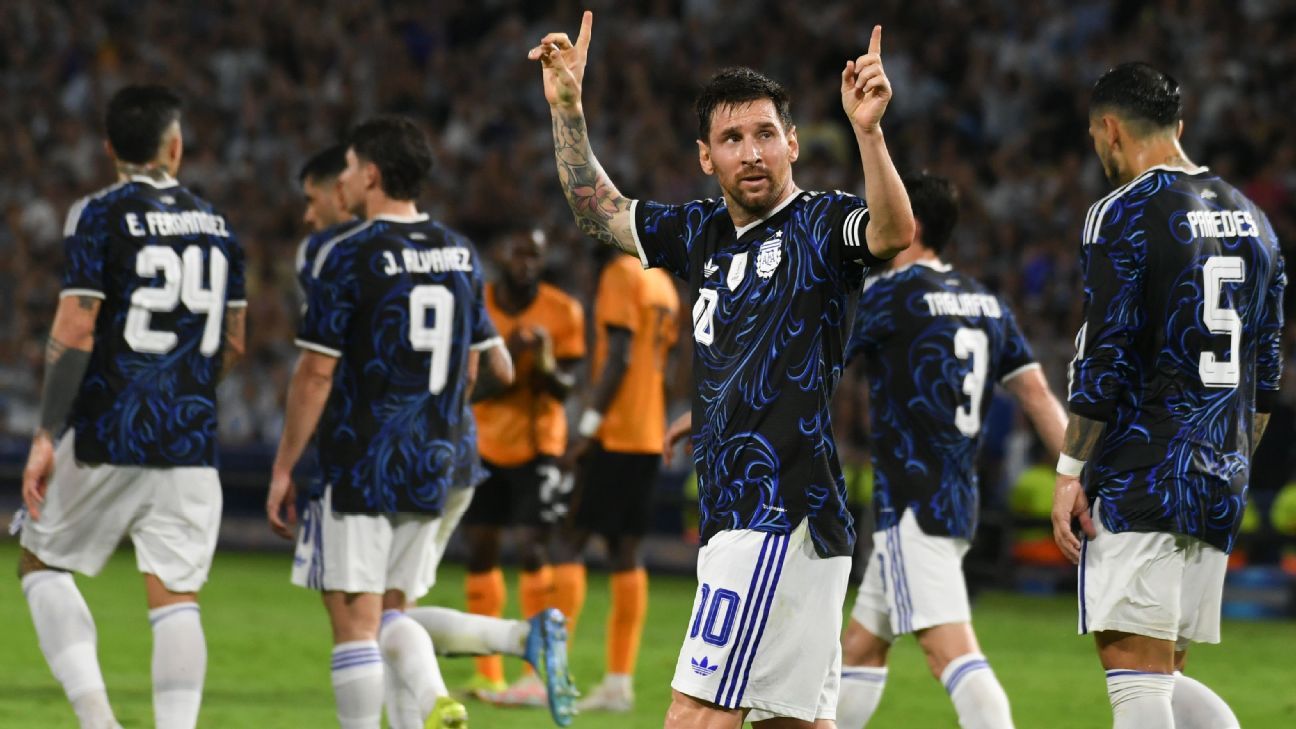
This situation presented a dilemma for Argentina. What would they do during the final FIFA date before the World Cup preparations? They decided to return the players to Buenos Aires. This allowed them to spend time with their families, engage in numerous training sessions, and participate in one or two matches, enabling the public to give the team an enthusiastic send-off while also honoring Lionel Messi, likely in his final appearance with the national team on home soil.
However, the question arose: where would the game be played, and who would be the opponent?
Argentina typically plays at River Plate’s Monumental Stadium. With the largest capacity in South America, it would have been perfect for such a significant event. Unfortunately, it was already reserved for concerts by AC/DC, forcing Argentina to take the alternative route to the much smaller Boca Juniors’ La Bombonera.
Guatemala was initially set to be the opponent. However, FIFA intervened, stating that Guatemala was already scheduled for another match in Italy, and regulations prohibit teams from participating on two different continents on the same FIFA date.
The last-minute resolution was to invite Mauritania for a match last Friday, followed by Zambia for Tuesday’s farewell.
This approach is unconventional for preparation. It means that Argentina’s list of opponents since the conclusion of World Cup qualification includes: Venezuela, Puerto Rico, Angola, and now two additional African teams that did not qualify for the tournament in June and July.
Does this matter? Argentina can argue that their performance has been strong since they secured the title in Qatar nearly four years ago. They successfully defended their Copa América title in 2024 and topped the South American World Cup qualification standings with ease. Additionally, they have developed strategies that reduce their reliance on Messi. A notable highlight was the convincing 4-1 victory over Brazil that occurred without Messi.
Nonetheless, the level of difficulty of the upcoming challenge must be acknowledged. Italy defended their title in 1938 and Brazil did so in 1962, but no team has ever won back-to-back World Cups outside their home continent. Argentina aims to make history in June and July, suggesting that a more rigorous assessment of their capabilities might have been beneficial.
Three key issues appear to be relevant. The first is Messi himself. There has been no official announcement regarding his participation in the World Cup. Scaloni has stated that the decision will rest solely with the player at the appropriate time. He is not the player he once was, and it is understandable as he approaches 39—his birthday is June 24—when the tournament begins. While flashes of brilliance remain, it is uncertain if he can still influence the game at the highest level. With Argentina not having faced European competition since the 2022 World Cup final, this remains unclear.
Last Friday’s 2-1 victory over Mauritania was difficult to watch. Argentina performed reasonably well in the first half, with Julián Álvarez on the field, but struggled in the second half after Messi’s introduction. This was partly due to a collective lapse in concentration and an exaggerated eagerness from his teammates to set up Messi for farewell goals.
However, a clear conclusion emerged. Álvarez has become Argentina’s most effective player, and Messi’s presence is more logical alongside the energy, intelligence, and skill of Álvarez. This was immediately evident in the match against Zambia, where the duo connected early to give Argentina the lead and did so again just before halftime to extend it.
The second issue pertains to Messi’s former teammate, Ángel Di María. Highly skilled, versatile, and crucial in significant moments, Di María has been an essential part of Scaloni’s success. He continues to excel, now back with Rosario Central, but shows no signs of reversing his decision to retire from international duty. How can Argentina fill the void left by such an irreplaceable player?
At the beginning of this cycle, there were hopes that Alejandro Garnacho might step up, but his development has been slow. Recently—particularly in the closing moments of the Zambia match—there have been indications that some of this responsibility may shift to Valentín Barco, the left-footed winger currently with Ligue 1 club Strasbourg.
As demonstrated on Tuesday night, he can create threats from either side and capped off the 5-0 victory with the final kick of the match. While Barco is unlikely to be a regular starter for Argentina in the World Cup, even based on limited minutes against weaker opposition, it is conceivable that Scaloni is considering him for a role similar to the impactful contributions Di María provided.
The third issue is arguably the most critical. Throughout the Qatar campaign, Argentina’s defensive unit frequently faltered under pressure. This was evident against Australia, the Netherlands, and nearly proved disastrous against France in the final.
In this extended World Cup, there is an additional knockout round, which presents another opportunity for defensive breakdowns to jeopardize the team’s success. The challenge is that no new defenders have emerged. Argentina is essentially heading to North America with the same defensive lineup they took to Qatar. There were moments in recent matches, particularly in the second half against Mauritania, when they appeared alarmingly susceptible to counterattacks. If this vulnerability is present in these relatively easy friendlies, how will they manage in the critical phases of a World Cup?
At this juncture, there is no definitive answer. In recent months, they have not faced opponents of the caliber that will challenge them in North America. Scaloni is, therefore, bringing largely the same squad that participated in Qatar. It is a familiar team, but nearly four years later, it is poised to embark on a significant journey into the unknown.
