
How assistant coaches manage athletes and their own career aspirations
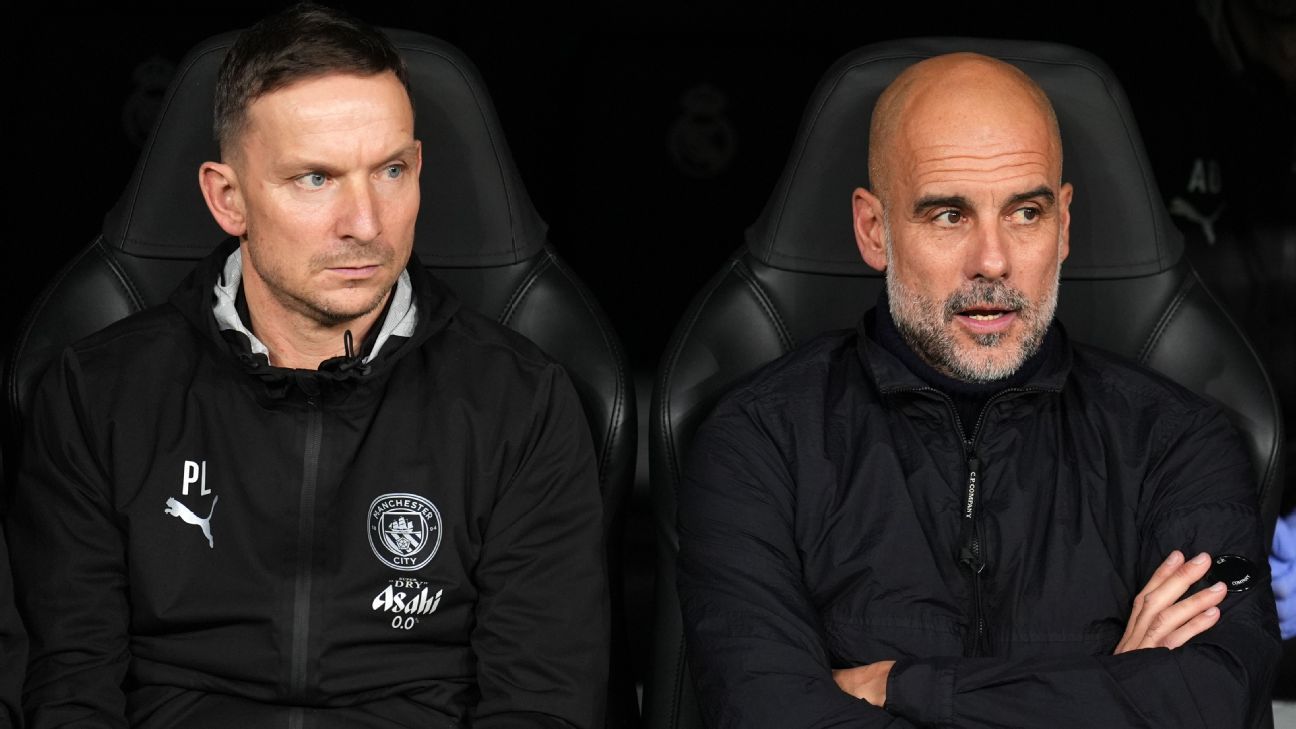
When Tijjani Reijnders netted the first goal for Manchester City against Nottingham Forest in December, Pep Guardiola immediately acknowledged the input of assistant manager Pep Lijnders. “You did that!” Guardiola exclaimed to Lijnders.
During halftime, Lijnders had pointed out some vulnerabilities in Nottingham Forest’s defensive setup, and just three minutes into the second half, City capitalized. A pass behind Forest’s defense reached Reijnders, who shot back across goalkeeper Matz Sels to put City ahead.
Part of City’s achievements under Guardiola stems from the influence of those around him. Guardiola has witnessed former assistant managers Mikel Arteta (Arsenal) and Enzo Maresca (formerly Chelsea) transition into managerial roles at Premier League rivals, highlighting Guardiola’s mentorship. This season, the new additions included Lijnders, who previously assisted Jürgen Klopp at Liverpool, and Kolo Touré. “They motivate me and I learn a great deal from all of them,” Guardiola remarked last month. “In modern football, you cannot succeed alone. Exceptional staff support is essential.”
– Messi reaches 900 career goals: Can he hit 1,000? Can he surpass Ronaldo?
– Awarding Morocco the AFCON title was justified, but why did CAF delay?
– A back three isn’t solely defensive: It could be just what your team requires
Every successful manager is backed by a capable No. 2 who plays a vital role in that success. Numerous examples exist throughout history: Alex Ferguson’s era at Manchester United was supported by Brian Kidd, Steve McClaren, and Carlos Queiroz, akin to Guardiola’s method of learning and adapting through new perspectives. At Liverpool, there were Bob Paisley and Bill Shankly, while in the 1970s and ’80s, assistant Peter Taylor formed a renowned partnership with Brian Clough at both Derby County and Nottingham Forest.
“What matters is their expertise, integrity, loyalty, and of course, their proficiency in every area, along with their winning mindset,” former Arsenal manager Arsène Wenger told ESPN. “They are the individuals who can connect more easily with the players since they are not the ones making the decisions.”
However, the role is evolving, and the expectations have changed as assistants now must juggle multiple responsibilities: therapist, tactician, planner, diplomat, and analyst. So what is it truly like to be an assistant manager?
Paul Nevin and John Carver have spent years collaborating with managers like Gareth Southgate, Bobby Robson, Alan Pardew, and David Moyes, equipping them to provide insight into this selfless yet essential role. As Canada manager Jesse Marsch tells ESPN: “My assistant and video analyst are like my right-hand men. They often understand me better than I understand myself!”
‘I don’t think people understand the intensity of it all’
Before earning a UEFA Conference League medal in 2023 and becoming a significant figure during Southgate’s tenure with England, Paul Nevin was a professional player in the lower leagues. He began his coaching career under Jean Tigana at Fulham, and since then, the 53-year-old has served as an assistant under Moyes at West Ham United and Patrick Vieira at Strasbourg, while also fulfilling his England responsibilities with Southgate from 2021 to ’24.
“You need to know yourself first before you can effectively assist someone else,” Nevin tells ESPN. “As an assistant manager, self-awareness and adherence to your core principles are essential.”
There are two categories of assistant managers. The first includes those who follow a specific manager wherever they go: consider Clough and Taylor. For more modern examples, think of Roy Hodgson and Ray Lewington, or Mauricio Pochettino and Jesús Pérez. Nevin identifies with the latter approach. “I enjoy working with various managers and adapting to their needs and how I can support them,” he states.
Wenger, now FIFA’s chief of global football development, sought specific traits in his assistant managers. “I preferred my closest assistant to embody the culture of a local team and country, which helps avoid many mistakes,” Wenger explained. “Pat Rice was devoted to Arsenal Football Club, and the same goes for Steve Bould. When I joined Arsenal, Pat Rice was instrumental for me because he had an in-depth understanding of the club. We communicated before my arrival, and he was exceptional — a very supportive individual and a top-notch coach.”
“When you achieve success in life, it’s often due to the good people surrounding you.”
Nevin emphasizes that clarity of roles is vital at the beginning of a new working relationship. “The worst scenario is when, as an assistant, you enter with one expectation while the manager has a different one. Someone will become frustrated very quickly.”
When a team is engaged in a Saturday-midweek-Saturday match schedule, the assistant manager typically organizes everything: training, coordinating travel arrangements (even down to aspects like sleep patterns), and ensuring all logistical details are managed so the manager can focus on strategy. “The manager will still make adjustments, but handling all that allows them to make informed decisions with minimal time spent on the finer details,” Nevin explains.
The assistant manager can also conduct pre- and post-training discussions with players, emphasizing anything more intricate than the manager’s primary messages. “I don’t think people grasp the intensity of it all: the preparation, the review, the delivery, and then the performance,” Nevin states. “That cycle just continues. You must work diligently to maintain freshness, as the months from December to March can be particularly challenging, with long, dark nights.”
Over the last decade, the assistant’s role has expanded to include collaboration with analysts, set-piece coaches, and other technical staff. With an abundance of information available, the assistant has become increasingly crucial as the individual who can distill it for the manager. “If we had someone from each department relay their information to the manager, it would lead to chaos,” Carver remarks.
Judging the mood and picking the right moments
Players can quickly discern how the relationship between a manager and their assistant operates. If a manager possesses a strong personality and is hands-on, the assistant will take on a more logistical role. Conversely, if the dynamic is reversed, the assistant’s ability to manage relationships becomes essential. “The assistant manager is particularly important if the manager is distant, a tough figure who communicates mainly on game day and during meetings but not much in training,” former center back Curtis Davies tells ESPN.
Everything is a balancing act. Whether they are working with elite players like Harry Kane, Alan Shearer, and Jude Bellingham, as Nevin and Carver have, or assisting a new signing who is unfamiliar with the team, it falls to the assistant manager to maintain a sense of balance.
“Sometimes the manager has to be the bad cop, so the assistant must take on the good cop role,” Carver explains to ESPN. “You need to gauge the atmosphere, understand it, sense it, and approach certain players with support, trying to have a conversation that doesn’t undermine the manager but helps the player, the manager, and the club come together.”
Carver began his tenure at Newcastle United in 1991, leading their youth development, and held various positions until former Netherlands international Ruud Gullit appointed him as assistant manager in 1998. After Gullit departed a year later, his successor, Bobby Robson, retained Carver, and they worked together until Robson’s exit in 2004. He is currently the manager of Lechia Gdansk in the Polish Ekstraklasa but has also served as an assistant for Scotland, Leeds United, and Sheffield United, among other teams, and managed MLS side Toronto FC during a rich career.
Carver emphasizes that establishing trust with the manager is crucial, just as it is with the players, and former Man City and Queens Park Rangers defender Nedum Onuoha concurs. “A good assistant manager serves as a great intermediary between you and the head coach. They are approachable and trustworthy. However, a poor one can be deceitful,” he tells ESPN.
England and Brighton & Hove Albion forward Fran Kirby believes the No. 2 should be accessible to the players. She tells ESPN: “The assistant manager should be more of a people person. They are the ones players can confide in since they are not the ones making the tough decisions.”
Arjan Veurink was Sarina Wiegman’s long-time assistant with the Netherlands and England national teams, and Veurink would likely be the one checking in on personal matters. “He would know more about your life and engage in more personal conversations to see how you are doing,” Kirby states.
Some discussions, however, are directed straight to the manager. “Ultimately, the manager makes the selection decisions, so if a player has a direct concern regarding selection, that must come from the manager,” Nevin explains. “But if there is a conversation about an aspect of your game that needs improvement, then we can work on that.”
The partnership is not always smooth; the relationship between manager and assistant can be tested. Carver notes that one of the key lessons he learned from his first role as assistant under Gullit was to trust his instincts. “You can’t simply agree with everything, and you must express your opinion,” Carver states. “Ultimately, it’s up to the manager to make the decision, and you support that decision wholeheartedly. You need to have a clear conscience.”
When Nevin worked with Moyes at West Ham, all his fellow assistants (Kevin Nolan, Alan Irvine, Stuart Pearce) had also held managerial positions. Moyes preferred staff who could relate to the pressures of the role. “When you’re experiencing a tough spell, it’s about the skill of determining how to convey a message effectively,” Nevin explains. “You can still say to the manager, ‘I know you might not want to hear this, but I need to tell you.’ Then it comes down to trust and respect. The manager will want to hear it and may respond, ‘No, I appreciate that, but I disagree. I’m going with this.’ That’s all part of the process.”
Never in the headlines
Assistants can be seen on the sidelines during every match, but the duration of their visibility largely depends on the manager’s preferences. “Some managers prefer their assistants to remain seated on the bench, but I’ve been fortunate to work with managers who welcomed my input on the sidelines and were open to my intervention when necessary,” Nevin states.
Carver refined his approach through years of experience. At Scotland’s national stadium, Hampden Park, the distance between the bench and the technical area was considerable, so Carver would choose his moments wisely. “I would walk down after 20 minutes and ask [manager Steve Clarke], ‘Steve, what are you thinking?’ Just to gauge his thoughts because I’m observing the game from a tactical perspective further back. I’d listen, process it, and return with my feedback.”
Despite the evolution of the role, some principles remain unchanged. Both Nevin and Carver believe the assistant should never be in the spotlight. If they are, it indicates something has gone awry. “The manager is the leader,” Carver asserts. “I would never step into the technical area and start shouting.”
Assistants can find themselves at odds with officials or embroiled in disputes with the opposing bench over contentious decisions. In 2013, following a reckless knee-high tackle by Wigan Athletic’s Callum McManaman that went unpunished by referee Mark Halsey, Carver confronted McManaman at halftime. The Wigan bench reacted by pushing and shoving Carver, resulting in a scuffle. Carver received a red card from Halsey, who later stated that missing that tackle was the worst decision of his refereeing career.
United States men’s national team coach Pochettino prohibits his coaches from engaging with the opposition bench, but tempers can still flare. “If it becomes a frequent occurrence, then that’s a concern,” Nevin remarks. “It’s crucial for the manager to remain the decision-maker and stay in the limelight.”
Handling the pressure
When a team is experiencing a rough phase — typically after conceding a goal — the TV cameras often focus on the manager, capturing his distant gaze or fleeting expression of distress. “You feel that just as intensely, but you must be even more alert,” Carver explains. “You need to protect them even more if possible. … If your manager is under pressure, you’re right there with them, shoulder to shoulder.”
“[Loyalty] is paramount, and it’s something I value in friendships as well. It’s all or nothing,” Sabrina Wittmann, manager of Germany’s FC Ingolstadt, tells ESPN. “Establishing trust is essential as they understand what matters to me and how I lead a team. It’s the most critical position for me, and if you aim for long-term success, it’s because you are working as a cohesive unit.”
From offering advice to managers before post-match media obligations to providing emotional support in quiet moments, assistants are there to deliver whatever assistance is required. “[Being a manager] can often be a lonely experience,” Guardiola stated in February. “Even when surrounded by numerous players, you can feel isolated, and you need people close to you whom you can rely on and trust during challenging times, and who can help you recognize the positives even in defeats.”
During international tournaments, teams may spend seven continuous weeks together. Relationships are tested, but the strength of the coaching staff can help sustain overall morale. Nevin was part of the England staff under Southgate during the Euros in 2021, the 2022 World Cup, and Euro 2024. “Throughout those periods, life continues,” he notes. “There are births, deaths, and the impact of these events within the camp can create stress and lead to tensions. So it’s about managing the noise and keeping the team steady.”
“[Southgate] excelled at that. Even when facing intense criticism, you couldn’t tell with him. He remained consistent. He never brought negativity into the camp, and it was remarkable to observe.”
Aiming for the top job
At some point, the desire to pursue your own path becomes too compelling to resist. There is a history of assistants succeeding as managers — Arteta and Zinedine Zidane are notable examples. However, there are also cautionary tales such as Lijnders at RB Salzburg or Mike Phelan at Hull City.
Assistants are sometimes thrust into the spotlight when the manager is dismissed. A successful stint can lead to their role evolving into caretaker, interim, or even permanent manager. However, it is a challenging position. “I would never take on a caretaker role again,” Carver states. “If you have a strong connection with the manager, your ideas align with theirs. Thus, you won’t offer anything significantly different.”
By accepting the managerial position at Lechia Gdansk in November 2024, Carver concluded his assistant role with Scotland. “I’ve always kept in mind that I still want to pursue management seriously,” he shares. “I felt more prepared now after everything I experienced at Newcastle and in Cyprus, and the learning never stops. Fortunately, Steve [Clarke] supported my decision, knowing I had always wanted to branch out on my own at some point.”
Nevin is currently seeking his next opportunity and remains open to whether it will be a managerial or assistant role. “I’m very much a hands-on coach, and it is becoming increasingly difficult for a manager to be present on the training ground consistently.”
Both understand the dynamics of each role. Even as a successful assistant, you will often remain in the background. It can be perceived as a thankless task, but long-serving assistant managers take immense pride and satisfaction in their contributions.
“I won a trophy with West Ham, and nobody needed to express gratitude to me then. It’s the most significant achievement I’ve had,” Nevin states. “You receive those kinds of rewards, and across the nation, there are countless exceptionally talented coaches working in academies, youth systems, schools, and on weekends assisting children, who receive little recognition. Thus, you learn that fulfillment comes in different forms.”
“Recognition and praise mattered more to me when I was younger,” Carver reflects. “However, as you mature and gain experience, you realize that you don’t require constant validation. If the manager and players appreciate your efforts, that is sufficient for me.”
