
Forecasting the USWNT’s starting roster for the 2027 Women’s World Cup
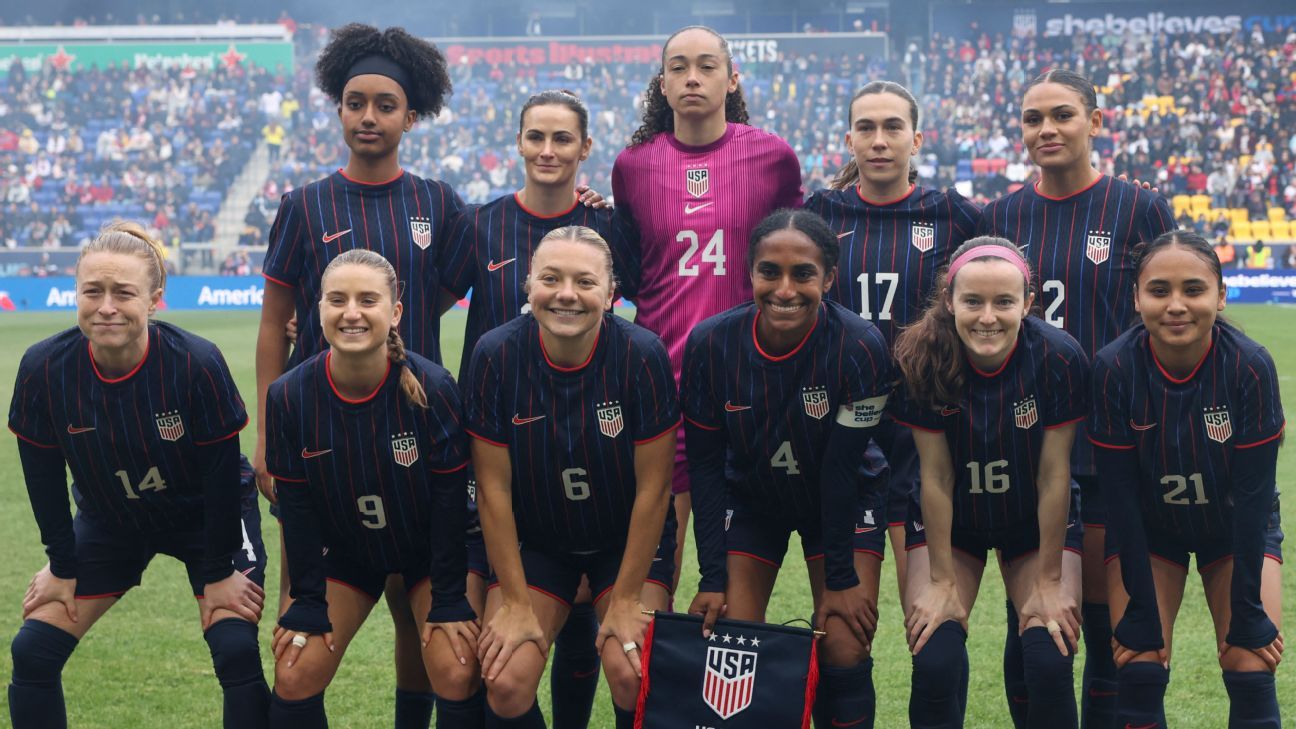
While the 2027 Women’s World Cup may seem distant, it’s approaching faster than anticipated.
Following the U.S. women’s national team’s victory in the 2026 SheBelieves Cup, head coach Emma Hayes has only six international windows remaining before she must finalize her World Cup roster.
In recent months, Hayes has started to refine the USWNT player pool. As she and her coaching staff fine-tune their strategies, a significant question looms over the next 15 months: Who will be Hayes’ starting lineup when the tournament begins in Brazil?
Over the past year, Hayes has introduced an unprecedented level of experimentation, with 32 international debuts in her first 32 matches in charge, far exceeding any other USWNT coach in that timeframe. This makes it increasingly challenging to ascertain her preferred lineup.
We are prepared for the task, but first, a note on nuance: A “preferred” lineup raises the question, “Preferred against whom?” Hayes emphasized this last week, discussing the need to prepare this new group of players for “tournament football,” where victories must be achieved through various approaches.
– USWNT clinches SheBelieves Cup title with Alyssa Thompson goal
– Kassouf: Hayes’ vision for the USWNT in the 2027 World Cup is becoming clearer
– Women’s Asian Cup insights: Why North Korea’s Choe is a player to watch
“What I understand is that we need to continue building our connections as much as we can,” Hayes stated on Friday. “I’ve made it clear this year that, especially during three-game windows, there will be, in a sense, two teams that will play — perhaps not all the time — but to allow us to develop connections among a group of players over two games; in one group, during one of the games. That, for me, is the greater priority.”
The group stages of the World Cup typically showcase a diverse range of opponent qualities and styles, necessitating planned rotations within those matches. A “strongest” starting lineup will have different meanings against varying opponents. For instance, a group stage match against a lower-ranked team that is expected to defend deeply would require an aggressive midfield, while a game a few days later against a top-tier team might necessitate a double pivot and additional defensive support.
Those opponents will not be identified until at least the World Cup draw, which is anticipated to occur at the end of this year. Numerous developments are likely to unfold between now and the 2027 World Cup regarding the roster, including injuries, recoveries, and fluctuations in form.
With these considerations in mind, let’s explore what Hayes’ World Cup lineup might resemble in June 2027, based on everything we know about her selections thus far and the philosophies she has articulated to inform our hypothesis. To clarify, this is not a selection we would make — it reflects how we believe Hayes is approaching the situation.
Goalkeeper starter options: Phallon Tullis-Joyce, Claudia Dickey
The post-Alyssa Naeher era appears to be a competitive battle between Tullis-Joyce and Dickey. They have received approximately equal playing time over the past year, with Tullis-Joyce’s brief injury absence in the fall influencing their total caps.
This competition is far from settled, but Tullis-Joyce made a strong impression in her debut against Brazil and earned the start in the key match of the SheBelieves Cup against Canada. Hayes has noted the progress she has observed in Tullis-Joyce’s ball-handling skills and her leadership on the field.
Dickey is equally deserving of the starting position due to her remarkable shot-stopping ability (affectionately nicknamed “The Claw” by her Seattle Reign teammates) and could still secure the starting role. Based on available insights, Tullis-Joyce seems to hold a slight advantage.
Defender starter options: Naomi Girma, Emily Sonnett, Tierna Davidson, Emily Fox, Lilly Reale, Gisele Thompson, Avery Patterson
Assuming no injuries, Girma, playing center back, and Fox, at right fullback, are certain selections. Both are among the elite in the world at their respective positions.
The choice for the opposite fullback remains one of the significant uncertainties in this defensive lineup. Patterson possesses an exceptional blend of game awareness and athleticism and could still be the solution. Gisele Thompson shares similar qualities, along with the added dynamic of her unspoken connection with her sister, Alyssa.
However, Reale appears to have the upper hand for the position. She can also advance to support the attack like Gisele Thompson and possesses a robust defensive presence akin to Patterson. Reale excelled for Gotham FC last year, contributing to the team’s NWSL Championship and Concacaf title while earning NWSL Rookie of the Year honors.
A larger question arises regarding Girma’s central partner, and Davidson, who suffered an ACL tear nearly a year ago, cannot be overlooked in this discussion. The Girma-Davidson pairing was Hayes’ preferred choice (but for a minor injury to Davidson) during the 2024 Olympics, where the USWNT secured the gold medal. The challenge is that they have only played together once since then due to injuries, the most significant being Davidson’s torn ACL — her second in three years, which raises concerns.
Davidson has recently been reactivated by Gotham and reinstated as club captain ahead of the 2025 season. She is naturally left-footed and complements Girma well. Her health and durability will be critical factors, but she has over a year to reintegrate.
Meanwhile, the consistently reliable Sonnett continues to perform well at center back. It is entirely plausible that Sonnett could start alongside Girma at the World Cup.
Midfielder starter options: Sam Coffey, Rose Lavelle, Lindsey Heaps, Claire Hutton, Lily Yohannes
The peak season for Lavelle has been ongoing for the past year. If her current form — and, as always, her fitness — continues, she might be the first name on the roster. The USWNT lacks a direct replacement for Lavelle, who, as Canada coach Casey Stoney acknowledged after Wednesday’s 1-0 USWNT win, compels opponents to adapt.
Coffey is also a strong candidate for the holding midfielder position, whether in a double or single pivot. Her game is continually evolving alongside her leadership, and her recent transfer to Manchester City will only enhance her already impressive skill set. Together, Coffey’s deep-lying capabilities and Lavelle’s fluid attacking style create a complementary dynamic in the midfield.
The challenge lies in determining who will balance them out and how.
Heaps serves as the team’s captain and is its most seasoned player, whose technical and tactical insights remain underappreciated by the broader audience. She will be 33 when the World Cup begins, a relative outlier on a squad increasingly comprised of players in their 20s. There are legitimate concerns regarding her durability, but this is also why Hayes is focusing on building depth.
The Coffey-Heaps-Lavelle midfield remains a possibility. Yes, this trio was occasionally bypassed during the Olympic gold medal campaign. And yes, maintaining the status quo seems like an unusually cautious approach for a coach like Hayes.
However, two factors are relevant here: First, Hayes is likely to rely on veterans in key positions, a concept she has previously discussed. Second, increased depth means that Heaps (and Lavelle and Coffey, for that matter) should have opportunities for rest during the World Cup, particularly with a favorable draw.
 play3:05Is Lindsey Heaps USWNT’s most important player?
The “Futbol Women’s” team discusses Lindsey Heaps’ impressive performances thus far for the USWNT in the SheBelieves Cup.
Former USWNT coach Jill Ellis successfully implemented this strategy during the 2019 World Cup, rotating all 10 outfield players in the second group match to manage a roster of veterans and prepare for the knockout stage.
Yohannes, who will have just turned 20 before the World Cup, is the most technically skilled of the emerging midfielders. Hayes reiterated this past week the importance of developing player combinations in her game rotations, and Heaps and Yohannes, who are currently teammates at OL Lyonnes, naturally complement each other.
Yohannes is an exceptional talent with remarkable vision who is likely to be a starter for the next decade. Hutton, in a more defensively oriented role, appears to be another long-term midfield cornerstone for the USWNT. Both Yohannes and Hutton seem poised to start some matches at the World Cup when the situation calls for it.
Forward starter options: Trinity Rodman, Alyssa Thompson, Catarina Macario, Sophia Wilson, Mallory Swanson, Ally Sentnor, Jaedyn Shaw
[Deep breath] Decisions regarding the forward line are why Hayes commands a significant salary (the “highest-paid women’s soccer coach in the world,” according to U.S. Soccer at the time of her hiring; over $1 million annually, as reported at that time).
Wilson and Swanson are currently in their return-to-play protocols after childbirth, and the self-styled Triple Espresso — with Rodman now back on the field following injuries — could be reunited by 2027. Surely, Hayes will desire that, correct?
Yes … and no. Hayes cannot overlook that Alyssa Thompson is her most reliable, in-form winger, having recently split her time between excelling in the NWSL and Women’s Super League over the past year. The 21-year-old possesses an undeniable ability to take on defenders with speed and exploit transitions. She is currently indispensable.
Rodman, provided she remains healthy, is similarly exceptional. She brings an element of creative flair and confidence to the team, serving as a catalyst at any moment. She has an innate ability to find the back of the net.
This leaves the No. 9 position open for competition. Macario made her case for it in 2025, but Wilson will do the same this year as she returns from maternity leave. Who secures the World Cup starting position will reflect more on Hayes’ tactical preferences than on either player’s abilities.
Macario is a false 9 who excels at combining play, while Wilson will stretch defenses and challenge defenders. One may be more suitable for a specific opponent, while the other might be advantageous in a different match.
The positive aspect of such a scenario? Consider the impact of bringing any of Swanson, Wilson, Macario, or Alyssa Thompson off the bench. Additionally, Shaw and Sentnor can each operate across the front four positions.
The USWNT’s World Cup lineup(s)
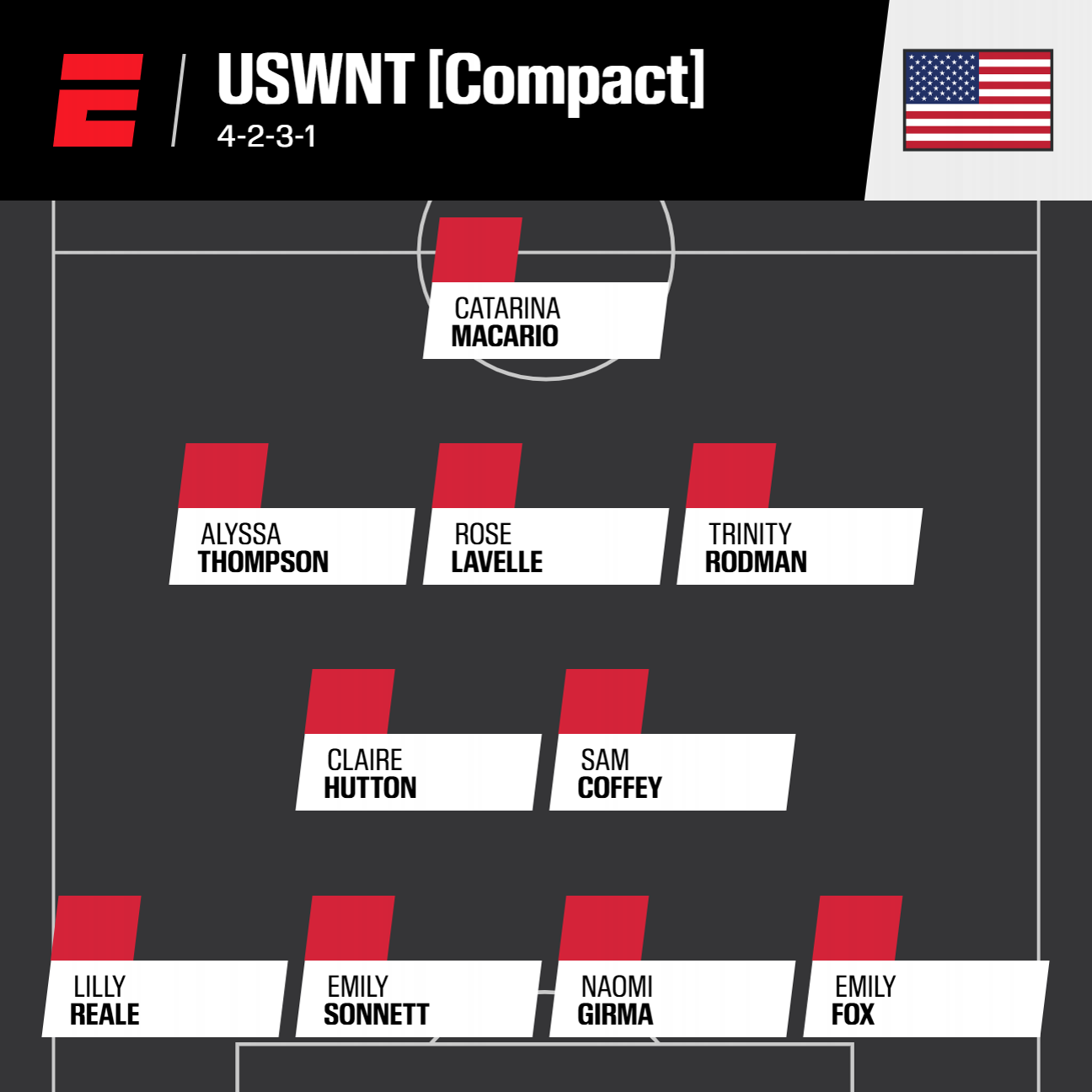
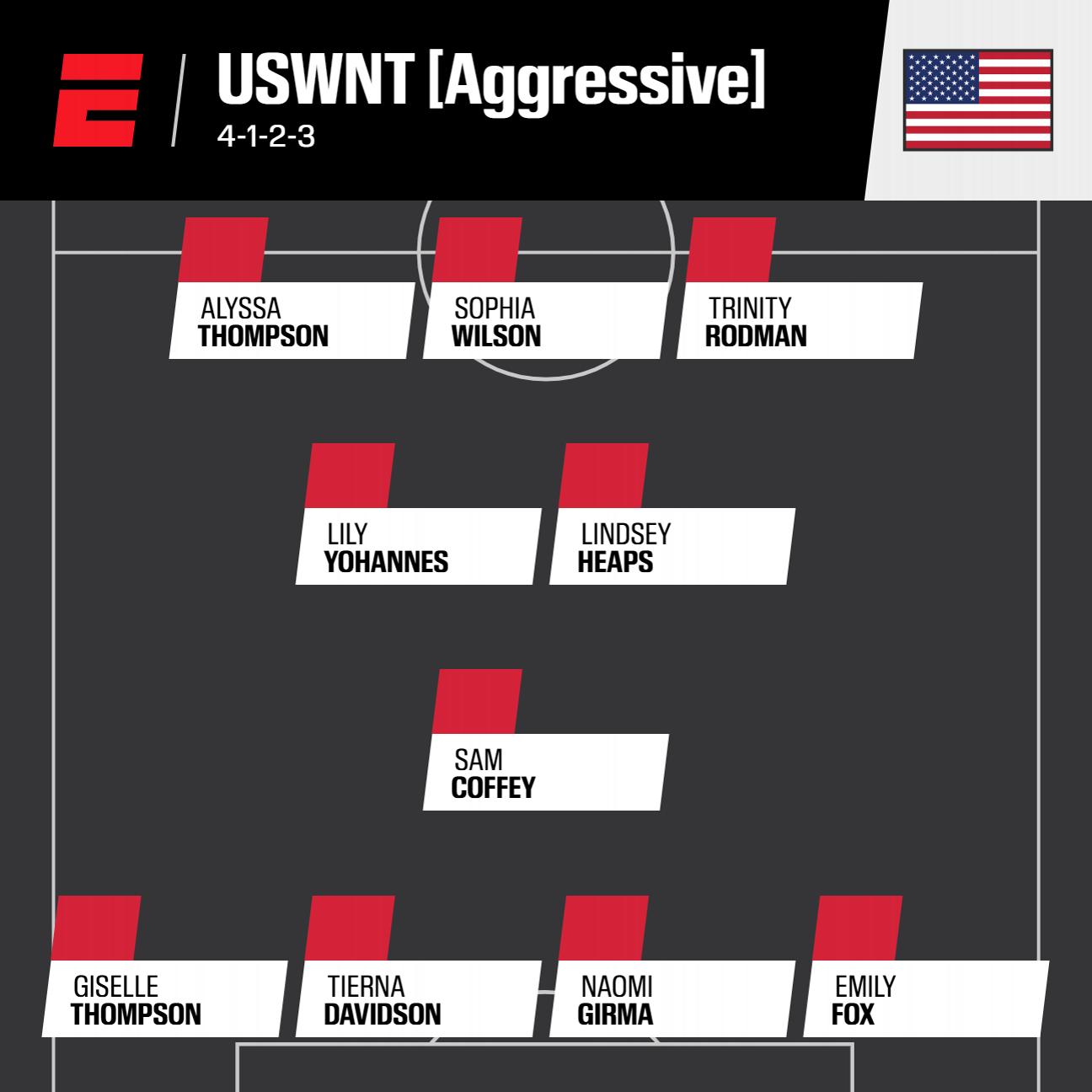
So, what does all this imply for the World Cup?
The USWNT’s “best XI” is more about identifying the right combination for the right match from a pool of around 15 players.
You can observe our predictions for what the lineup might look like if the USWNT adopts an aggressive approach (as it did recently against Argentina), and if Hayes feels the need for more defensive support in a tougher match — two recent fixtures against Canada serve as concrete examples.
In the aggressive model, Yohannes has the freedom to distribute and act as a playmaker (as she did against Italy recently) without the USWNT being overly concerned about counterattacks.
In the more compact model, Hutton and Coffey form a double pivot with Lavelle as the playmaker (a relatively common combination over the past year), Reale takes on a more conservative fullback role, and Alyssa Thompson and Rodman are tasked with making runs behind as Macario draws defenders out of position.
Regardless of the strategy the USWNT chooses, expect Tullis-Joyce to be the starting goalkeeper.
