
Following the turmoil under Amorim, Carrick has restored stability at Manchester United.
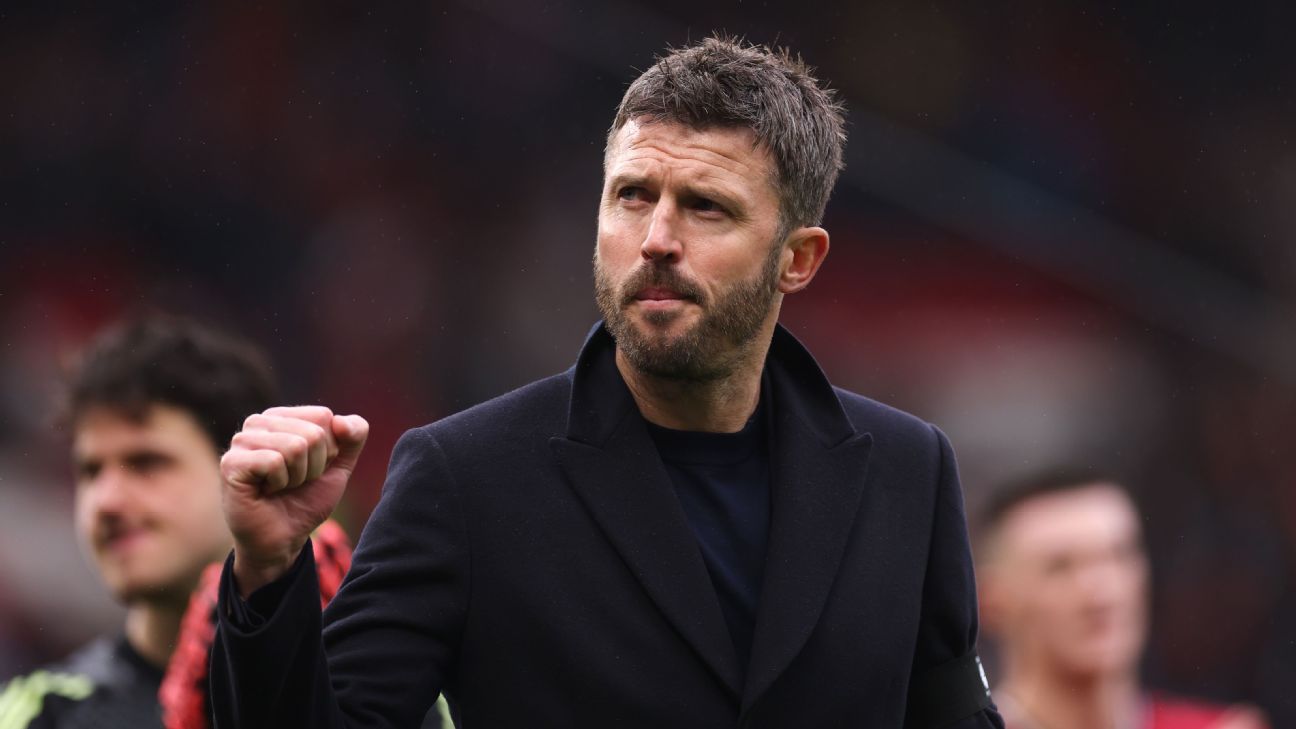
Following his fourth consecutive victory — a 2-0 win over Tottenham Hotspur on February 7 — Manchester United head coach Michael Carrick entered the interview area adjacent to the tunnel at Old Trafford with a bright smile. Having already spoken to the same broadcaster twice earlier in the day, the former Manchester United midfielder, appointed as coach until the season’s conclusion, humorously remarked that he was surprised “there were any questions left.”
Four wins and a draw from his five matches have been a welcome change for United since Carrick’s arrival on January 13, but the sense of calm has also been appreciated. There were always inquiries directed at former manager Ruben Amorim during a tumultuous 14 months in charge, many of which were challenging to address. In contrast, Carrick has introduced a sense of serenity.
Results have certainly contributed, but he has also made efforts to stabilize the situation in other ways. By the conclusion of Amorim’s tenure, club executives began to feel uneasy whenever the Portuguese coach was about to speak. With Carrick, there are no such concerns. He has not issued any demands to the owners for additional support, nor has he publicly criticized any players. Any potentially contentious issues regarding team selection or United’s performances have been skillfully avoided.
In accordance with Carrick’s vision of United’s principles, players have been reminded that it is a privilege to represent the club. This was a sentiment he experienced during his 12 years in the heart of United’s midfield. Although he has provided the squad with a fresh start — particularly beneficial for players sidelined by Amorim, such as Kobbie Mainoo — he has also emphasized the necessity of taking accountability for past actions.
Carrick previously served on Ole Gunnar Solskjaer’s staff at United and felt a sense of loss when the Norwegian was dismissed in November 2021. When he briefly took charge as interim manager for three matches, he advised the players to first reflect on themselves, and he has adopted a similar mindset in his current role.
He secured the position partly due to his composure during discussions with CEO Omar Berrada and director of football Jason Wilcox. Sources indicated that while it was evident he desired the opportunity, he did not appear desperate for it. He remained reserved during negotiations, and even when his candidacy became known, close friends noted that he “went quiet” in their WhatsApp groups.
After departing Middlesbrough in the summer, Carrick remained active with his charitable foundation and work as a pundit. He was scheduled to appear as a television guest for the Manchester derby but had to cancel abruptly when it was confirmed he would be on the touchline instead.
Some individuals close to Carrick believed that the United position was the only coaching role that would compel him to return to the sport full-time, especially after showing apparent disinterest in discussions with Wolves when they sought a new manager in November. For many players who were part of successful squads under Sir Alex Ferguson, the opportunity to return is too appealing to decline.
– Wright: Is it happening again? Arsenal’s stumble in title race follows familiar pattern
– Hamilton: Soccer managers’ latest source of inspiration? The rugby pitch
– O’Hanlon: The Premier League’s best and worst players at different skills
Carrick is an independent figure, although much of his conduct is influenced by Ferguson. What occurs in the dressing room remains confidential, and he has reinstated a focus on the academy.
One of Carrick’s initial actions upon assuming the role was to inform a select group of academy graduates that they would be permanently joining the senior squad for training. Under Amorim, young players often learned in the morning if they were needed to supplement the first team.
On one occasion, Bruno Fernandes approached Amorim and his staff to advocate for a young player to receive more chances. Such interventions are unlikely to be necessary under Carrick, who has taken it upon himself to quickly familiarize himself with which prospects are advancing well.
With a 12-day interval between the 1-1 draw with West Ham and the upcoming match against Everton on Monday, Carrick allowed his players some time off, but he was in Manchester during his weekend break observing two United youth teams compete against Manchester City at the City Football Academy on Saturday morning. Dressed in a long black coat and sunglasses, he watched his son, Jacey, play for the under-16s before engaging in an extended discussion with U18s coach Darren Fletcher after their 3-1 victory on a nearby pitch.
According to those within the club, Carrick has been so concentrated on the daily responsibilities that he has seldom ventured into long-term planning. For instance, he has not had discussions regarding the potential return of Marcus Rashford in the summer. The academy is an exception, as he views the promotion of youth team players as a vital club principle. Highly regarded winger Shea Lacey is among his preferred prospects.
Carrick has positioned United on track for European qualification after securing 13 points from a possible 15, with a return to the Champions League also within reach. In doing so, he has placed himself on a trajectory to be appointed as the permanent manager, although United remains committed to conducting a comprehensive recruitment process.
If results continue in this manner — beginning with Everton at the Hill Dickinson Stadium — the most challenging inquiries he will face will pertain to whether he anticipates securing the job on a full-time basis.
A different individual might complicate matters for the club with their responses in an attempt to increase pressure and expedite the situation. Berrada and Wilcox are unlikely to be worried — they already recognize that Carrick is not the type to create turmoil. After a tumultuous 14 months, everyone at Old Trafford is appreciating the tranquility.
