
Expenses for the 2026 World Cup: Potential costs for a USMNT supporter
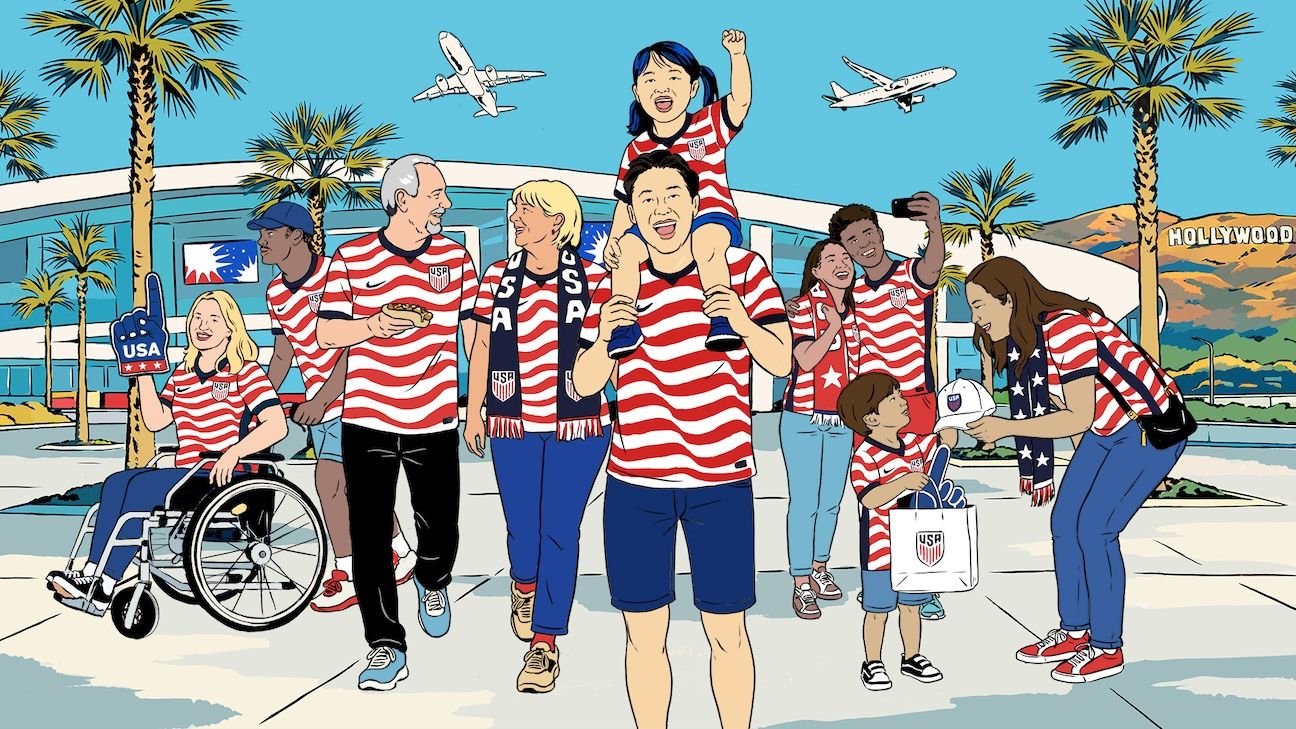
The 2026 FIFA World Cup is set to commence on June 11 in the United States, Mexico, and Canada. From the perspective of fans, a significant concern is the expense associated with attending matches. While ticket prices have garnered the most attention, they represent just one aspect of the overall cost: supporters are also apprehensive about the affordability of accommodations, transportation, concessions, and merchandise.
This prompts the inquiry: What might the total cost be for following a team throughout the World Cup? We sought to explore this through the lens of a hypothetical fan of the U.S. men’s national team residing in Los Angeles—arguably the optimal city for attending every USMNT match, given that the co-hosts will play at least two games there during the group stage.
The figures presented are illustrative rather than definitive—this is simply one of many possible scenarios for the U.S. in the tournament, and all prices are subject to change. However, examining the lower end of what this once-in-a-lifetime experience might cost, even under the best circumstances, highlights the financial accessibility (or lack thereof) of the World Cup.
Spoiler alert: It’s not an insignificant amount…
BEFORE THE WORLD CUP
The journey begins…
Your office reflects your passion. Christian Pulisic, Clint Dempsey, and Claudio Reyna jerseys adorn the walls. A half-filled Dos a Cero mug rests on your desk. Dominating the space is a framed 28 x 28 print of Landon Donovan drinking from a water fountain, signed by the entire 2002 World Cup squad.
You have long envisioned following the U.S. men during a home World Cup since childhood. Your parents attended the 1994 tournament, the last men’s World Cup hosted in the U.S., and still reminisce about witnessing the U.S. stun the world with a 2-1 victory over Colombia at the Rose Bowl—in those iconic denim kits, no less.
Although you reside in Los Angeles, the prospect of actually doing so seemed unattainable… until the results of FIFA’s random selection draw landed in your inbox in January. Tickets for every USMNT group stage match, including two “local” games at SoFi Stadium, home of the NFL’s Rams and Chargers!
You can hardly believe your fortune. However, as you begin to calculate the expenses, your excitement starts to wane.
You were aware of the ticket prices when you entered the draw—the most expensive ticket you requested was for the USMNT’s opening match against Paraguay at $1,120—but the total still amounts to a significant figure.
No matter. It’s the World Cup, and you’re committed to going regardless.
REALITY: Ticket sales and pricing have been a mess
Ticket prices exemplify the rising costs that have attracted the most scrutiny. The expenses for sporting events across the country have surged dramatically over the past two decades: a 164% increase since January 2000, according to the U.S. Bureau of Labor Statistics. In contrast, inflation has not kept pace, rising by 95% during the same period.
FIFA has released World Cup tickets in several phases, beginning in September. However, access to these face-value tickets has been limited, as fans needed to submit requests for the opportunity to purchase them. A random draw then determined which fans were granted the chance to buy tickets. In the latest sales phase, FIFA reported receiving 500 million ticket requests, while only around 6 million tickets were available for the entire tournament, indicating poor odds for a successful request.
Tickets are categorized into four tiers, with Category 1 representing the highest-priced seats and Category 4 the most economical. (Category 3 tickets, which are the most widely available at a reasonable price point, were utilized for this analysis.) In September, FIFA announced ticket prices ranging from $60 for the group stage to $6,730 for the final. However, the latest ticket release in December revealed higher-than-expected prices and no $60 tickets, leading to widespread discontent among fans.
In response, FIFA reduced prices for the most dedicated supporters, allowing national federations to distribute $60 tickets to some fans. Nevertheless, these tickets constitute a minuscule portion of the overall availability, and many fans remain dissatisfied. Recently, a European supporters’ group filed a formal complaint with the European Commission against FIFA regarding ticket prices.
It’s also important to note that these prices are a stark contrast to those at previous World Cups. For instance, during the last World Cup held in the U.S., Category 1 group stage tickets for the USMNT were available for $50 (equivalent to $112 today). The face value of the cheapest comparable ticket for the USMNT in 2026 is $700.
THE GROUP STAGE
The opening match
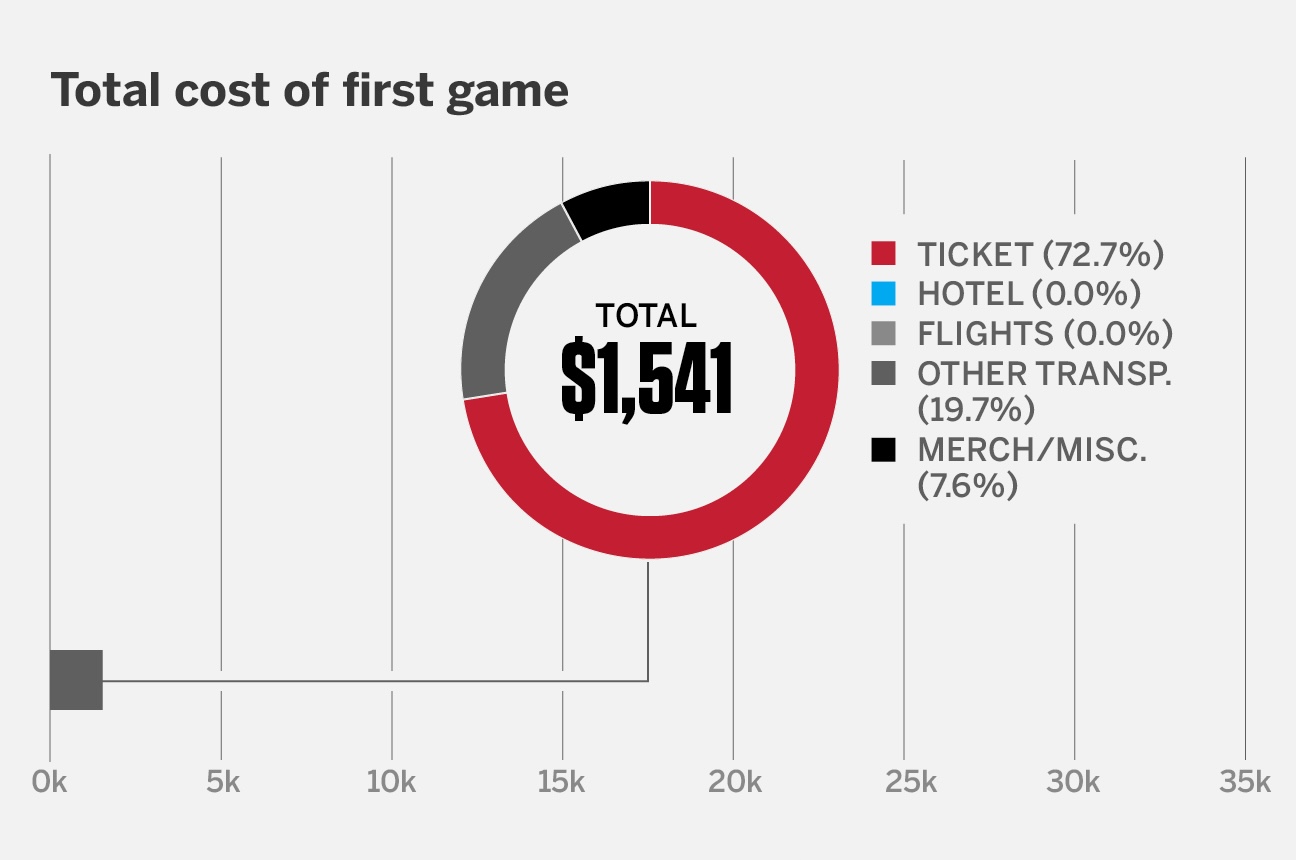
The months leading up to the USMNT’s opening match on June 12 pass quickly. Dressed in your newly acquired kit, you drive the 10 miles from your home to SoFi Stadium. It takes five attempts to fit your car into a spot at the crowded official FIFA parking lot. The parking pass cost you $300, and you still have to trek over a mile from your car to the entrance. But you consider it a minor inconvenience, a small price for peace of mind.
The atmosphere is electric. Outside the stadium, children are playing pickup soccer, and the enticing aroma of grilled burgers and chicken fills the air.
As for the match, Paraguay poses a tough challenge, but the U.S. is still favored. When striker Folarin Balogun receives a through ball and skillfully slots it into the bottom corner to secure the match, you jump to your feet. Chants of “USA! USA!” resonate throughout the stadium.
Final score: 3-1. It’s the World Cup, indeed.
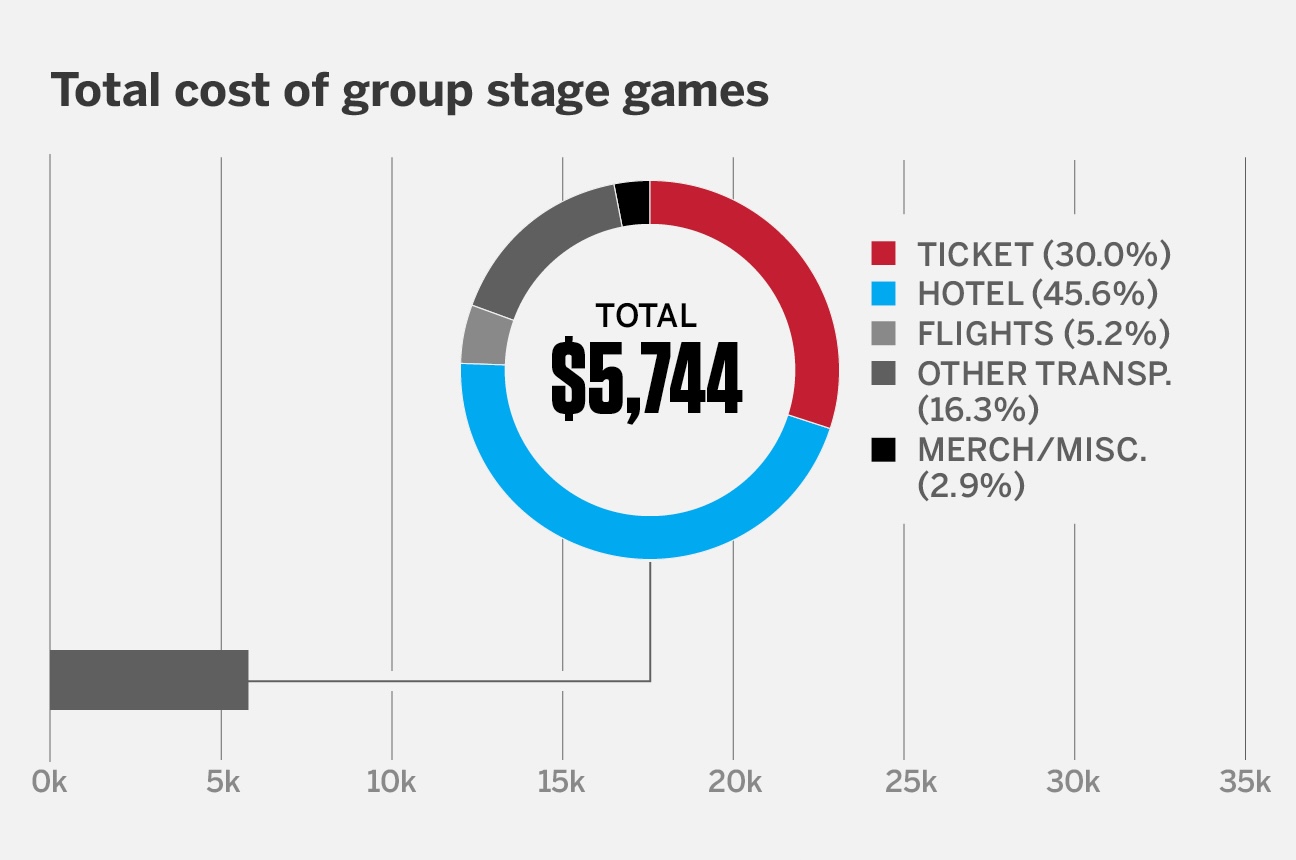
The United States’ second match takes place in Seattle, so you book a flight the day before the game and rent a car at the airport. You wish you had time to explore the area, but hotel rates near Lumen Stadium skyrocketed months before the World Cup, and you cannot afford to linger. At least the tickets were more affordable: just $265 through the draw.
You feel optimistic before the game—the U.S. triumphed over Australia in a friendly last October—and you can sense the team’s confidence as well, attacking the Socceroos swiftly and decisively. Center back Chris Richards stands out defensively, extinguishing any hint of danger. When the final whistle blows, signaling the United States’ 2-0 victory, the crowd erupts in unison. With six points from two matches, the USMNT has nearly secured first place in the group and a place in the knockout rounds.
On the flight back to L.A., fellow passengers break into one of the team’s signature songs, and you enthusiastically join in:
We love ya, we love ya, we love ya
And where you go we’ll follow, we’ll follow, we’ll follow
Cause we support the U.S., the U.S., the U.S.
And that’s the way we like it, we like it, we love it
Oh Oo-oh Oh-oohhhhhhhh!
REALITY: Prepare to be gouged on accommodations
Price hikes for hotels surrounding major sporting events are not a new phenomenon. Prior to the 2014 World Cup in Brazil, a study by the national tourism board revealed that many hotels increased their rates by 200% or more, with some reaching as high as 583%.
According to The Athletic, hotel prices in the 2026 World Cup host cities surged over 300% following the December draw that determined team placements.
The costs utilized for this analysis are averages from five hotels (three stars or lower) nearest to each host venue with availability on Google Travel as of February 17, based on two-night stays (from the night before the match to the day after). While more affordable hotels can be found within a reasonable distance, this method provided a consistent approach for comparing cities.
Planning ahead for the knockouts
Now that the U.S. has topped the group, you know where it will play in the round of 32. You felt it was wise to delay purchasing tickets and booking travel back in January, as the location would have changed had the U.S. finished second in the group. However, you are now feeling the repercussions as you browse FIFA’s official resale marketplace. Unsurprisingly, the price for the round of 32 tickets is more than triple what you paid for the Australia match through the draw.
You push those thoughts aside and enjoy the inconsequential final group stage match, a 1-1 draw with Turkiye back at SoFi Stadium. At $340, the ticket for this game almost feels like a bargain. But the focus is on how the USMNT performs from this point forward, and finally, the team has arrived.
REALITY: Secondary markets provide little respite
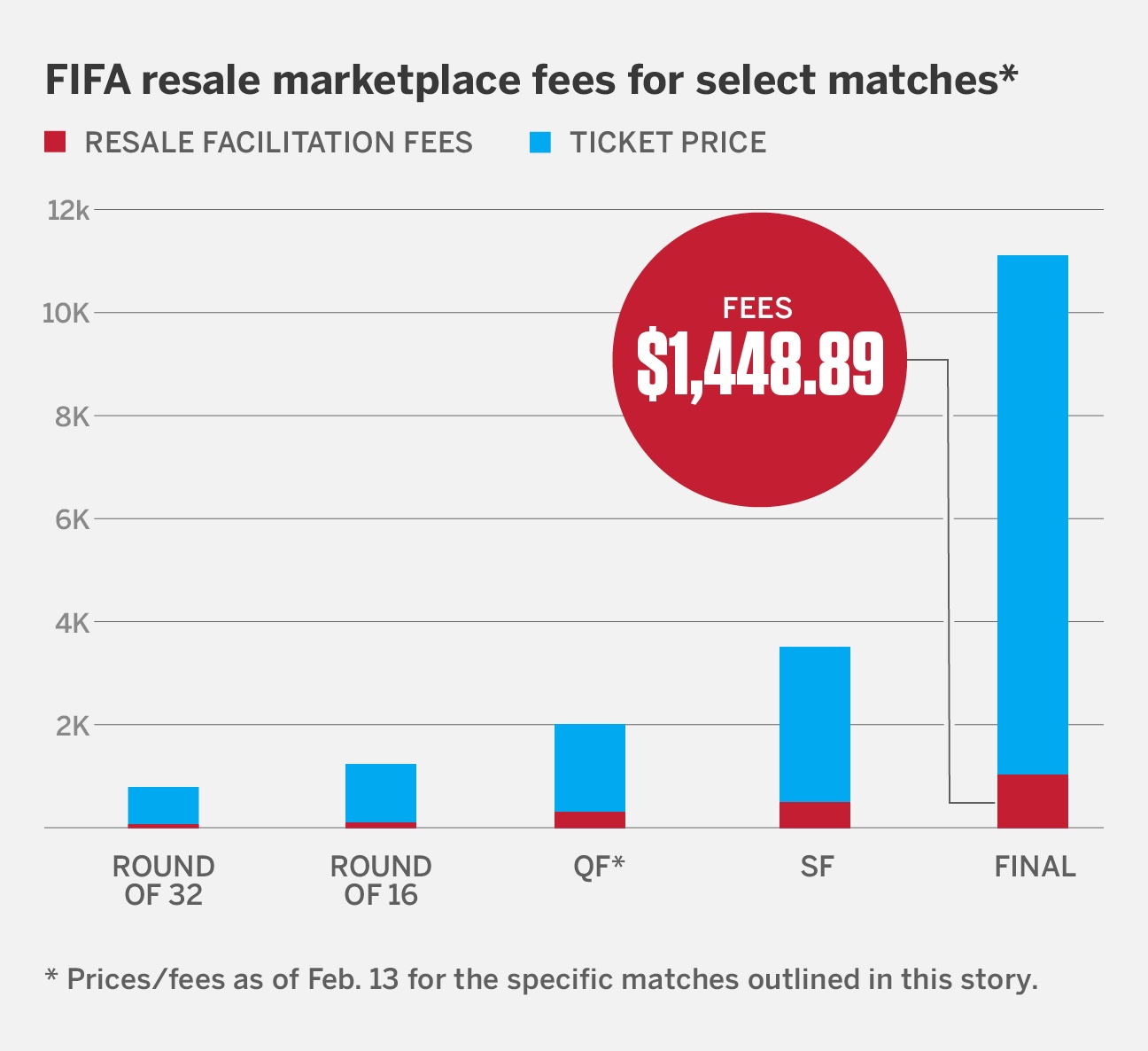
For many fans, secondary markets (also known as resale platforms) are the only means of obtaining tickets. In addition to sites like StubHub and Vivid Seats, FIFA has its own marketplace, which is currently closed (it will reopen on April 2). For the 2022 World Cup in Qatar, FIFA controlled resale prices and charged fees of no more than 5% or $0.50, whichever was greater. However, without any regulations in 2026, resale prices have soared, with FIFA charging fees of 13% or more to both buyers and sellers per transaction on its resale marketplace.
For this analysis, face-value prices were used for the group stage matches, while prices listed on FIFA’s resale marketplace as of February 13 were applied for subsequent rounds. It is reasonable to anticipate that if the U.S. starts strong in the World Cup, both interest and prices will increase.
“If the USMNT performs well in the group stage, it would likely drive up demand for the knockout-round ticket inventory tied to its path,” stated Keith Pagello, founder of the ticket price tracking platform TicketData. “Once the tournament begins and the U.S. appears to have a genuine chance to advance, it is likely that individuals who were not even considering the World Cup a week earlier suddenly become very interested.”
THE KNOCKOUT ROUNDS
U.S. finds its stride
The round-of-32 match against Switzerland a week later takes place at Levi’s Stadium in Santa Clara, California. You opt for the 5½-hour drive as your most economical choice. Gas prices have been elevated for months—over 25% higher than a year ago—but you are still saving hundreds.
Switzerland fields a talented squad, capable of defeating the U.S. 4-0 in a friendly last June, but this is not the same U.S. team. Despite the Swiss creating opportunities, goalkeeper Matt Freese remains resolute, and Balogun and Weston McKennie capitalize on two significant chances in front of goal.
Another 2-0 victory! Next up: a matchup with Belgium in the round of 16.
Despite Belgium’s experienced stars, led by midfielder Kevin De Bruyne, it becomes immediately evident a few days later in Seattle which team is prepared for the moment. Across the pitch, the Americans are winning battles and asserting themselves. Just like that, the U.S. has advanced to the World Cup quarterfinals for the first time since 2002.
The downside? Your funds are dwindling. What will you do now?
REALITY: Fly, drive or take a train? No perfect options
Transportation will consume a significant portion of any World Cup attendee’s budget. Planning to drive to a match? Parking at official FIFA lots can cost more than the tickets themselves at certain venues. Despite this, some lots are already sold out for major matches, including the final in New Jersey. The U.S. government announced in early March that $100.3 million in funding will be allocated to World Cup host cities for enhancing public transit. However, it remains uncertain how these funds will be utilized and how effectively the systems will function during the tournament.
The airfare used for this analysis consisted of the cheapest nonstop flights to the host cities available on Google Flights as of February 13, arriving the day before each match and departing the day after. Car rental rates from Kayak and average state gas prices were also included in the total transportation expenses.
Whatever it takes
During dinner, you present your case to your parents for a loan or an early Christmas gift. Surely they would understand your situation? What price would they assign to their memory of Earnie Stewart slipping the ball past Colombia’s goalkeeper back in 1994?
They are not particularly thrilled by your request, but by the end of the evening, you have secured enough to get you through the quarterfinal against Uruguay (along with 100 hours of scheduled yard work for August).
Fortunately, the match is in L.A. It feels surreal—everything is aligning for the U.S., and even from the upper levels of SoFi Stadium, you can see the radiant smile on Pochettino’s face. But how will you finance the next leg of your journey?
Sitting in your office, your gaze drifts toward the signed Donovan print. The thought is painful, but you recognize what you must do.
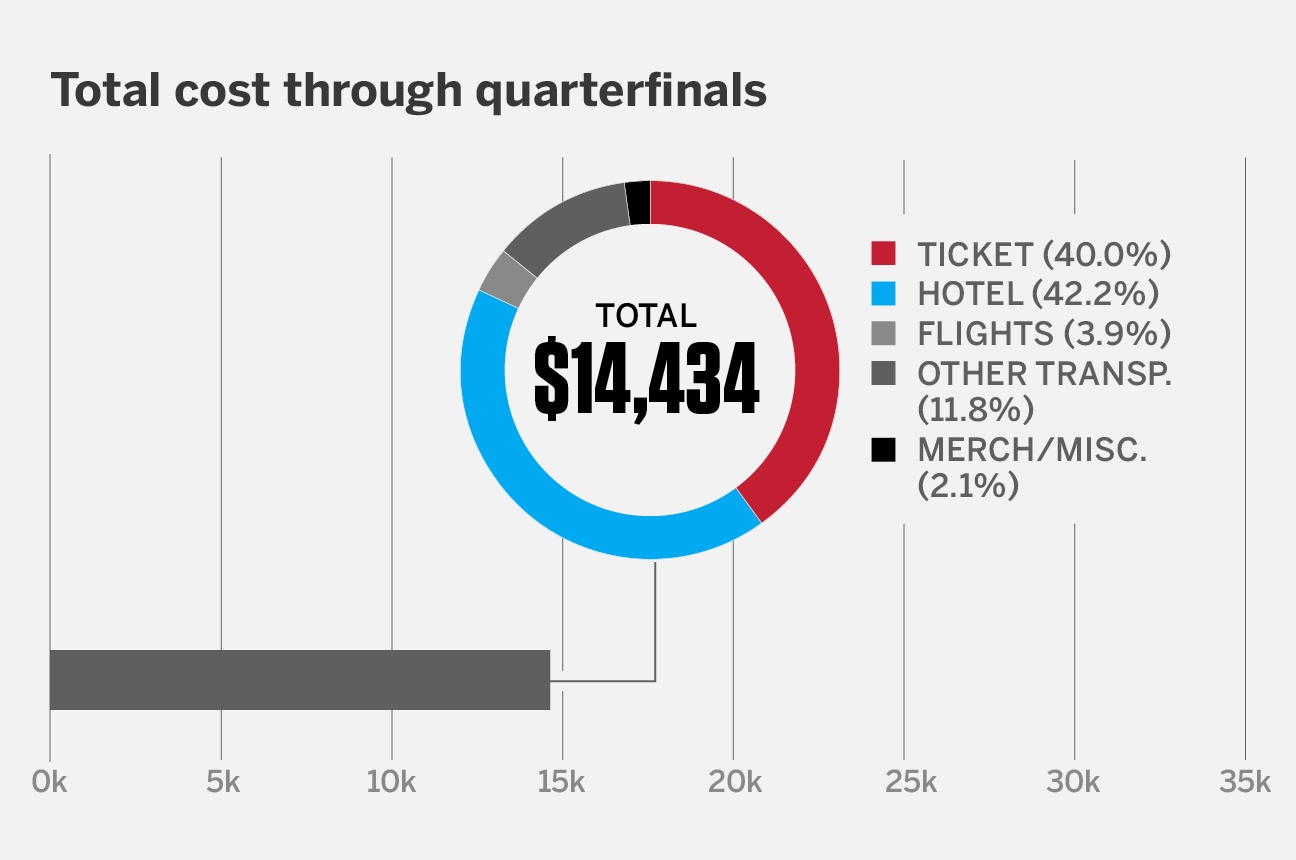
After a frenzied bidding war on eBay, you find yourself on a plane heading to the semifinal in Dallas. Should you question the judgment of someone willing to spend $6,000 on a photograph? Perhaps, but it’s not your fault that USMNT memorabilia is in such high demand.
By this point, you have developed a few slightly irrational game-day rituals. For instance, you always order the same items at the concession stand: hot dog, bottle of water. Nothing extravagant, but it has yet to disappoint.
REALITY: A concessions premium at big games
While concession prices overall have not experienced as dramatic an increase as other areas—an average fan at the 1985 MLB All-Star Game spent about $15 in today’s dollars on concessions, which is comparable to prices typically seen at NFL games today—they can escalate for major events. For instance, the cheapest alcoholic beverage at Super Bowl LX was canned wine ($16.50), hot dogs were priced at $15 each, and bottles of water cost $7. These figures served as benchmarks for this analysis.
United States vs. France
Facing the 2018 World Cup champion France and Kylian Mbappé, the U.S. appears outmatched. Didier Deschamps’ deep and talented squad controls possession, and Mbappé leaves center back Tim Ream behind in transition to put Les Bleus ahead.
Yet the U.S. continues to battle. You feel as though you are witnessing the culmination of all the generations of U.S. soccer that have come before this team—heart, determination, skill—and ultimately, it is Christian Pulisic who scores the equalizer in the 87th minute. Fireworks illuminate the night sky. Tears stream down the face of the woman next to you. The match proceeds to a penalty shootout, and when the decisive moment arrives, you are certain there is only one outcome for a team destined for greatness.
As for securing the funds to reach the final?
And where you go, we’ll follow.
THE WORLD CUP FINAL
Getting to the big game
For the first time this summer, you won’t need a car to reach the stadium. Trains and the subway will suffice to transport you from the airport to the city and then to MetLife Stadium, all for under $100.
When match day arrives, the streets of Manhattan are alive with red, white, and blue. The celebration begins the moment you step out of your hotel and continues through to the ultimate tailgate outside the stadium. On the concourse, you pause to purchase a keepsake. Over the course of your month-long adventure, you’ve acquired a few items—a hat here, a scarf there, in addition to the new kit. But for the final, it feels appropriate to buy a replica World Cup trophy.
REALITY: Kit price increase is speeding up
In the long term, when adjusted for U.K. inflation, kits have not become significantly more expensive—in 1992, replica Premier League shirts sold for around $89 in today’s dollars, similar to the $80 to $105 you might spend today. However, the increase has been particularly rapid over the past decade, with costs for adult Premier League kits rising 50.7% in ten years. (U.K. inflation has increased by 39.9% during the same period.)
It is not surprising that fans are drawn to the market for counterfeit shirts. Illegally produced fake shirts can offer savings of $50 or more. However, while the kits may appear superficially identical, the lack of regulation poses risks, such as the use of potentially harmful materials or the sharing of your personal information with unwanted parties.
The end of the road
You arrive at your upper-bowl seat and gaze down at the immaculate pitch. You capture a few photos of the view, sharing them with friends and family, and revel in the moment.
When you embarked on this journey, you envisioned creating memories from four games—five if you were fortunate. Now, the U.S. men are competing in the World Cup final for the first time ever, and you are about to witness it live. You are living the dream of every USMNT fan in the country… aren’t you?
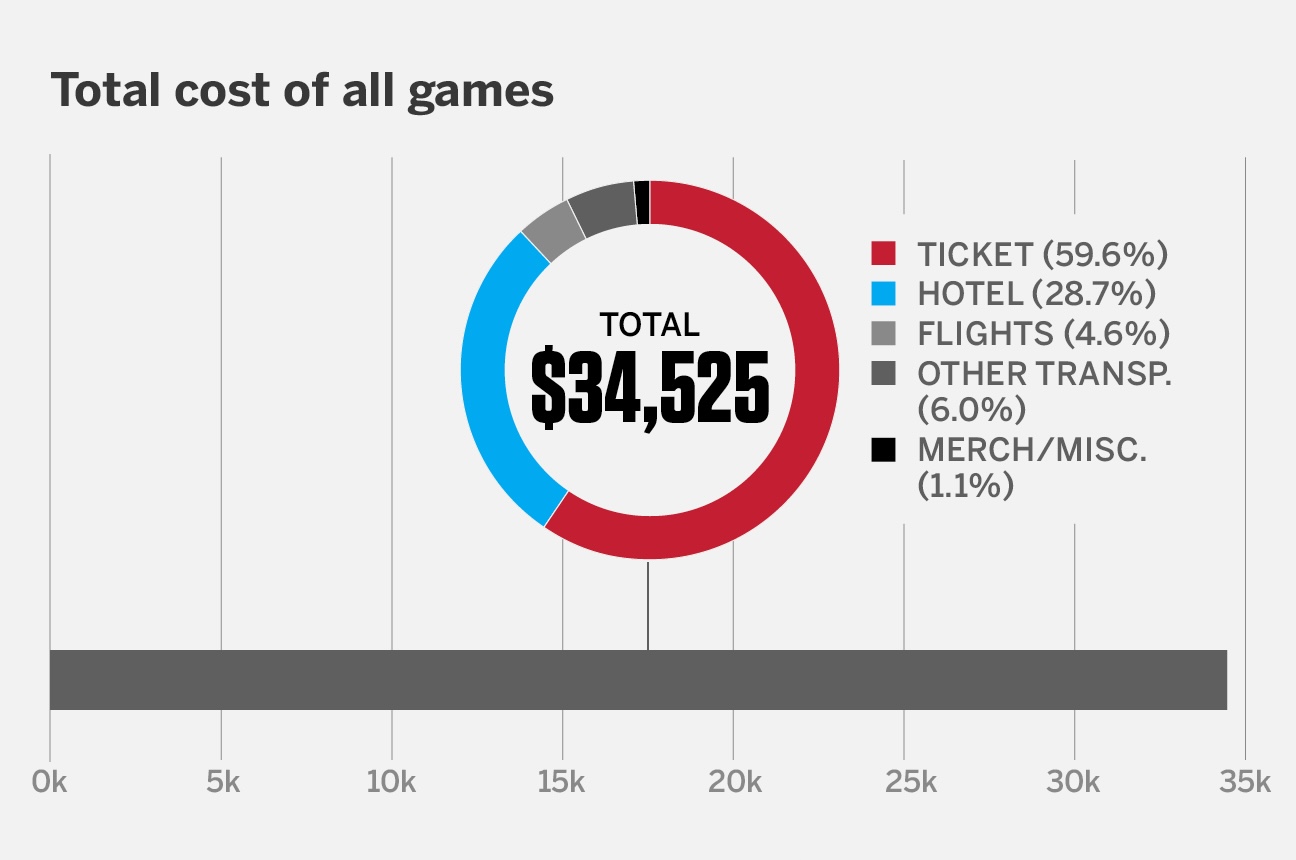
CONCLUSION
In total, the 2026 World Cup is poised to be the most expensive edition to
