
Can Mexico maintain their momentum from the March window heading into the World Cup?
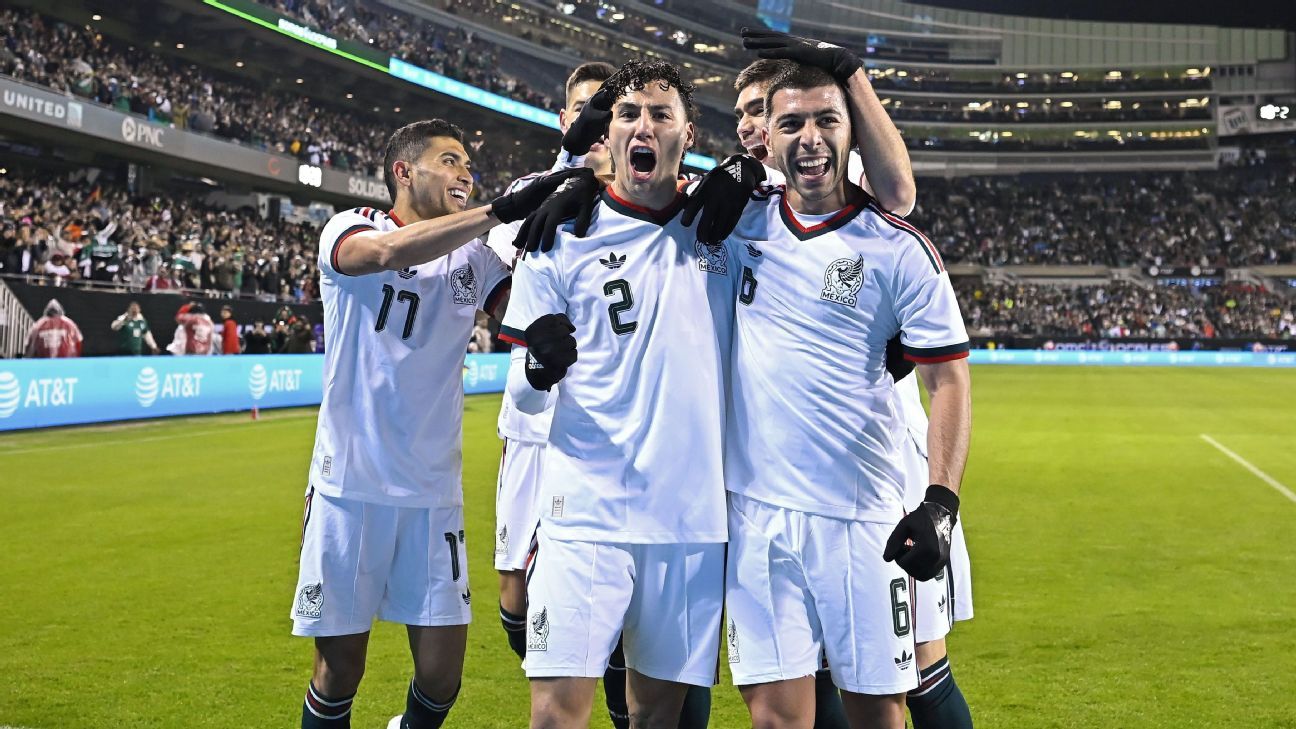
It is easy to overlook how bleak and tumultuous the situation appeared for Mexico just a few months ago.
El Tri concluded 2025 in a disappointing manner, enduring a troubling six-match winless streak that represented their worst performance in a decade. With the FIFA World Cup approaching, concerns began to mount.
“Crisis continues,” stated part of one headline.
“Mexico loses to Paraguay and also all of its credibility,” noted another, which went on to question whether this was the weakest national team in the last 50 years.
Typically confident, yet with a hint of seriousness, even the charismatic manager Javier Aguirre seemed subdued while speaking with the media after his last match of the previous year.
“You can never truly feel secure when you aren’t winning,” Aguirre remarked to the press during the winter. “Sometimes issues resurface, things you believed you had already dealt with, and a negative outcome makes you realize that you haven’t. We have not yet arrived at the point we aspire to reach.”
How swiftly circumstances can shift. Starting January with a 1-0 win over World Cup-bound Panama, Mexico has navigated away from their previously turbulent situation and initiated a five-match unbeaten streak in 2026. With a record of 3 wins, 2 draws, and no losses, along with a notable plus-6 goal differential in those encounters, El Tri is gaining momentum as summer approaches.
Admittedly, those two draws occurred during this March window against Portugal (0-0) and Belgium (1-1), but considering both teams rank in the top 10 of ESPN’s World Cup standings, these results still signify progress for the national team program—especially when evaluating Tuesday’s draw with Belgium.
Mexico outperformed their rivals with 10 shots to 5 (0.9 xG for Mexico, 0.3 xG for Belgium), secured more duels (54.4% to 44.9%), and generated more key passes (seven to two) than the European team, which appeared taken aback by El Tri’s intensity throughout the match. Had it not been for a spectacular long-range goal by Dodi Lukebakio, which accounted for Belgium’s sole goal, we would be discussing a historic achievement for Aguirre and his squad.
National media, once critical of Aguirre and El Tri, have also shifted their perspective. Ricardo “Tuca” Ferretti, a former coach of Mexico and current analyst on Futbol Picante, expressed admiration following Tuesday’s draw with Belgium.
“In the Javier [Aguirre] era, this is the best game that I’ve witnessed,” he stated.
It is worth noting that while comparisons can be imperfect due to roster changes, this is the same Belgium that recently defeated a fellow Concacaf rival, the U.S. men’s national team, 5-2. The U.S. subsequently lost to Portugal 2-0 on Tuesday. For Aguirre, avoiding such defeats and managing to keep pace with Portugal and Belgium are indicators of finally guiding his roster toward their desired destination.
“The team’s attitude was very positive … the camp was encouraging,” he remarked regarding the last two matches. “I am leaving [the March window] feeling satisfied.”
But what precisely has changed for Mexico in 2026? It is one thing to triumph over more manageable opponents like Panama, Bolivia, and Iceland earlier in the year, but how were they able to nearly outplay an elite team like Belgium and compete closely with a World Cup contender like Portugal?
Several factors can be highlighted here—one notable trend to observe in 2026 is a more tenacious Mexico that is winning more duels—but perhaps the most apparent factor in the recent window, and in general this year, is the opportunity afforded to alternate players. With injuries affecting multiple positions, the competition for World Cup roster spots has become more competitive.
Key internationals such as Edson Álvarez, Rodrigo Huescas, Mateo Chávez, Gilberto Mora, and César Huerta are recovering from short-term injuries, while players like Luis Ángel Malagón and Marcel Ruiz are completely sidelined due to more serious injury issues. While having a fully healthy roster is the ideal scenario, this situation has also prompted others to rise and take charge in their absence.
During both March matches, substitutes and newcomers such as Brian Gutiérrez, Erik Lira, Obed Vargas, and Álvaro Fidalgo performed admirably in their starting roles. Julián Quiñones, who has been in and out of Aguirre’s selections, was arguably the standout player against Belgium. Jorge Sánchez, who might be a No. 3, No. 4, or even No. 5 option at right back if the roster were fully fit, exceeded expectations in his start on Tuesday and opened the scoring with a goal in the 19th minute.
The list continues, and these players are motivated not only by the opportunity presented but also by the understanding that the latest international window served as essentially the final audition in front of Aguirre before he finalizes his squad for the World Cup. When asked after the Belgium match if he felt he had secured his place for the major tournament, the Spanish-born Fidalgo laughed in response.
“No, no, no, of course not,” he said. “There are truly significant players here. I must continue to perform well. At my club, I just need to keep playing. I have to keep improving.”
With 71 days remaining until their World Cup opener against South Africa, will El Tri continue to develop as well?
This will be the key question for Aguirre and his team as they refine their strategy for what could potentially be a bright and successful summer. In the tournament that they will co-host with the U.S. and Canada, the outlook is generally favorable for host nations of any World Cup.
The dark clouds of Mexico’s winter have dissipated. With some assistance from reinforcements, they have yet to return, for the time being.
