
Arbeloa’s overhaul of Real Madrid’s youth system mirrors Pep’s strategies.
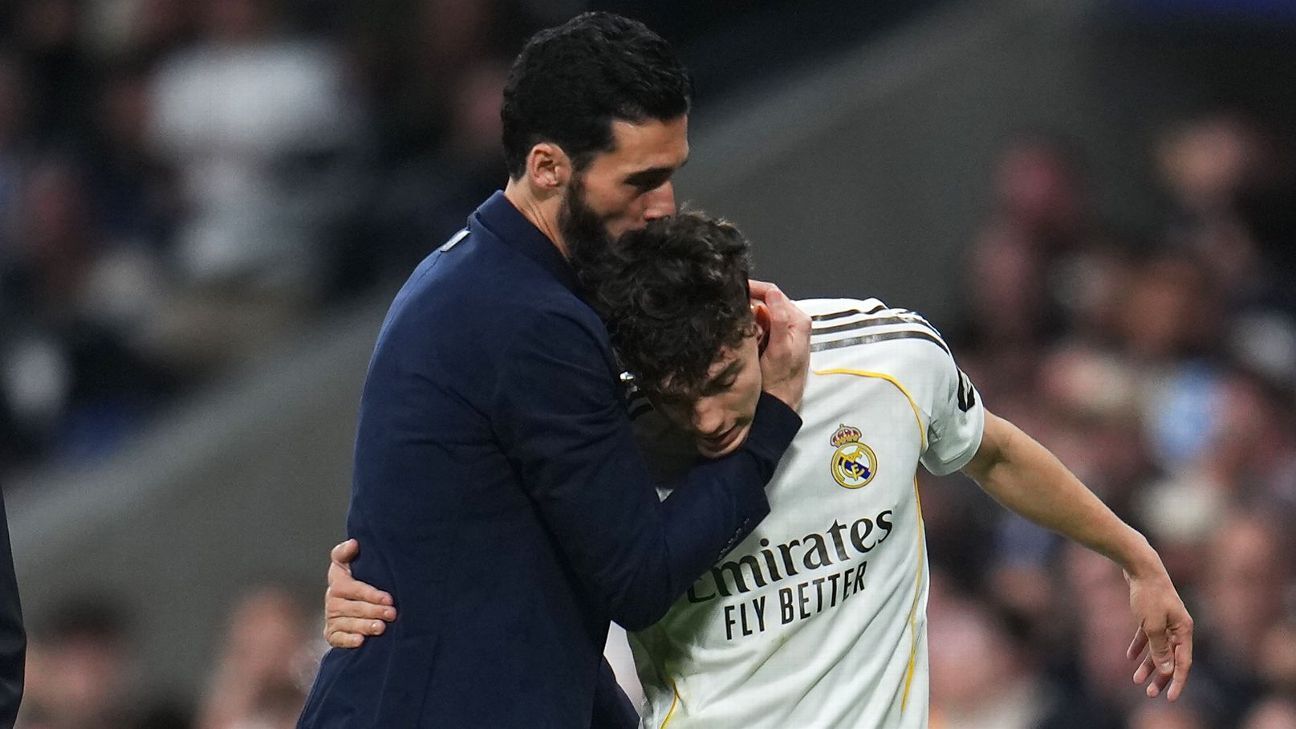
It is often said that a house is not truly happy until it hears the sound of little feet. In this context, casa Real Madrid is likely experiencing immense joy as they prepare for their UEFA Champions League second-leg match against Manchester City on Tuesday.
Coach Álvaro Arbeloa now finds himself overseeing a remarkable surge of young talent entering Real Madrid’s first team, a phenomenon not seen in recent memory. Remarkably, it has taken him less than nine weeks, rather than the typical nine months, to achieve this.
Los Blancos‘ ambition to secure LaLiga, along with their quest for a place in the Champions League quarterfinals, is being bolstered by a group of teenagers: Thiago Pitarch (18), Dani Yáñez (18), Jorge Cestero (19), Víctor Valdepeñas (18), and Diego Aguado (19). Additionally, César Palacios (21) and Manuel Ángel (22) have been promoted from the B team and made their debuts. These emerging talents join slightly more seasoned academy graduates Gonzalo García and Raul Asencio, who, while relatively new, have collectively made 123 first-team appearances and contributed 20 goals/assists.
– Arbeloa: Mbappé to travel for 2nd leg at Man City
– Real Madrid hail Güler’s ‘amazing’ goal from his own half
– Haaland is in a slump, and it has cost Man City the title
As a side note, although these rising stars did not originate from the academy known as La Fábrica (the Factory), Madrid’s first team significantly relies on 21-year-old Türkiye international Arda Güler (who recently scored a stunning goal from his own half), 18-year-old Argentine prodigy Franco Mastantuono, and 20-year-old Spanish international Dean Huijsen.
For decades, since Johan Cruyff took the helm at Barcelona, it has been the Blaugrana who have staunchly supported the philosophy of “if you’re good enough, you’re old enough.” Now, Arbeloa has independently instilled that same principle at the Santiago Bernabéu, coinciding with the 10th anniversary of Cruyff’s passing.
Moreover, poised to become “factory-produced” fixtures in the first team are Joan Martínez (19), Lamini Fati (19), and Jesús Fortea (18).
The last time anything resembling this occurred at Madrid is still regarded as legendary, dating back to 1983—almost half a century ago—when the Quinta del Buitre group emerged, marking a period when Madrid’s academy was arguably at its most powerful and prestigious in the club’s illustrious history.
The nickname was given to the group’s most famous and charismatic player, Emilio Butragueño: El Buitre, or “The Vulture.” The other four members included Miguel Pardeza, Manolo Sanchís, Míchel González, and Rafael Martín Vázquez.
During their remarkable era, the Vulture group secured 16 trophies, which included two UEFA Cups, six LaLiga titles—five of which were consecutive—three Copa del Rey trophies, four Spanish Supercopas, and one Copa de la Liga. However, among them, only Sanchís won the Champions League (twice).
Returning to the present and this season’s Champions League campaign, let me provide a glimpse of the excitement generated by the rise of these home-grown, all-Spanish, dynamic, and confident youngsters.
Pitarch undoubtedly stands out as the leader of this group. When he was substituted against Elche on Saturday in the 63rd minute, the Bernabéu erupted in unison, cheering for him. He has already captured their affection. When Yáñez cut in from the right and skillfully directed the ball onto Huijsen’s head for the third goal, the seasoned members of the first team surrounded the debutant, thrilled for his achievement.
Arbeloa’s remarks afterward shed light on the significance of this moment.
“For someone like me, who came through Madrid’s youth system and reached the first team… I think I can die happy thanks to a night like this,” he shared with RMTV. “After the match, I spoke with Yáñez and Aguado, who were the first players I began coaching in our academy when they were 13 or 14. To be able to give them their chance at the Bernabéu is a dream come true for me.
“Additionally, [Dani] Carvajal, the quintessential homegrown player, along with Fran [Garcia], Thiago, César, Gonzalo… the feeling is almost indescribable. I am incredibly happy and proud. It’s not just about including them, but also how they performed.
“It almost reminded me of what Real Madrid was like during that Quinta del Buitre era. I am certain Emilio [now Madrid’s vice president], who was present in the stands, is very proud of what he witnessed today.
“It is crucial to have academy graduates in the Real Madrid first team due to what they contribute. Not only talent but also the DNA they carry within them—what they impart to anyone who joins from outside our club. I hope that in the future, whoever occupies this managerial position, we will always see our academy graduates in the first team.”
What makes this particularly gratifying for Madridistas is that their talent pipeline had been dormant for years. Carvajal and Nacho made their definitive breakthroughs in 2013-14, but aside from Lucas Vázquez, no other youth-team graduate had established themselves as a genuine first-team player until now. This marks a span of 12 years with minimal returns.
Suddenly, Madrid has not only overturned that dismal trend but has also aligned with the youth revolution occurring across Europe’s top clubs.
In last season’s Champions League, Paris Saint-Germain’s Senny Mayulu became the youngest scorer in a final for 30 years, Arsenal’s Max Dowman made history as the Premier League’s youngest scorer, this season Kenan Yildiz, 20, was named Juventus’ youngest-ever captain, Lamine Yamal is breaking records for club and country at 18, and Lennart Karl has accumulated seven goals and three assists in 26 Champions League and Bundesliga matches at just 17.
It may seem absurd to refer to him as a “veteran,” having just turned 21, but Güler—who has been competing in continental football since he was 16—stated: “I may be shy and reserved off the field, but when we step onto the pitch, I understand that age is irrelevant.
“We are all equal there: teammates. I can’t quite explain what happens to me when I play, but I adopt a different persona—I enter warrior mode.”
Of course, this is not unfamiliar territory for Arbeloa’s opponent on Tuesday.
Pep Guardiola has similarly integrated youth talent, bringing Pedro and Sergio Busquets from Barcelona’s youth system into a Treble-winning season, consistently placing trust in young players up to the present day with Max Alleyne, Nico O’Reilly, Rico Lewis, and Savinho at City.
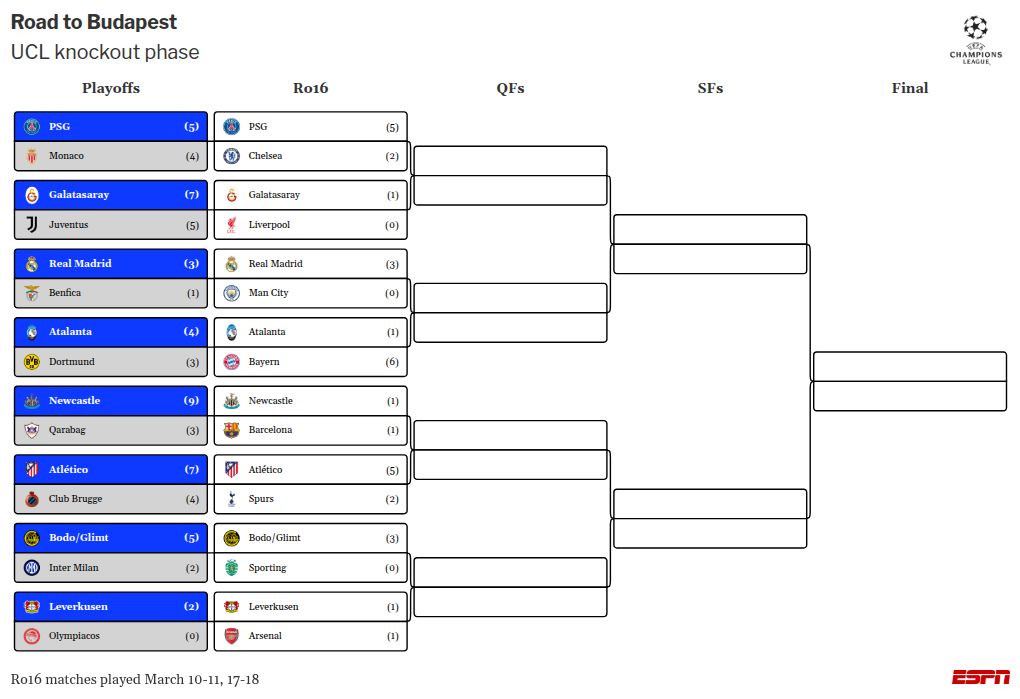
Victory, and a place in the quarterfinals, regardless of the age of those who achieve it, is the primary focus at the Etihad on Tuesday.
Now, however, Madrid approaches the challenge with a newfound, and perhaps unexpected, surge of youthful enthusiasm and confidence.
