
A three-man defense isn’t solely for protection: It could be exactly what your squad requires.
Week after week, Rúben Amorim deployed his Manchester United players in a 3-4-2-1 formation. Many viewed this as a misstep, and among the various criticisms of Amorim’s tactics, the notion that “it’s overly defensive” was prevalent.
This is a common critique associated with a back-three setup; with three center backs instead of the more standard two found in a back four, it is understandable how supporters might perceive a team as adopting a more defensive posture. However, this is not always the reality.
The past decade has provided numerous instances of teams utilizing a back three while being among the most offensive and dynamic in the game—one particularly notable example currently exists in the Dutch Eredivisie—and even Amorim’s United somewhat challenged this perception. In the 20 Premier League matches he oversaw this season, the Red Devils recorded the highest number of shots on target (109) and achieved the third-highest expected goals (xG) total (36.14) in the league, trailing only Arsenal (36.41) and Manchester City (38.02).
While Amorim’s team faced challenges, it is important to acknowledge that employing a back three does not inherently signal a commitment to defensive play; it can represent a daring and inventive tactical approach. Here’s why.
Wing backs are offensive, assertive, and challenging to defend against
A defining characteristic of the back-three formation is the inclusion of wing backs, a role that occupies a distinctive position in football tactics. Classifying them as defenders, midfielders, or forwards can be challenging, as they effectively fulfill all three roles simultaneously in one of the sport’s most intricate responsibilities.
Very few wing backs prioritize defensive duties. It has often been joked in scouting circles that every full back is a former winger who has been compelled to drop deeper on the pitch, but in an era of “inverted wingers” and wide forwards capable of scoring 40 goals a season, having a wing back who can enhance the attack is immensely advantageous, as their defensive responsibilities are frequently managed by others.
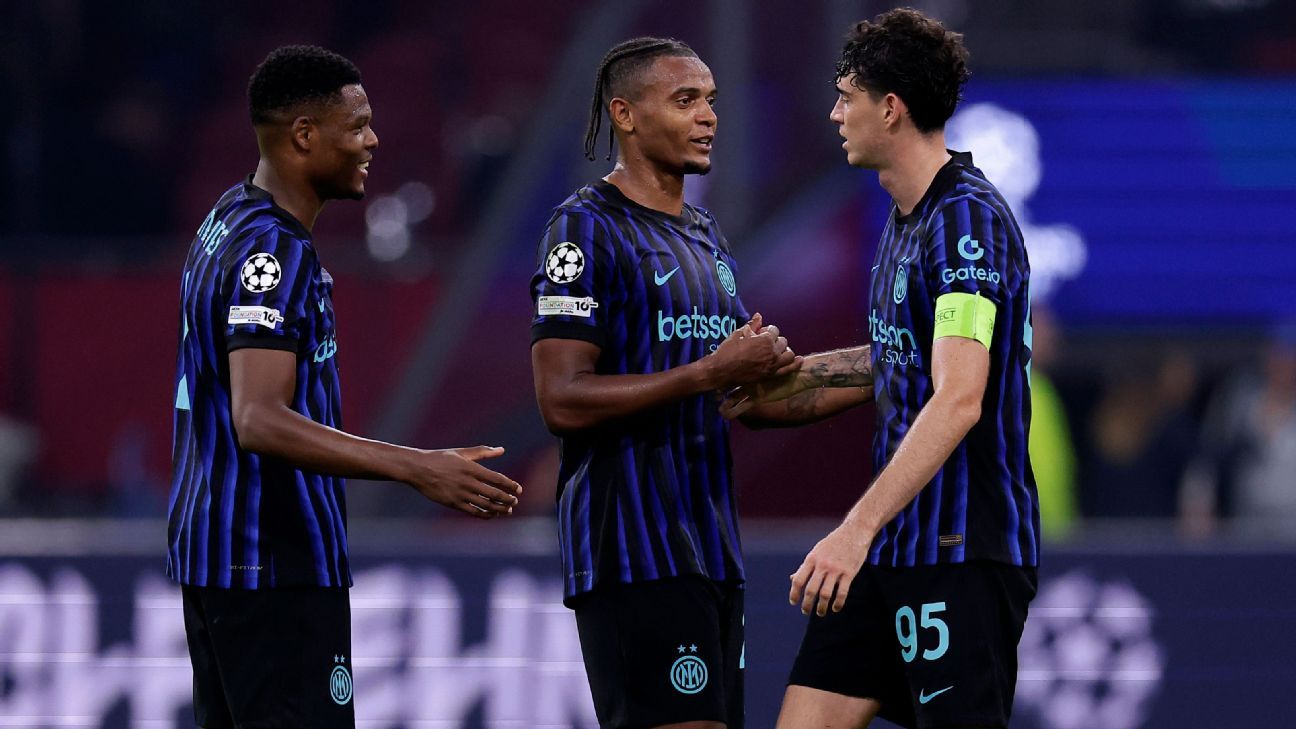
Consider Inter Milan’s pair of Federico Dimarco and Denzel Dumfries, for instance.
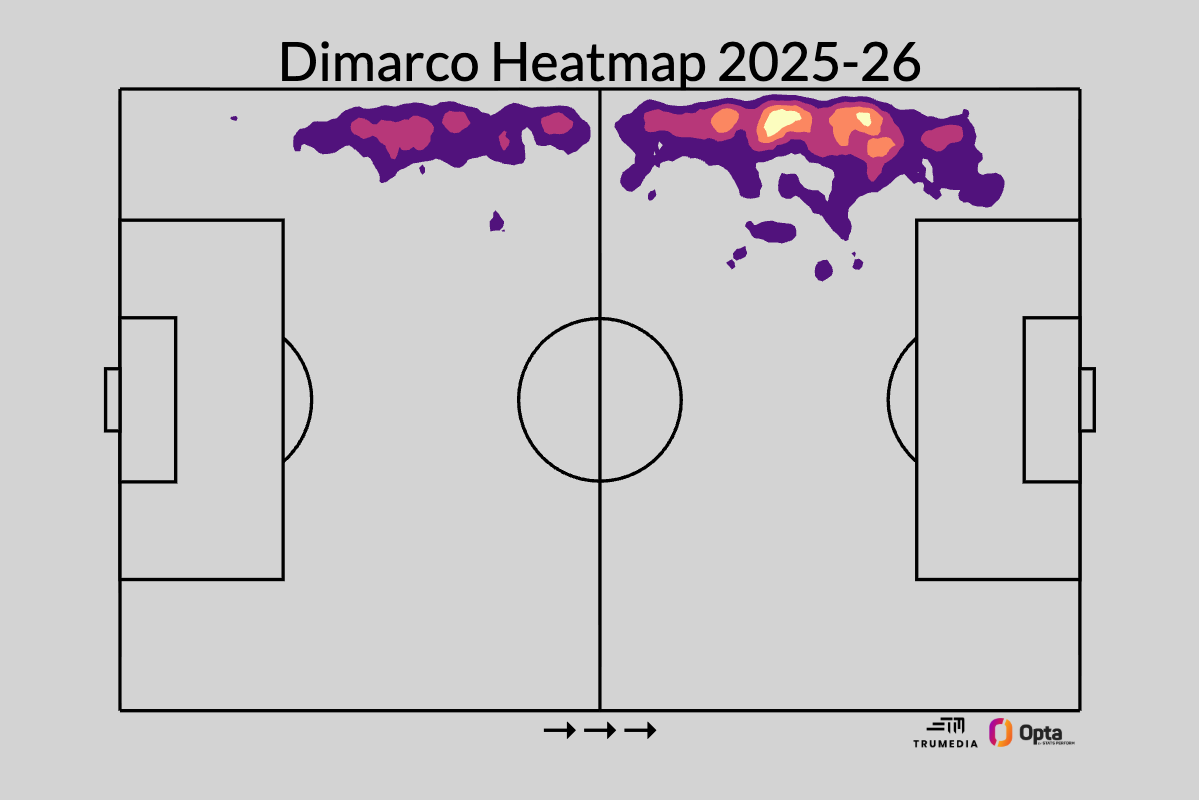
Dimarco, the left-sided wing back, has generated the most chances in Italy’s Serie A this season (76) and also boasts the highest Expected Assists figure (8.49), indicating the quality of the chances he creates, spending more time in the final third than anywhere else on the pitch.
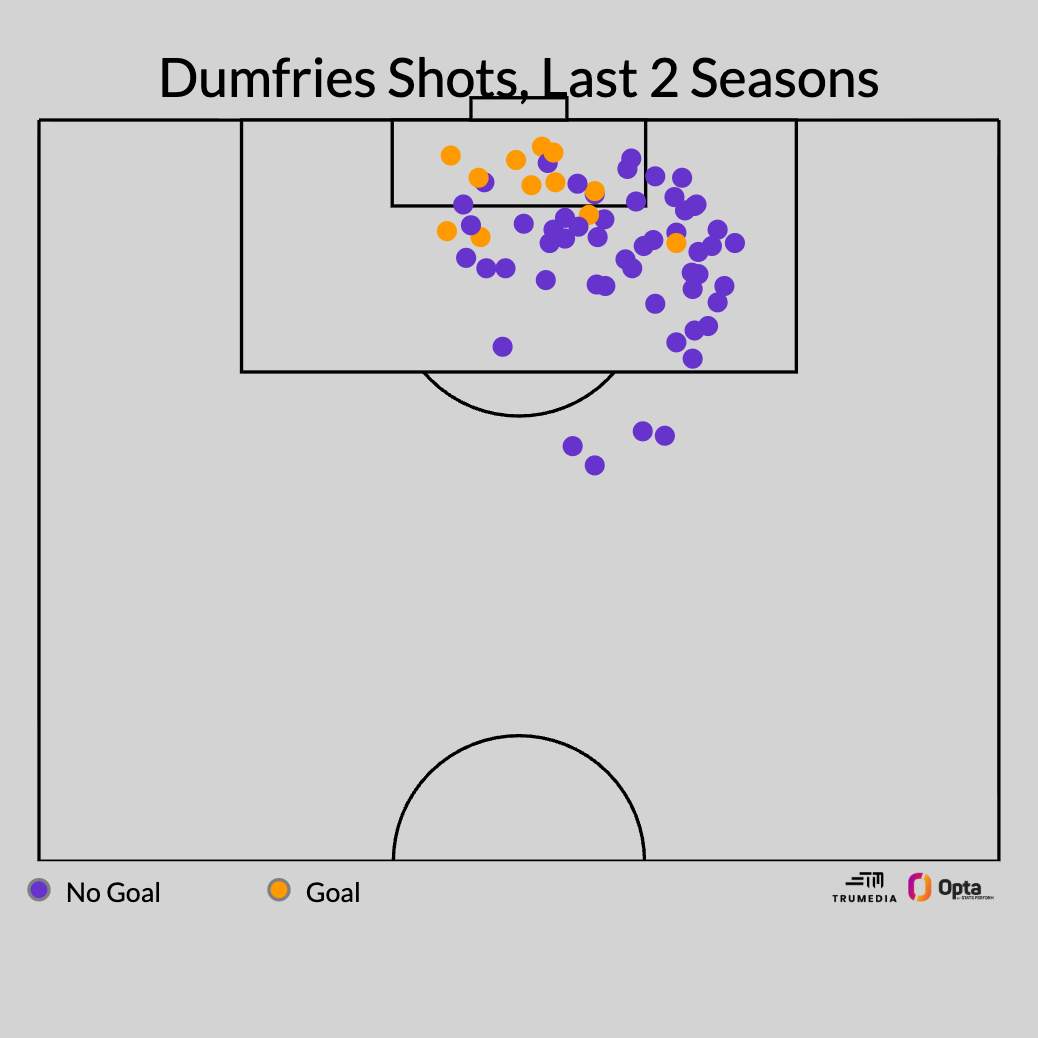
On the right, Dumfries operates like a forward who has been repositioned; he consistently penetrates the opponent’s box and poses a significant threat when arriving at the back post.
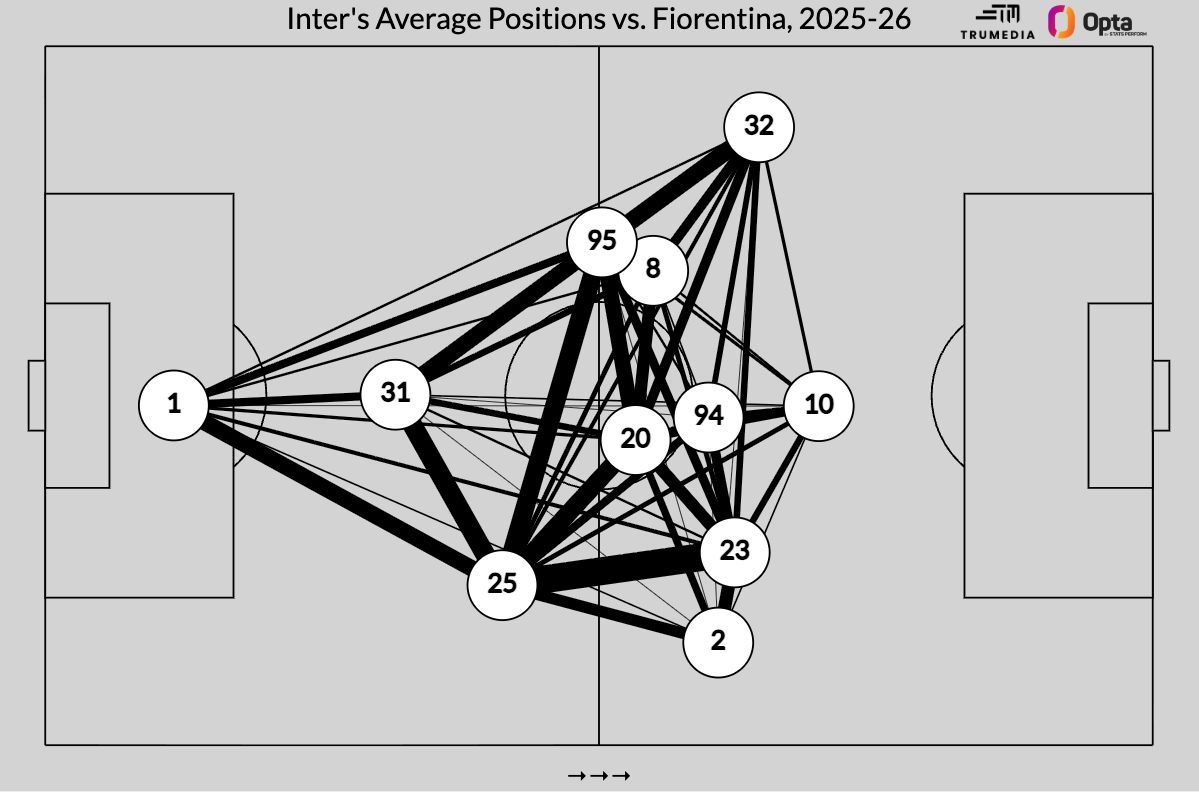
With both wing backs advanced, it is common for seven or eight of Inter’s players to register the majority of their touches in the opponent’s half, which would be atypical for most other teams.
Crystal Palace wing back Daniel Muñoz exhibits a similar style. He has contributed to 15 goals since the start of the 2024-25 season and, like Dumfries, can be difficult for defenses to track as he often receives the ball in the space between their defensive and midfield lines. Additionally, his remarkable speed and endurance enable him to tirelessly cover the touchline.
Certain coaches, including Antonio Conte and Simone Inzaghi, have acknowledged the intrinsic value of wing backs and utilize them whenever feasible. However, to maximize their potential, a back three must be employed, or the team risks being overly vulnerable defensively.
 play1:39Hutchison: Carrick has made a mockery of Amorim’s Man United
ESPN’s Don Hutchison believes Michael Carrick has made a “mockery” of Ruben Amorim’s Manchester United.
Center backs can advance into midfield
Utilizing a back three does not automatically imply an increase in defensive personnel within the lineup, however.
Some managers design their systems to enable one of the center backs to step forward and join the midfield during possession. Provided that this player is comfortable with the ball, they can create a numerical advantage in the center of the pitch (while two center backs remain to provide cover behind them).
Amorim has long advocated for this approach. At Sporting CP, he instructed Gonçalo Inacio to perform this role; at Manchester United, he tasked Lisandro Martínez, and later Luke Shaw, with similar responsibilities.
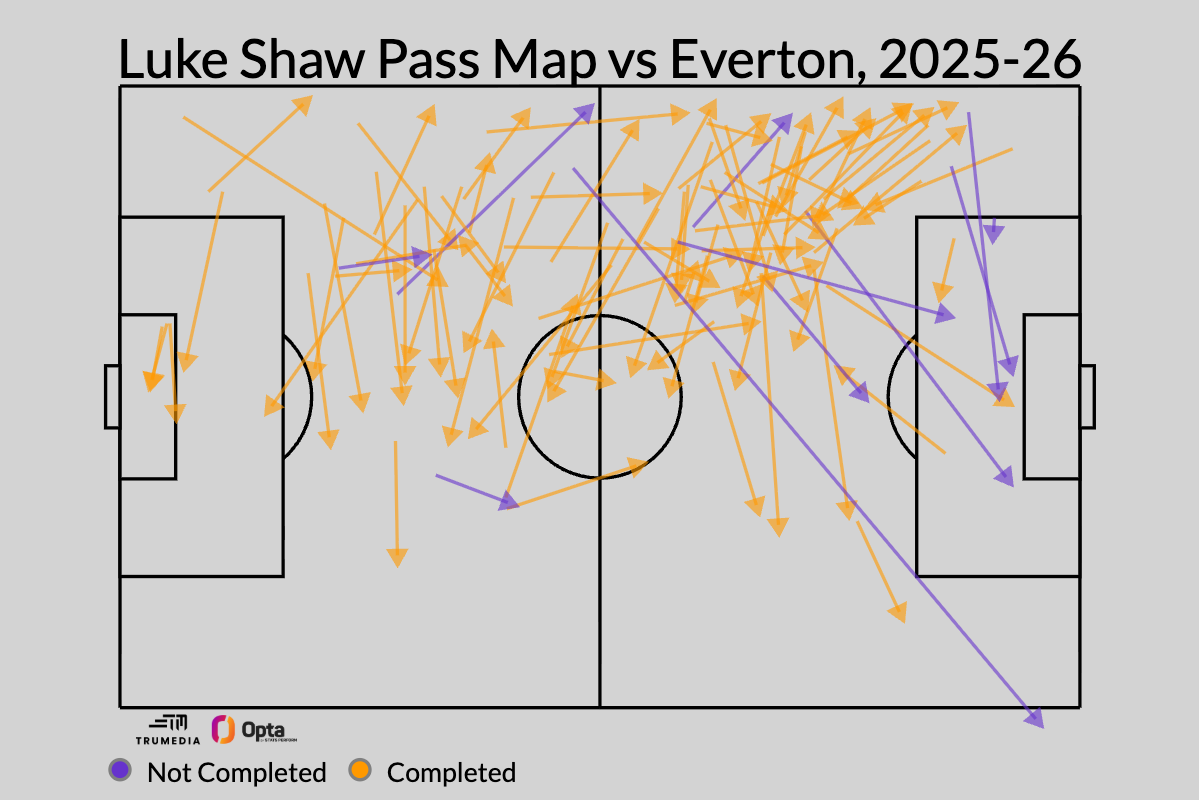
The pass map above illustrates the strongest cluster of passes originating from what effectively functions as a left center midfield—or even left No. 10—area on the pitch. A significant portion of the Red Devils’ passing volume flowed through Shaw (or Martínez) under Amorim, who advanced and positioned himself very close to Bruno Fernandes and others.
Atalanta’s Giorgio Scalvini has also executed this role from right center back in the past, while Borussia Dortmund’s Nico Schlotterbeck frequently dribbles into midfield from left center back, and Conte’s Premier League title-winning 2016-17 squad at Chelsea encouraged Brazil defender David Luiz to venture forward and influence play as he saw fit.
Nevertheless, the most compelling example of a center back advancing into midfield and transforming a team’s dynamics is John Stones’ role for Manchester City’s treble-winning squad in 2022-23.
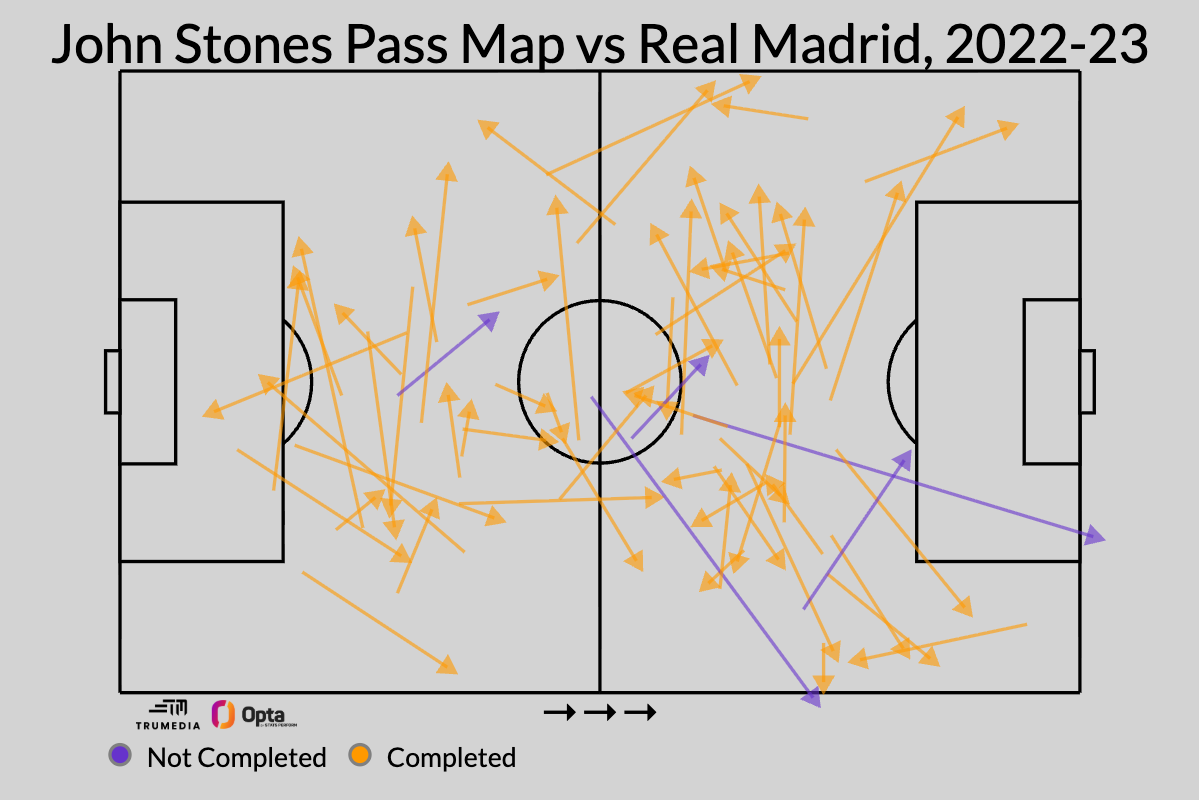
Midway through that season, Pep Guardiola discovered a tactical adjustment that no opponent could counter. He deployed four center backs (Stones, Rúben Dias, Manuel Akanji, and Nathan Aké) in the defensive line, then instructed Stones to join Rodri in midfield when the team was in possession. This, in turn, pushed Ilkay Gündogan up alongside Kevin De Bruyne, creating a 3-2-5 formation.
Stones’ responsibility was to recycle the ball high up the pitch, akin to a midfielder, while also forming a protective barrier with Rodri against counterattacks. This allowed Guardiola to utilize five players in attack, spread across the width of the field. A brief look at his pass map (above) against Real Madrid in that year’s Champions League semifinal might mislead one into thinking he played solely as a center midfielder … but that was not the case.
 play2:25Marcotti ‘really disappointed’ in Guardiola’s tactics vs. Real Madrid
Gab & Juls react to Man City’s 3-0 loss to Real Madrid in the first leg of their round of 16 Champions League clash.
Center backs can contribute to the attack
Some center backs even extend their influence beyond the central midfield areas, actively participating in the final third.
When Cristian Romero played in Serie A for Genoa and Atalanta, he frequently surged forward to join the attack. At times, he would find himself alongside the striker after a 40-yard sprint, seizing the opportunity to arrive unnoticed and create disruption.
Currently, you might observe Juventus’ Federico Gatti charging up the pitch in a similar manner—though not always from a back three, which adds additional risk to the maneuver—and then there is Inter center back Alessandro Bastoni, who is a reliable defender and an excellent long passer from the back, but also has the freedom to advance well beyond the midfield. In fact, the 26-year-old often overlaps with his wing back (Dimarco), receives the ball, and delivers crosses, or makes underlapping runs to enter the opposition box himself.
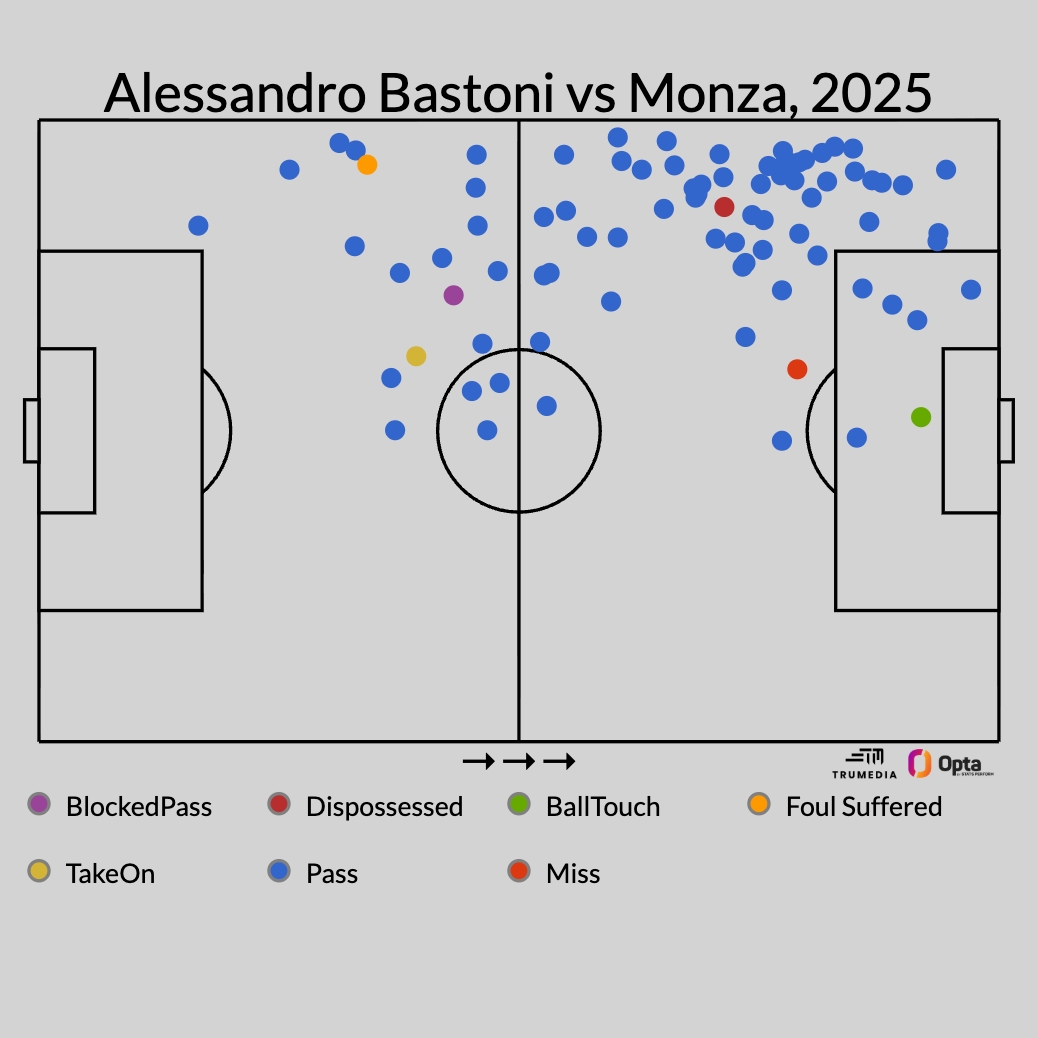
Bastoni has recorded an impressive 477 touches in the attacking third this season, ranking 19th in Serie A; he significantly contributes to the league’s most potent attack while also remaining crucial to a defense that has conceded just 23 goals in 29 matches.
However, if you find that impressive, prepare for NEC Nijmegen, who take it to an extreme.
NEC has a remarkable narrative. A historic, smaller club from the Netherlands that has never secured a major trophy, they currently sit third in the Eredivisie, surpassing giants like Ajax and other regular European contenders such as AZ Alkmaar and FC Twente.
They have achieved this position by playing the most audacious football seen this season. NEC builds from the back and attacks in a freeform style, with center backs charging up the pitch to join the forward line, wingers ending up in defensive positions, and everything in between. Elazar Dasa, the right center back, has delivered 34 crosses this season, surpassing some teams’ forwards across Europe.
NEC’s base formation is a 3-4-2-1, but as soon as one player makes a pass, they advance up the pitch and the shape dissolves. This serves as perhaps the ultimate illustration of why employing three center backs does not inherently equate to a defensive approach. After all, only champions-elect PSV Eindhoven have netted more goals (77) than NEC’s 67, while they have only conceded the joint-seventh-most (45), which is notable given their tendency to leave themselves vulnerable at the back at times.
Pushing the boundaries
Just as no 4-4-2 formation is identical—Sean Dyche’s relegation-fighting variant for Burnley, which relies on long balls to a target man, is vastly different from Unai Emery’s possession-oriented, controlled version at Aston Villa—a back three system is not necessarily defensive.
The evidence is clear: Inter are Serie A’s leading scorers with 65; Dortmund are the Bundesliga’s second-highest scorers with 55; and Lens rank third in Ligue 1 with 49 goals. All these teams consistently employ a back-three formation.
Conte has effectively utilized a back three to great attacking effect over the years with various clubs such as Chelsea, Juventus, and Napoli; while Manuel Gasperini, the architect of some thrilling Atalanta teams, is also a proponent of the back-three system.
ESPN’s Ryan O’Hanlon recently suggested that the football world—particularly the Premier League—could benefit from more back threes, as the flexibility and creativity the formation allows could serve as an effective counter to a landscape dominated by man-marking, physicality, and set pieces.
However, not every back-three narrative is a success … and this brings us back to Amorim’s Manchester United.
His team squandered numerous scoring opportunities, as the Portuguese struggled to maximize the potential of young striker Benjamin Sesko and constrained creative midfielder Bruno Fernandes in a deeper position that significantly limited his influence in the final third. Additionally, United’s defensive performance was lacking; only six clubs conceded more goals than their 30, as the system was imposed on a squad that lacked the necessary athleticism in central midfield to execute it effectively. Now, interim manager Michael Carrick has replaced it with a back four, leading to improved results.
Nonetheless, this should not deter one from the concept. As demonstrated by several clubs, from last season’s Champions League finalists Inter to Dutch newcomers NEC, a back three can be a system that stretches the boundaries of “attacking” when implemented correctly. And isn’t that precisely what football requires?
