
One of the most significant narratives of the NBA season has been the intense competition among teams aiming to secure a top prospect in the promising 2026 draft.
This week, however, a new narrative has surfaced: teams that were tanking are now focusing on assembling a competitive roster for the upcoming season instead of pursuing higher lottery odds for the 2027 draft.
The Utah Jazz and Washington Wizards, two franchises openly attempting to safeguard their top-eight protected draft picks, making these trades indicates several shifts in trends:
-
the perceived strength of the 2026 draft
-
the perceived weakness of the 2027 draft
-
the limited availability of free agent options this summer
-
the constraints on how long tanking can be a feasible strategy
-
the lack of interest in high-salary stars outside the very top of the market
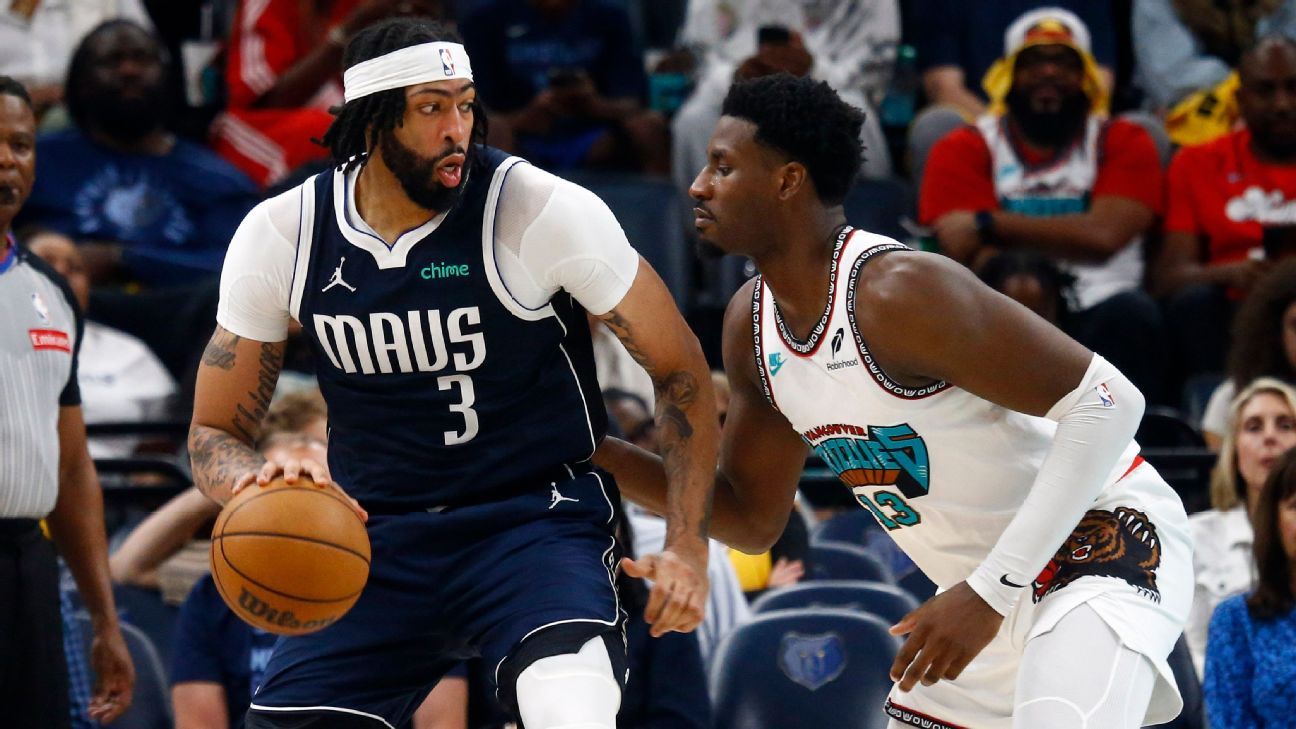
The structure of the trades that brought Jaren Jackson Jr. to Salt Lake City on Tuesday and Anthony Davis to Washington on Wednesday was consistent: sending out expiring contracts, primarily average draft assets (except for Memphis acquiring Phoenix’s unprotected 2031 selection), and receiving talented players on contracts that generated little interest around the league.
This does not diminish the actual on-court skills of both players. Jackson is a “unicorn” rim-protecting, floor-spacing big man who is highly sought after across the league. Davis, despite frequently dealing with injuries, is a 20-10 player when active and can be a formidable defensive presence in his own right.
However, in a league where teams are striving to enhance depth and emphasize youth and athleticism, maintaining borderline All-NBA big men earning over $50 million annually is a challenging proposition—unless you possess a relatively clean salary cap like the Jazz and Wizards do. Each team has only one other player (Lauri Markkanen for Utah, Trae Young for Washington) earning more than $15 million on their payroll.
This also serves as the latest indication that, despite concerns regarding teams tanking in pursuit of top prospects such as Cooper Flagg, Dylan Harper, VJ Edgecombe, and Kon Knueppel in 2025, as well as Darryn Peterson, AJ Dybantsa, Cameron Boozer, and Caleb Wilson in the forthcoming 2026 draft, this trend is unlikely to persist. For weeks, sources have informed ESPN that the 2027 and 2028 classes do not rank nearly as highly.
While it is essential to recognize that quality players emerge from every draft—the 2013 draft, which was widely considered one of the weakest in league history, produced Giannis Antetokounmpo at No. 15 and Rudy Gobert at No. 27—it is also evident that the same incentives for poor performance will not apply.
The scarcity of free agency options this summer is another contributing factor. Recent rule changes—such as the introduction of a true salary cap floor, compelling teams to allocate their funds before the season begins, and a significant relaxation of extension rules, enabling more players to re-sign rather than enter the open market—have led to a decline in impactful players switching teams through free agency. A notable exception was Paul George joining the Philadelphia 76ers 18 months ago after the LA Clippers opted not to offer a full max contract.
The Jazz and Wizards, who had accumulated draft picks in recent years, have opted to pursue free agency now by acquiring impactful players under contract as a more favorable strategy.
There are still unresolved questions for both franchises. Utah’s newly formed large frontcourt—Jackson at 6-foot-10, Markkanen at 7-1, and Walker Kessler at 7-2—will be intriguing to observe, as will whether the Jazz, currently sixth in the lottery standings, can manage to retain their pick with Memphis, the Milwaukee Bucks, and others above them now attempting to lose.
Kessler’s upcoming restricted free agency, as a talented young big man in a scarce position, could result in a costly offer sheet this summer that tests Utah’s financial limits.
For Washington, sources expect that Davis and Young will play very little, if at all, for the remainder of the season as the Wizards seek lottery luck, and that both stars will receive long-term contracts this summer. The nature of those contracts and their implications for Washington’s financial situation moving forward will also influence the overall assessment of these trades.
In just 24 hours, two teams that have been striving to lose have unexpectedly changed direction. The trades involving AD and Jackson have not only indicated the trajectories of Washington and Utah but also reflect the broader direction of the NBA.
