
NBA trade deadline: Key beneficiaries and affected teams from a hectic week
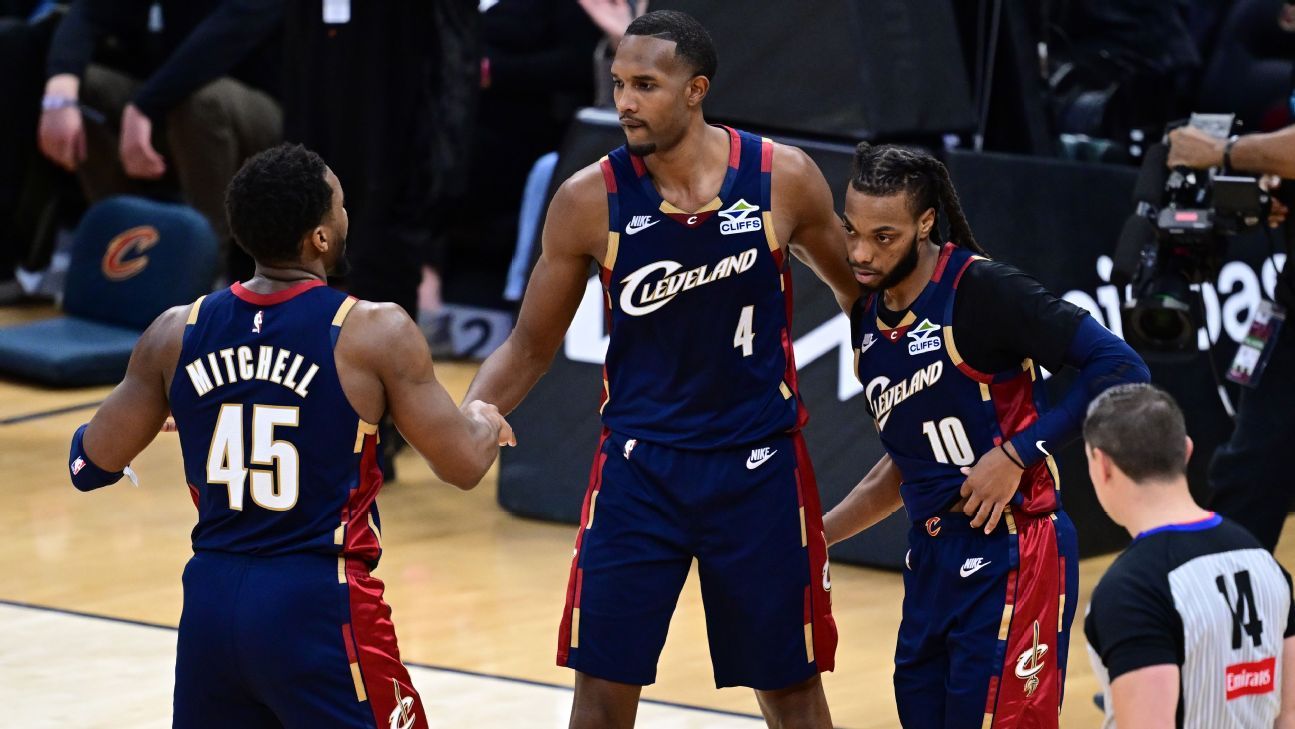
The 2025-26 NBA trade deadline has passed, and Giannis Antetokounmpo remains with his team, but numerous other players have switched teams, and future draft selections have been exchanged this week.
The Dallas Mavericks have moved on from Nico Harrison’s unexpected trade for Anthony Davis, sending the star player to the Washington Wizards. The Golden State Warriors have concluded the Jonathan Kuminga situation, trading him along with Buddy Hield to the Atlanta Hawks in exchange for Kristaps Porzingis.
In what may be the most surprising trade of the deadline, James Harden departed the rising LA Clippers to bolster the Cleveland Cavaliers in the Eastern Conference.
There is much to analyze, so let’s explore the most significant winners, losers, and trends from the 2026 NBA trade deadline.


Winner: The Cleveland Cavaliers
Cleveland is currently experiencing a winning streak, boasting a 9-2 record following a 22-19 start, and the preseason Eastern Conference favorites made improvements at the deadline. Among the 11 players logging at least 500 minutes for the Cavaliers this season, the three players with the lowest net ratings were Darius Garland (minus-3.0), De’Andre Hunter (minus-0.9), and Lonzo Ball (plus-1.3). All three have now been traded, replaced by James Harden, Keon Ellis, and Dennis Schroder.
While trading the 26-year-old Garland for the 36-year-old Harden may have future implications for the Cavaliers, Harden is currently a superior and healthier option compared to the former Cavs point guard, and he is expected to alleviate some of the offensive pressure on Donovan Mitchell, who is experiencing his highest usage rate since his time in Utah. Harden shares some of Garland’s weaknesses: he is not the most engaged defender, but he is larger than Garland, and while he has playoff reliability concerns, Garland also has a questionable postseason history.
The Cavaliers’ other acquisitions should further strengthen the roster. Ellis is recognized as the best defender in the Cavaliers’ backcourt, while Schroder is a variable who has fluctuated between exceptional productivity and subpar performance in his recent stops; he may revert to his productive form in Cleveland.
Additionally, acquiring these two players while parting with Hunter and Ball has reportedly saved Cleveland around $100 million in luxury tax payments, according to ESPN’s Bobby Marks. It is uncommon for a contender to enhance its roster while also reducing costs at the deadline, but Cleveland achieved this unexpected outcome.



Winner: Surprise Star Destinations
As of Thursday, the Wizards, Jazz, and Pacers have a combined record of 42-109 — translating to a 23-59 record over 82 games — and both the Wizards and Jazz are keen to lose enough games this season to retain the top-eight-protected picks owed to the Knicks and Thunder, respectively.
Nonetheless, this did not prevent Washington, Utah, and Indiana from making significant roster enhancements at the deadline. Washington had previously traded for Trae Young last month and added Anthony Davis this week — ironically, it was not long ago that many envisioned a Young-Davis pairing in Los Angeles — while Utah acquired Jaren Jackson Jr. and the Pacers made a late move for Ivica Zubac.
This deadline theme broadly reflects the NBA’s evolving financial landscape, as the stringent penalties of the aprons intersect with a leaguewide desire for increased youth and depth. As ESPN’s Tim Bontemps noted, few teams are interested in acquiring borderline All-Stars earning around $50 million annually, as is the case for Young, Davis, and Jackson, “unless you have an otherwise clean cap sheet like the Jazz and Wizards do.”
The Pacers’ acquisition of Zubac was distinct, as Indiana — currently in an injury-induced “gap year” following a Finals appearance last season — sought a replacement for Myles Turner. Zubac is on a more affordable contract than Davis and Jackson (three years for $58.7 million total) and is an excellent two-way fit with the existing Pacers core, which justified a higher price: upcoming restricted free agent Bennedict Mathurin and two first-round picks.
It is important to note that while the Pacers should return to contention with Zubac immediately in 2026-27, the Wizards and Jazz may not have made winning moves, as it is quite possible that neither Washington nor Utah will qualify for the playoffs with their new All-Stars next season. However, the emergence of these surprise star destinations added an intriguing element to deadline week.
 play2:02’NBA Today’ crew reacts to Jaren Jackson Jr. trade
The “NBA Today” crew discusses the Jaren Jackson Jr. trade and its implications for Ja Morant, the Grizzlies and the Jazz.

Losers: Utah Jazz Ball Movement
In the last three seasons, 47 players have averaged at least 20 points per game. Only two of them have fewer than three assists per game — current Jazz forward Lauri Markkanen (1.9) and new Jazz forward Jaren Jackson Jr. (2.1).
Adding presumptive starting shooting guard Ace Bailey, who is averaging 1.6 assists per game in his rookie season after struggling with playmaking in college (1.3 per game), results in a perimeter rotation filled with ball stoppers.
This is not aligned with the style of play that Jazz coach Will Hardy prefers. Utah leads the league in assist percentage this season, thanks to point guards Keyonte George and Isaiah Collier, along with center Jusuf Nurkic, who is averaging 4.9 assists per game as a central playmaker. (Nurkic even recorded three consecutive triple-doubles last month.)
Moving forward, however, the Jazz appear to have opted to prioritize size, shooting, and defense over ball movement. This may be a reasonable tradeoff; Jackson and center Walker Kessler, in particular, should create a formidable rim protection duo once Kessler, a restricted free agent this summer, recovers from his surgery to repair a torn labrum. However, this arrangement places significant pressure on George to continue his growth as a franchise point guard, or else Utah’s offense may stagnate just as the team aims to become more competitive.

Winners: The Proactive Memphis Grizzlies
In the aftermath of the Jackson trade, Memphis has performed well with its initial two significant moves of the rebuild. Last summer, the Grizzlies secured four first-round picks and a swap for Desmond Bane — a favorable return for a solid player who has yet to make an All-Star team. Memphis subsequently traded two of those picks to acquire rookie standout Cedric Coward in the draft.
Eight months later, the Grizzlies traded Jackson for three picks and a couple of promising young players, including the No. 18 pick in the 2025 draft, Walter Clayton Jr. In isolation, Jackson has a higher potential than Bane, being a two-time All-Star and Defensive Player of the Year. However, his performance has declined slightly, and if Jackson is merely good rather than great on both ends — as he has appeared this season — he may not justify his upcoming contract extension, which begins next season at four years and $205 million.
The downside is that Memphis is now facing a lengthy rebuild, and it still needs to determine the next steps for Ja Morant. However, the Morant-Bane-Jackson core had clearly reached its limit after just one playoff series victory. The Grizzlies acted proactively and capitalized on high value for Bane and Jackson, now possessing one of the most substantial future draft capital reserves in the league.
Additionally, there has been some criticism since the Jackson trade regarding the quality of picks acquired; they will receive the Lakers’ top-four-protected 2027 pick; the best 2027 pick from the Jazz, Timberwolves, or Cavaliers; and the Suns’ 2031 pick.
However, it is premature to reach such conclusions. First, while the Suns have impressed with their turnaround this season, their 2031 pick could be valuable, as predicting a team’s performance half a decade into the future is nearly impossible. Furthermore, the Jazz could easily provide Memphis with a lottery pick next year (for what appears to be a weak draft class), as even with Jackson, they are projected as a play-in team at best in 2026-27.

Loser: Former Dallas Mavericks GM Nico Harrison
As if the ousted Mavericks general manager needed any further embarrassment, his former team traded Davis for a meager return, just a year after acquiring him in the surprising Luka Doncic blockbuster. Dallas traded the centerpiece of Harrison’s vision for Khris Middleton, AJ Johnson, Malaki Branham, Marvin Bagley III, a 2026 first-round pick from the Thunder (likely No. 30 overall), a 2030 first-round pick from the Warriors (only if it lands in the 21-30 range), and three second-round picks.
In other terms, they effectively traded a generational superstar for one rotation player (Max Christie), two less favorable first-round picks, and one uncertain first-round pick (from the Lakers in 2029). This is roughly equivalent to the overall value that Memphis received for Jaren Jackson Jr.


Winner: Nikola Vucevic
Vucevic is a dedicated professional who has had a lengthy and fruitful NBA career. The 15-year veteran is a two-time All-Star with over 17,000 points and 10,000 rebounds, along with nearly $200 million in career earnings. However, he has never experienced a deep playoff run, as his postseason record consists of just three five-game losses in the first round (excluding his rookie season, when he was a deep reserve who played three playoff minutes for the 2011-12 76ers).
Now, the 35-year-old center will have his opportunity, following a trade from Chicago to Boston. The Celtics not only saved money and gained roster flexibility by going under the first apron with this move, which swapped Anfernee Simons’ $27.7 million salary for Vucevic’s $21.5 million deal; they also acquired a superior version of Luka Garza for their center rotation.
Vucevic is a defensive liability against top competition: he is allowing opponents to shoot 68% at the rim this season, according to NBA Advanced Stats, ranking 30th among 31 players who have defended at least 200 shots. For context, Garza does not meet that 200-shot threshold, but he has allowed a similar 67% mark at the rim, while starting Celtics center Neemias Queta has restricted opponents to a tougher 56%.
Nonetheless, Vucevic is an enhancement on the offensive side and a strong fit for Boston’s perimeter-oriented system. Over the past two seasons, he has converted 39% of his 4.5 3-point attempts per game.
Loser: Oops Trades
Another recurring theme in deadline transactions was what can be termed the “oops” trade, as several teams attempted to extricate themselves from challenging situations they had entered due to previous moves. The Davis trade serves as a prime example, as the Mavericks opted to part ways with the main component of their haul for Doncic just a year later, even if the return was essentially a couple of back-end first-round picks and financial relief.
However, this is far from the only instance this week. The Knicks signed Guerschon Yabusele to strengthen their bench, but his performance declined in New York. Oops! Now Yabusele is a Bull. Point guards Chris Paul, Tyus Jones, and Lonzo Ball joined the Clippers, Magic, and Cavaliers, respectively, last summer. Oops, oops, oops! All three were moved at the deadline to assist their teams in saving money.
The Cleveland-Sacramento trade was a double “oops” move, as the Cavaliers traded Hunter a year after acquiring him at the 2024-25 deadline, while the Kings retracted from the three-year deal they offered Schroder in free agency. Similarly, the trade between Atlanta and Golden State concluded Kristaps Porzingis’ injury-plagued tenure with the Hawks after half a season and finally resolved the Warriors’ Jonathan Kuminga situation.

Winner: Madison Square Garden
It is hard to envision a role player more capable of energizing Knicks fans than Jose Alvarado, a tenacious, hardworking guard who grew up in New York City. The MSG crowd cherished Pablo Prigioni in the 2010s, and now they have a superior, homegrown version of that archetype a decade later, after the Knicks traded Yabusele and two second-round picks for Alvarado.
It remains uncertain how much playing time Alvarado will receive in New York, as the Knicks already have Tyler Kolek, Landry Shamet, Jordan Clarkson, and Miles McBride (who may be sidelined until the playoffs due to core muscle surgery) as backcourt options off the bench. However, when he does play, Alvarado should enhance the Knicks’ depth — and excite his new team’s fans whenever he dives for a loose ball or secures one of his signature backcourt steals.
 play0:49Shams: 76ers create roster room by trading Jared McCain
Shams Charania gives details of the 76ers’ trade of Jared McCain to the Thunder.

Winner: The Oklahoma City Thunder
Despite the flurry of trades this week, few are expected to significantly impact the 2026 title race. This is favorable for the championship frontrunners.
The top players to switch teams since the season began include, in some order, Davis, Harden, Zubac, Jackson, Young, Garland, and Porzingis (if healthy). They have joined teams with no chance of making the playoffs, teams in the Western Conference play-in mix, and an Eastern Conference contender in the Cavaliers.
Meanwhile, the Nuggets only executed a minor trade to avoid the luxury tax, while the San Antonio Spurs and Houston Rockets remained inactive, and the Los Angeles Lakers added only Luke Kennard, who will enhance their perimeter shooting but will not improve the NBA’s 24th-ranked defense. For the Minnesota Timberwolves, Ayo Dosunmu is a solid fit alongside Anthony Edwards and Jaden McDaniels, but overall, all the leading challengers to Oklahoma City in the West are no more threatening today than they were a week ago.
The Thunder also made a clever trade of their own, giving up a pick likely to land in the 20s (via Houston) for Jared McCain, who might have been the Rookie of the Year last season if he had played more than 23 games. McCain has not been as impressive in his second season as he returns from knee and thumb surgeries, but the Thunder still acquired a player on an affordable rookie contract with considerable potential, which could be particularly beneficial in future seasons as costly extensions for Shai Gilgeous-Alexander, Jalen Williams, and Chet Holmgren impact the Thunder’s depth.
Finally, Oklahoma City’s position in the 2026 draft likely improved this week, even as the Thunder relinquished a late first-rounder. The Clippers, who owe an unprotected pick to Oklahoma City this year, have weakened significantly with their trades of Harden and Zubac, increasing the likelihood that they will send a lottery pick to the Thunder. Meanwhile, the Jazz, who owe a top-eight-protected pick to Oklahoma City, have improved with Jackson, raising the chances that they will send any pick to the Thunder (even if Utah will still strive to retain that pick).
The only negative news for the Thunder this week was unrelated to trades: Gilgeous-Alexander will be sidelined until at least the All-Star break due to an abdominal strain. Given the numerous other injuries affecting the Thunder — they were missing all five of their usual starters in a loss to the Spurs on Wednesday — and their dependence on the reigning MVP, this absence could jeopardize Oklahoma City’s
