
Key considerations for the Warriors as the NBA trade deadline approaches
WITHIN 24 HOURS OF Jimmy Butler’s significant ACL injury, Golden State Warriors general manager Mike Dunleavy acknowledged that the team’s new circumstances might necessitate a different strategy as the trade deadline approaches.
“Perhaps the parameters have shifted,” Dunleavy stated. “Maybe the goalposts have been moved.”
One of the pivotal moments in roster construction on the NBA calendar is just a week away. As the Feb. 5 trade deadline approaches, the Warriors face numerous questions, starting with the impact of Butler’s injury.
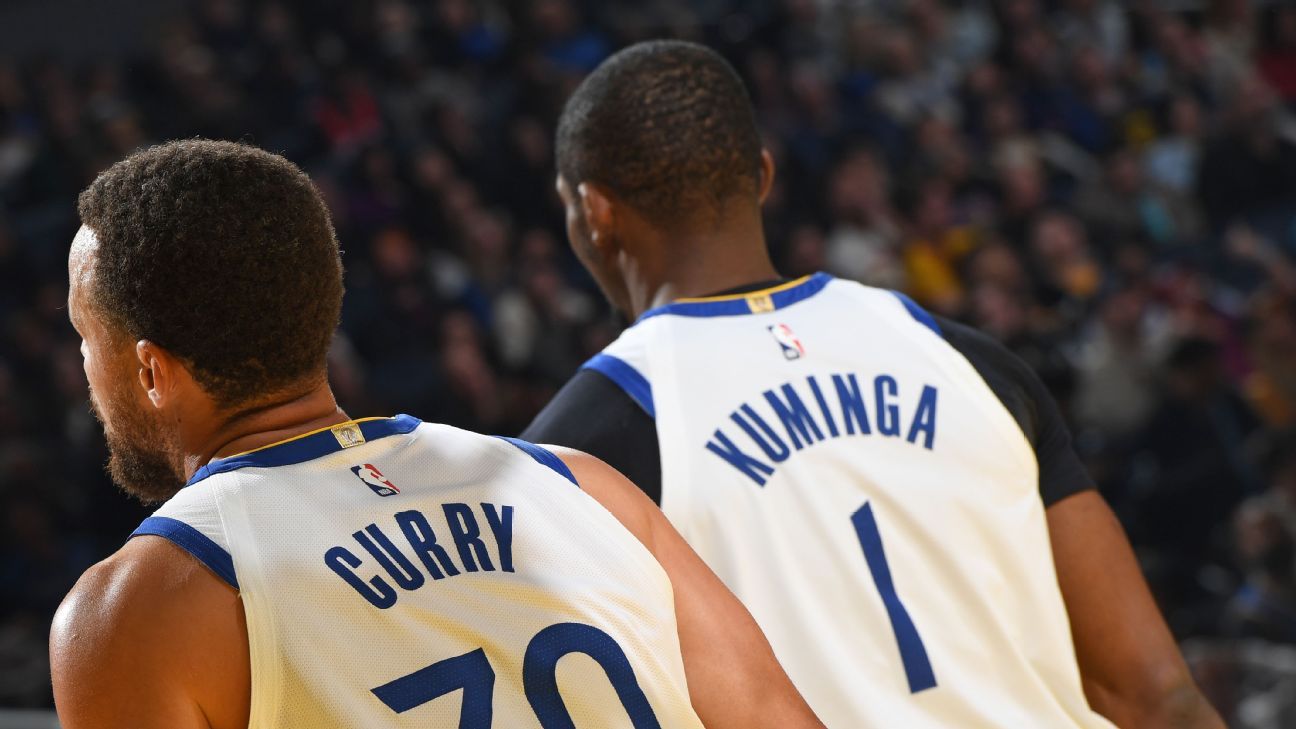
In the days following the injury, team insiders have indicated a shift towards a more future-oriented strategy. With Butler in the lineup, they were considering smaller enhancements, aiming to leverage Jonathan Kuminga’s $22.5 million salary to strengthen a team they viewed as a potential contender.
The prospect of realistic contention diminished with Butler’s absence, leading the front office to be less inclined to expend assets for an immediate win-now move. While it is possible they could secure a deal that enhances this season’s roster, their primary focus is on better positioning the team for contention in the 2026-27 season and beyond.
The Warriors’ main target remains the same high-profile name that has been on their radar for nearly a decade: Giannis Antetokounmpo. The notable change now is that Milwaukee seems more open to discussions. ESPN’s Shams Charania reported on Wednesday that Bucks general manager Jon Horst has recently shown a willingness to entertain offers.

What can the Warriors offer for Giannis?
League sources informed ESPN that the Warriors have reached out to the Bucks in the past week, expressing strong interest in Antetokounmpo and their readiness to present a significant offer, irrespective of his calf strain and uncertain return timeline.
It remains uncertain whether Antetokounmpo would consider the Warriors as a preferred destination. However, his preferences, like those of any superstar nearing extension eligibility, are relevant to the discussion. A trade for Kevin Durant last February fell apart after Durant indicated he did not wish to reunite with the Warriors. A preliminary assessment with Antetokounmpo will be necessary to ensure he would welcome a partnership with the Warriors, even if they are not his top choice.
However, the Bucks are in a strong position, capable of trading Antetokounmpo in the coming week or waiting for a more developed market in the summer. Should they choose to act quickly, the Warriors — among the anticipated aggressive bidders — possess one of the most attractive package of picks. League executives believe that the sooner Milwaukee acts, the better Golden State’s chances are in the bidding process.
The Warriors can offer up to four first-round picks: 2026, 2028, and 2032 unprotected, along with 2030 if it falls within the 1-20 range (top-20 protected owed to Washington as part of the Jordan Poole for Chris Paul trade). Due to Milwaukee’s outgoing picks, they could only command one additional pick swap.
In earlier discussions regarding lower-tier trades, the Warriors have been cautious with their draft picks beyond the Stephen Curry era. This situation is not a lower-tier discussion. The picks beyond the Curry era would be available to Milwaukee and could be valuable (though less so, as the post-Curry era would likely include Antetokounmpo in his mid-30s).
“It would require a significant amount [to move the post-Curry picks],” Dunleavy remarked. “Positionally, play style, archetype, all that. I would keep it quite broad and open. But if there’s a great player available, we have everything in the war chest that we would be willing to utilize.”
The Warriors have communicated to Butler their intention to retain him despite the ACL injury, believing he will rehabilitate and contribute upon his return next season. Dunleavy stated he did not “envision” trading Butler. They are not actively shopping his contract, according to team sources, but everything is on the table in discussions regarding Antetokounmpo — and Butler is a clear salary match, although a deal involving Draymond Green and several other rotation players is also a possibility.
Other teams — including the New York Knicks (Karl-Anthony Towns, OG Anunoby) and Miami Heat (Tyler Herro, Kel’el Ware) — have younger or mid-prime players that may be more appealing to the Bucks. However, Milwaukee has shown interest in Kuminga since the summer, according to league sources, and he would be seen as a high-upside option on a controllable contract as part of the return package.
Third-year guard Brandin Podziemski could also play a role in the negotiations, according to league sources. The Milwaukee native is under contract for next season at $5.7 million, the final year of his rookie deal. To assist with salary matching, the Warriors could also take on one of Milwaukee’s other veterans with long-term contracts, such as Bobby Portis (three years, $43.5 million remaining) or Kyle Kuzma (two years, $42.7 million remaining).
What is the alternative plan?
If the Warriors do not acquire Antetokounmpo, there is no one currently on the trade market that would compel them to pursue assets with this level of intensity, according to team sources.
They have expressed interest in New Orleans Pelicans wing Trey Murphy III, but have faced resistance in discussions with a front office led by Joe Dumars and Troy Weaver, which has thus far shown reluctance to part with most of their young core, according to league sources.
The Warriors have also been associated with other mid-tier players such as the Brooklyn Nets’ Michael Porter Jr. and Miami’s Andrew Wiggins, but team sources continue to downplay those possibilities. One source indicated they have not engaged with Miami regarding a reunion with Wiggins.
What does it mean for Kuminga?
Despite Kuminga’s wish for a new beginning and a more consistent role outside the Warriors, Dunleavy has made it clear since the summer that he will not trade Kuminga unless he finds the deal’s value acceptable.
Prior to Butler’s injury, the front office had been more open to trading Kuminga for a rotation player on a short-term contract who could assist this season’s team in competing.
However, Butler’s injury has simultaneously diminished their championship aspirations — unless a significant trade occurs — while also elevating Kuminga from being out of the rotation to a player expected to log at least 20 to 25 minutes.
“Now that Jimmy’s out, there’s no doubt he’s going to play,” Kerr told ESPN. “He will have a role. So I hope he recovers quickly [from a minor bone bruise] because this is a great opportunity for him, and we need him. We need what he brings.”
The Warriors are still assessing Kuminga’s trade market, but team sources have indicated that it is less likely he will be moved following Butler’s injury. He has a $24.3 million player option that could be exercised in the summer and a clearer path to playing time in the near term, which could enhance his value and fulfill the desires of both parties.
What does it mean for the last chapter of the Curry-Kerr era?
The Warriors currently hold a record of 27-22, positioned at No. 8 in the Western Conference, residing in the play-in territory they have frequently occupied over the past five years.
“Our objectives remain unchanged. We are still aiming to win,” Kerr stated. “However, our ceiling is not as high. Jimmy is one of the top players in the league, and we felt strongly that if given a chance in the playoffs, we could make a run similar to last year.”
“With Jimmy absent, it will undoubtedly be much more challenging to achieve that. But we still pursue it. We continue to strive to position ourselves for the playoffs, and you never know what might happen.”
Curry will turn 38 in March. Time is of the essence.
Kerr has consistently expressed that it would be unwise for the franchise to expend valuable assets for minor upgrades, but it is evident that those involved would welcome an additional boost in February, if it can be reasonably secured.
“It’s up to Mike and Joe [Lacob],” Kerr remarked. “I’m in the final year of my contract, so nothing is guaranteed moving forward. I always believe they should do whatever is most beneficial for the franchise. But you do have Steph Curry, and he is still performing at a high level, and if there is something we can do to provide Steph with more support, we should pursue it. What that entails is always in the details, what is available, and what we have to give up.”
Kerr did not seek a contract extension at the start of the season. He believes that the open-ended nature of his future is the healthiest approach for both parties. He stated he is still undecided about whether he will return for a 13th season as the Warriors’ coach.
“Let’s wait until the end of the year and see if everyone is aligned,” Kerr said. “If we are, then we will continue. If not, then we won’t. [It will depend on] how the season concludes, what the future looks like, and all of that factors in. And they, meaning Joe and management, have a lot to consider. It’s a particularly intriguing time for the organization.”
