
Inside the contentious divide between Jonathan Kuminga and the Warriors
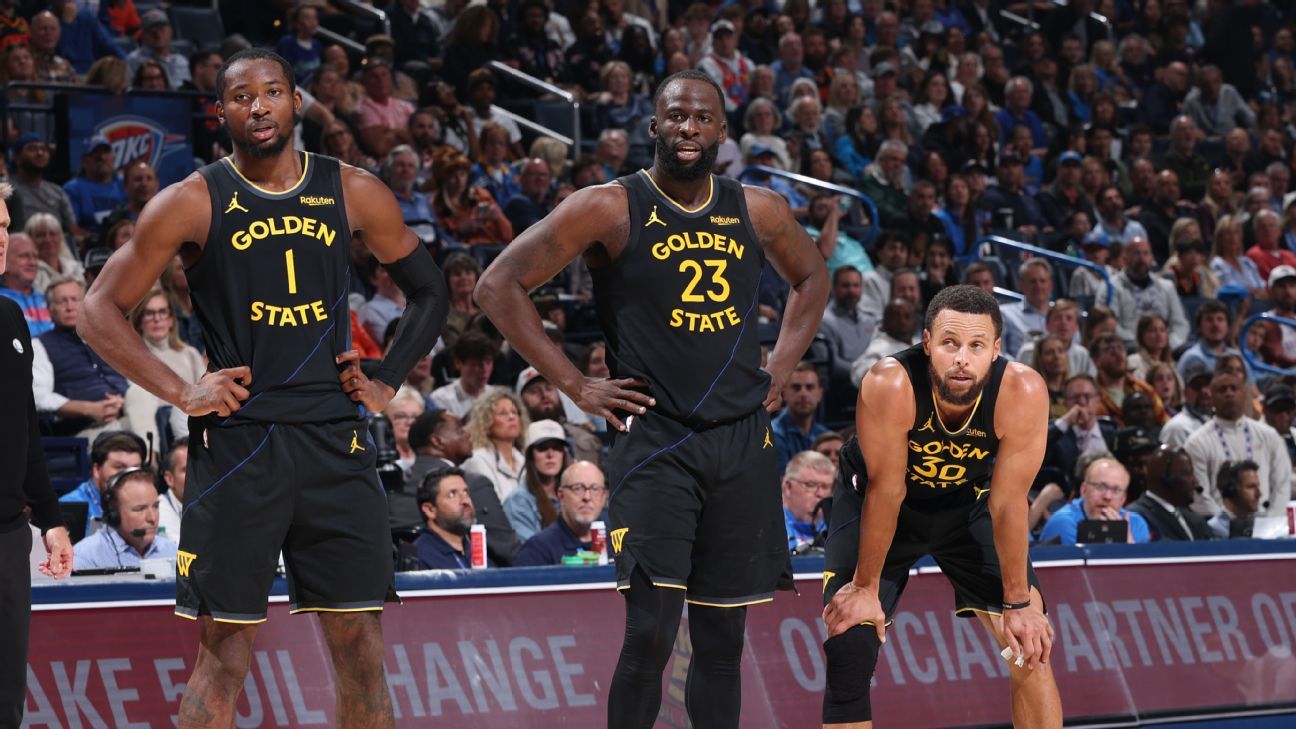
THE MOST TENSE escalation in what team insiders characterized as a generally amicable cold war between Jonathan Kuminga and Steve Kerr occurred on the afternoon of Dec. 10.
The Golden State Warriors had been ousted from the NBA Cup two weeks prior, providing them with an unusual break in their schedule. They had secured a victory in Chicago the previous Sunday night and were not scheduled to play again until Friday.
Kuminga was ready for the discussion. He was aware that management intended to reprimand him for missing a team-requested event and inform him that someone in his vicinity was taking excessive food from the family room. The grievances between the player and the organization, as multiple sources indicated, had devolved into “petty” disputes in the fifth year of a relationship that many believed should have concluded long ago.
Kerr had struggled to connect with Kuminga on a deeper level, which was typically one of his coaching strengths. He had written him notes, sent lengthy text messages, and attempted to establish rapport. However, Kuminga seldom reciprocated. His responses were typically indifferent and infrequent.
In several discussions with Kuminga over the past five years, it became increasingly evident that he perceived Kerr as the primary obstacle to his career advancement, which had been marked by inconsistency, unexplained DNPs, and tension.
“Go ask the man himself,” he would remark with an eye roll after experiencing a few of those no-minute or low-minute games.
Organizational dynamics loomed large, compelling these two into an uncomfortable and protracted professional relationship, but Kuminga understood who dictated strategy and rotation.
Inside Kerr’s office that afternoon, frustration reached a boiling point. The conversation shifted from minor issues to broader concerns. Both sides expressed their frustrations—Kerr articulated his dissatisfaction with Kuminga’s lack of commitment and competitiveness regarding team objectives, while Kuminga voiced his hurt over Kerr’s longstanding skepticism about his abilities as a player.
The meeting concluded, sources familiar with the discussion reported, with Kerr slamming his whiteboard in frustration. Kuminga, notably, then proceeded to deliver what Kerr would later describe as two of the most intense practices he had witnessed from him, sprinting the floor, attacking the paint, and defending aggressively.
“He executed the tasks I requested,” Kerr stated. “I empathize with him that he has been somewhat at the mercy of my decision-making.”
However, like every brief period of harmony between Kuminga and the Warriors, it was short-lived and ultimately destined to fail, resting on a dual-layered foundation of misalignment. At the fundamental level, the player and coach were in complete disagreement regarding career trajectory and vision.
Above them, team owner Joe Lacob had formed a connection with Kuminga during a Miami dinner in the 2021 predraft process and clung to the notion that Kuminga could still emerge as a face of the franchise’s next era at various crossroads. However, Lacob was too reluctant to abandon a dream that did not align with the roster or system, one that his coaching staff was not inclined to implement, according to team sources.
“Allow your basketball personnel to make basketball decisions,” one team source remarked.
Last week, the Warriors finally fulfilled Kuminga’s request and traded him to the Atlanta Hawks in exchange for Kristaps Porzingis, concluding one of the most unusual five-season tenures in recent league history.
“Everyone was right. Everyone was wrong. Everyone is to blame,” another team source commented. “No one emerged victorious.”
IN LATE DECEMBER, during his third extended stretch of DNPs this season, Kuminga began to pack up his belongings in his Bay Area residence, sources close to him indicated, anticipating a trade and essentially trying to will it into reality.
He attended required events and supported teammates during games, but he had his skills trainer, Ant Wells, in town for individual workouts at various gyms away from the facility, feeling an increasing sense of disdain from Warriors management and coaches when he practiced drills to enhance his on-ball scoring and playmaking in their presence.
“He dislikes working out in this environment,” one source noted, gesturing toward the practice court.
Kerr had long drawn parallels to Shawn Marion and Aaron Gordon, believing Kuminga’s most productive stretches came as an energetic wing who sprinted the floor, operated from the dunker spot, rebounded, defended with versatility, and did not require the offense to be centered around him. Those high-level role-playing wings, Kerr emphasized, are valued and compensated well.
However, as Kuminga’s career progressed, he felt he had demonstrated enough in supplementary roles to warrant more consistent trust and opportunities on the ball.
Neither of these occurred to his satisfaction, sources indicated, only reinforcing his belief that Kerr and general manager Mike Dunleavy would only ever perceive him as a fast, athletic player lacking the necessary skills to be a primary option.
In response, both Kerr and Dunleavy frequently pointed to Kuminga’s lower efficiency metrics in isolation and midrange situations as justification for their stance. They attributed the blame to Kuminga’s agent Aaron Turner and those around him, team sources reported, for prioritizing and focusing on “the wrong things” away from the facility, steering his career down an incorrect path.
The disconnect impacted contract negotiations, and multiple members of the organization framed the divide with a question: “Does he want to win, or does he want to look good?”
The accumulation of minor remarks and subtle criticisms regarding his limitations fueled Kuminga’s resentment and soured his feelings toward the staff and organization, sources indicated, often leaving his closest supporters—Turner, Wells, assistant coach Anthony Vereen, Jimmy Butler, and others—to help him regain focus on the ultimate objective.
Kuminga possesses a strong belief in his potential—a “multiple-time All-Star,” he once told ESPN—which was only strengthened after Kerr was compelled to rely on him during the Minnesota playoff series last May when Stephen Curry suffered a hamstring injury, leading Kuminga to score 18, 30, 23, and 26 points on 55% shooting in the last four games against a group of Timberwolves defenders that had posed challenges for his teammates.
In the lead-up to free agency last July, no one from the organization visited Kuminga, a restricted free agent, in Cleveland during a month of two-a-day workouts, which only reinforced his doubts about Kerr, Dunleavy, and the organization’s commitment to prioritize and develop him.
During a preseason practice in October, the Warriors were working through some late-clock offense. Assistant coach Terry Stotts was providing instruction.
The directive to the first unit was straightforward: get the ball to Curry or Butler and let them create. The directive to the second unit was less clear, team sources noted: If neither Butler nor Curry was on the court, they lacked significant creation options, so they were instructed to get the ball to Pat Spencer and run some pick-and-roll. Kuminga was not mentioned. He was frustrated by this.
“Those are all triggers,” Turner told ESPN. “Pokes.”
Despite the unraveling situation, Kuminga played a contributing role during various phases of his Golden State career. As a rookie, he started three playoff games and logged 138 postseason minutes during the team’s 2022 championship run.
His first significant breakthrough occurred in his second season. Veteran wing Andrew Wiggins departed the Warriors for the final two months to be with his ailing father. In Wiggins’ absence, Kuminga averaged 24.2 minutes per game after the All-Star break and scored 13.2 points on 57% shooting as a key role player in the team’s push to the No. 6 seed.
In his third season, Draymond Green was suspended for a significant portion of the early months, opening another opportunity. Kuminga averaged 16.1 points in 74 games and set a franchise record with 138 dunks.
During this period, Kuminga believed that Lacob and the entire front office supported him. Dunleavy referred to him as “virtually untouchable” and directly told Kuminga that he viewed him as a “cornerstone.”
However, extension discussions that summer failed to gain momentum. The Warriors, sources indicated, believed Turner’s expectations were excessively high, using the five-year, $150 million contract Jalen Johnson signed with the Hawks as a benchmark, while Turner contended that they never made a sincere effort to extend him, frequently emphasizing “flexibility” in negotiations.
“JK’s taken off,” Green remarked during Kuminga’s third season. “That has kind of set the stage for this team. [He’s a] bona fide No. 2 option on our team.”
Yet Kuminga often vanished from the equation when Kerr sought adjustments during challenging periods.
The persistent calls for patience—that he would be essential to the team’s post-Curry era—became tiresome. Kuminga, sources indicated, felt the messaging had turned disingenuous and that their perception of his game was disrespectful.
“We were always very clear about JK and what we believe he can be,” Turner stated. “They were the ones not aligned. They couldn’t sort it out among themselves.”
AFTER A MONTH of strained contract negotiations had stalled last summer, Dunleavy and Lacob met with Kuminga and Turner in Miami in an effort to address the lingering issues and distrust.
The 2025 restricted free agency market had presented Kuminga and Turner with a harsh reality, but they felt that Kerr’s inability to optimize Kuminga’s skill set and ongoing public remarks about his lack of fit had contributed to the situation.
Lacob acknowledged the disconnect and the imperfect arrangement, sources reported.
“[Kerr] didn’t even want to draft me,” Kuminga stated during the meeting.
The Warriors selected Kuminga with the No. 7 pick in the 2021 draft, a lottery selection they acquired from the Minnesota Timberwolves in the D’Angelo Russell trade for Wiggins.
Kerr was not heavily involved in the draft process. He was with Team USA preparing for the Tokyo Olympics that summer and received only sporadic updates from a distance, lacking a firm opinion on Kuminga, according to team sources.
The Warriors had two lottery picks and evaluated over 70 prospects during the predraft process, including Franz Wagner, the German wing who was selected No. 8 by the Orlando Magic. A group of coaches on the staff attended Wagner’s workout, team sources noted, and strongly believed he would be an ideal choice and fit within Kerr’s system.
Lacob and then-general manager Bob Myers were among a select few who visited Kuminga in Miami six days before the draft. Then-assistant coach Kenny Atkinson conducted the workout and maintained strong faith in Kuminga throughout his final days with the organization. He departed for the Cleveland Cavaliers head coaching position in 2024.
When the Warriors were on the clock six days after the Miami workout, both Kuminga and Wagner were still available, and Lacob advocated for his preferred choice, team sources reported. Myers and Dunleavy, then an assistant GM, did not object.
“Bob and I have felt for several years that we’ve needed physicality,” Lacob remarked that night. “Athleticism and physicality. That’s what really excites me about him.”
The decision to draft Kuminga over Wagner, who has averaged at least 20 points per game over the past three seasons, became a central point of contention within the organization, a notable example of Lacob’s personnel interference during the post-Kevin Durant transition years, aiming for, as team sources indicated, style over the substance that had propelled the dynasty teams.
In the subsequent seasons, team sources speculated that Lacob’s public support for Kuminga and his enthusiastic celebrations of Kuminga’s significant moments stemmed from his desire to validate his initial assessment. This is also why, those sources believed, Lacob struggled to part with Kuminga in potential trades.
This included discussions to acquire Alex Caruso from the Chicago Bulls at the 2024 trade deadline, seen by some within the organization as a prime opportunity that should have been seized. Other team sources countered, noting that Chicago was difficult in late-stage negotiations and reminded that Kuminga was a key rotation player at that time.
“Joe receives disproportionate blame,” one source stated. “It’s a complex situation. There was a lot of indecision [from multiple individuals].”
Kuminga would have been included in the Warriors’ much-discussed deal for Durant at the 2025 deadline, a move that Lacob approved and nearly finalized before Durant ultimately rejected the trade. There was also a possibility, sources indicated, of trading Kuminga to the Indiana Pacers before the 2023 draft for the No. 8 pick, which became Jarace Walker.
However, nothing ever materialized—either due to internal indecision or external factors. And the cold war between player and coach, as well as between the front office and ownership, continued to simmer.
Last summer, Turner and Kuminga explored sign-and-trade opportunities with the Sacramento Kings and Phoenix Suns. Kuminga participated in a video call with Kings general manager Scott Perry and coach Doug Christie. They presented him with a vision of a prominent role and 30-plus minutes per game, emphasizing the type of belief and growth opportunity he desired.
The Warriors rejected the proposed returns, showing no interest in Malik Monk, Royce O’Neale, or Grayson Allen, along with minor draft assets.
One of the common responses, according to league sources: Lacob would never agree to it.
The Warriors, team sources indicated, believed Kuminga needed to confront the harsh realities of the existing business dynamics. Kuminga, sources noted, was simply weary of being a “pawn” in an organizational tug-of-war: the coach wouldn’t play him, management wouldn’t let him go, stalling his career.
Turner and Kuminga pushed their external negotiations to the deadline, ultimately signing a two-year deal in late September. This affected the ability to finalize the signings of Al Horford, De’Anthony Melton, Gary Payton II, and Seth Curry until after training camp commenced. This particularly frustrated Kerr, team sources reported, who informed those involved in the negotiations that it was another instance of Kuminga prioritizing himself over the team.
Kuminga’s teammates publicly supported him until the end but expressed their frustrations regarding the seemingly endless nature of the saga. Butler took Kuminga under his wing, and Kuminga regarded him as a genuine mentor, sources indicated, with Butler expressing to some that he perceived an organizational double standard in the treatment of Kuminga compared to others.
“Everyone liked him,” Kerr stated. “I liked him. He’s a really good guy. Very personable. Well-liked in the locker room. Just a tough fit.”
 play1:17JWill: I don’t trust Porzingis’ durability
The “Get Up” crew examines whether Kristaps Porzingis can be a difference-maker for the Warriors.
THREE DAYS BEFORE the confrontation in Kerr’s office on Dec. 10, Kuminga did not play in the team’s victory in Chicago, marking his first benching of his fifth season.
In the aftermath, reporters gathered around Kuminga’s locker for a five-minute exchange regarding Kerr’s rotation decisions. Kuminga stated he would accept it and remain prepared. He claimed his relationship with Kerr was fine. Those talking points did not necessarily reflect his private feelings.
After reporters departed, he called ESPN with a question.
“Did y’all ask him about me?” he inquired.
The reporters had. About 15 minutes earlier, Kerr had been questioned about his decision to once again exclude Kuminga from his rotation. Kuminga wanted to see the clip.
“It happens to everyone in the league,” Kerr remarked. “Except for the stars.”
Kuminga interpreted that last comment as yet another subtle jab, sending a public reminder that he is not perceived as he believes he should be.
“See,” Kuminga remarked. “That’s the s— I’m talking about. Why does he have to say that?”
Kuminga started the first 12 games of his fifth season. He was a significant two-way contributor in the team’s 4-1 start, prompting Kerr to declare him an established starter and igniting another wave of belief that perhaps this time would be different.
However, everyone aware of the dynamics at play cautioned that history would likely serve as a precedent. The Warriors encountered a rough stretch, falling to 6-6 amid spacing issues in their starting lineup that Kerr had anticipated.
He was not going to bench Green or Butler, so Kerr removed Kuminga from the starting lineup. Kuminga’s knee began to trouble him the night before in Oklahoma City, and after 12 first-half minutes, he exited the game. The Warriors secured a spirited victory over the Spurs, led by 46 points from Stephen Curry.
After the game, Kerr stated that the Warriors had “rediscovered” their identity: “That just looked like our team out there.”
Kuminga, sources indicated, perceived the statement as yet another public indication that his game was not considered part of the team’s identity, that he had once again become the convenient scapegoat. The wounds from the past five years were not difficult to reopen.
Kuminga took his time returning from knee tendinitis, frustrating Kerr and the organization.
“I don’t sugarcoat [my messaging],” Kerr told ESPN. “I’m honest with the media. I’m honest with players, and sometimes you have to tell players things they don’t want to hear. I believe this is generally a healthy way to coach. It can be very challenging for a young player finding his way. I’m sure I said a few things that hurt him, but I don’t believe I ever said anything that could be considered inflammatory.”
Over the following two months, Kuminga would play only 117 more minutes as a member of the Warriors. This included 16 consecutive DNPs.
During that period, sources reported that Kuminga was asked to take the court four times, but he declined three mop-up duty opportunities and ruled himself out of the Thunder game on Jan. 2 due to back soreness after Kerr indicated he would receive significant minutes with Curry, Butler, and Green absent.
Members of the coaching staff and front office, team sources indicated, viewed that deactivation against the Thunder as the unofficial conclusion, a sign that he had given up on the team.
Kuminga, sources noted
