
Amari Bailey, having played 10 games in the NBA, pursues college eligibility.
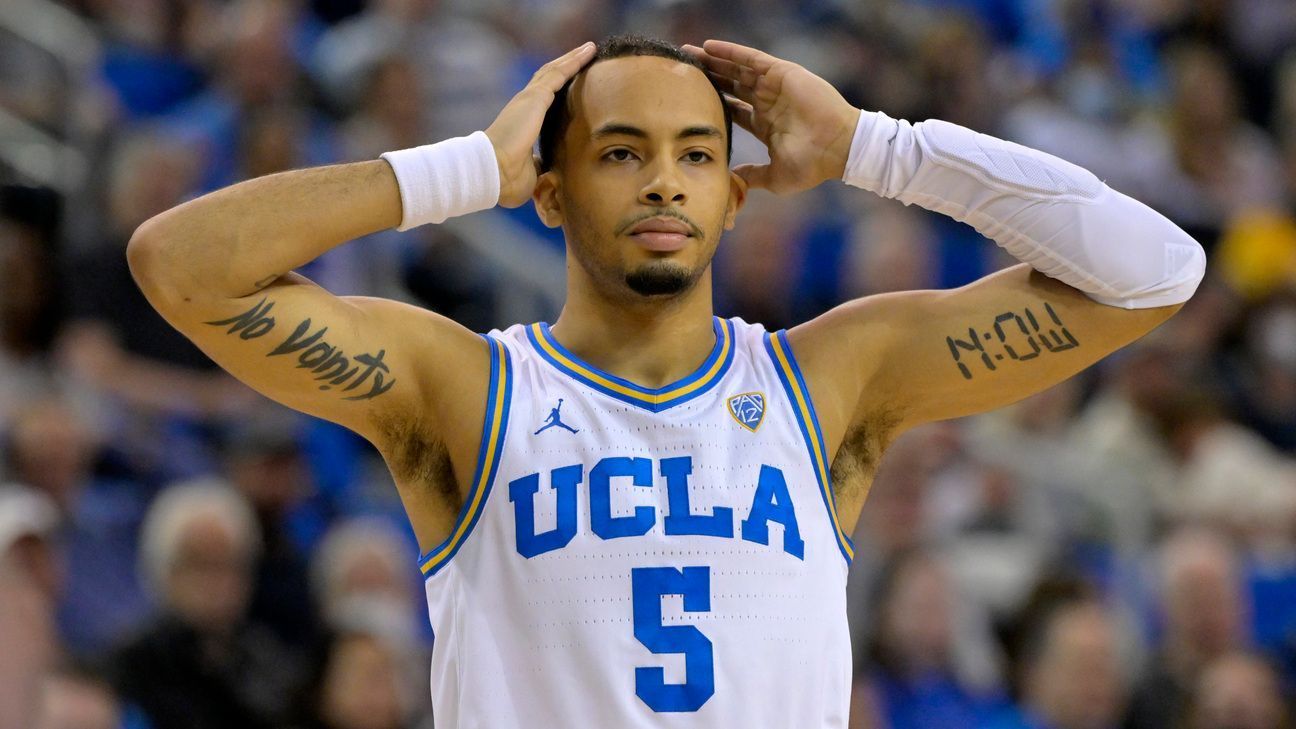
Former UCLA player Amari Bailey stated that he is striving to be the first basketball athlete to return to college after participating in NBA games.
Bailey, 21, has engaged an agent and a lawyer to assist in his pursuit of NCAA eligibility, aiming to join a college team for an additional season.
He mentioned that he began to seriously consider a return to college in 2025 but has contemplated the possibility of rejoining the NCAA since his drafting in 2023. He acknowledged making some errors as an 18-year-old freshman and departed UCLA with “a lot to prove left on the table.”
“At this moment, I would be a senior in college,” Bailey told ESPN. “I’m not looking to be 27 years old playing college sports. No disrespect to those who do; that’s their path. However, I went to play professionally, gained valuable experience, and faced numerous challenges. So, why not me?”
The 6-foot-3 guard played one season at UCLA in 2022-23 before entering the 2023 NBA draft, where he was chosen by the Charlotte Hornets in the second round. He participated in 10 games for the Hornets during his rookie season on a two-way contract and spent two years in the G League before being released over the summer.
This endeavor will serve as a significant legal challenge for the NCAA’s capacity to enforce regulations regarding who can participate in college sports, particularly in an era where waivers and lawsuits have increasingly undermined the prohibition on professional players joining NCAA rosters.
NCAA president Charlie Baker stated in December that the association would not grant eligibility to any player who has signed an NBA contract. Nevertheless, Alabama forward Charles Bediako — who also played in the G League on a two-way NBA contract — challenged the NCAA’s regulations in state court and secured an injunction that has permitted him to compete for the Crimson Tide in recent games.
“The NCAA has not and will not grant eligibility to any players who have signed an NBA contract,” NCAA senior vice president of external affairs Tim Buckley remarked when asked about Bailey’s intention to return. “Congress can enhance NCAA regulations to prevent professional athletes from suing their way back to competing against college students.”
Bediako contended in court documents that the NCAA has been “selective and inconsistent” in applying its eligibility regulations. His legal team referenced a recent NCAA decision that allowed James Nnaji, a 2023 NBA draft pick who played professionally in Europe instead of signing with an NBA team, to play for Baylor.
Bailey was selected 10 picks after Nnaji in the same draft and signed a similar contract as Bediako. Bailey informed ESPN that having played a few minutes in a limited number of NBA games late in his rookie season does not justify treating him differently than those players.
“You’ve got a college-aged individual who wants to attend college, and you’ve got a system that states, ‘Too bad, you’ve gone to a different league so you’re out forever,'” said Elliot Abrams, Bailey’s attorney. “I don’t see any valid justification for it.”
Abrams assisted former North Carolina football player Tez Walker in restoring his NCAA eligibility in a crucial 2023 ruling and has since collaborated with numerous other college athletes to navigate the waiver process. NCAA regulations permit athletes to compete for four full seasons within a five-year timeframe that begins when they first enroll in college. Bailey would have one year left in that five-year period for the 2026-27 season.
The NCAA, which is seeking to overturn the Bediako court ruling, prohibits anyone who has signed a professional contract from participating in college sports unless the compensation they receive from their professional team covers only “actual and necessary expenses,” such as food, housing, healthcare, and training costs related to their sport.
NCAA members adopted the “actual and necessary expenses” exception in 2010 as schools increasingly recruited players from abroad. This new regulation required the NCAA to evaluate players on a case-by-case basis, and institutions have progressively pushed the waiver boundaries, from teenage European league players to older, higher-paid athletes in those leagues and then to the G League. The issue has become more pronounced in recent years as schools began compensating players directly, and the earnings athletes can make in the NCAA have started to surpass what they can earn in professional leagues.
The association initially modified the rules to accommodate a European system that places young players who earn only enough to cover their living expenses alongside highly compensated professionals within the same club.
Baker stated in a recent announcement that these lawsuits ultimately diminish opportunities for high school players, and veteran coaches have vocally opposed the absence of a clear standard for fear that it will lead to an unrestricted two-way relationship between the NBA and college.
“A judge ordering the NCAA to permit a former NBA player to compete against actual college student-athletes is precisely why Congress must intervene and empower college sports to enforce our eligibility regulations,” Baker remarked shortly after Bediako was granted the opportunity to play for Alabama.
Bailey expressed his belief that most college basketball prospects aspire to compete for positions with the top players in their age group, regardless of their previous playing experience. He also mentioned that he considers the five-year limit reasonable but suggested that it might be more practical to restrict players who signed a full NBA contract or first-round draft picks.
Bailey’s only professional contract was valued at $565,000, he stated. He contends that many starters for elite college teams earn similar amounts, if not more.
He mentioned that he has been training twice daily at home in Southern California and intends to start discussions with schools soon about joining their roster for the upcoming season. He indicated that he does not have a specific team in mind but is seeking a program where he can demonstrate his leadership abilities, manage an offense as a point guard, and lead a team to the Final Four.
“It’s not a stunt,” Bailey asserted. “I’m genuinely serious about returning. I simply want to enhance my skills, alter the perception of me, and demonstrate that I can achieve success.”
His prospective team would need to request a waiver from the NCAA to allow him to participate. If the NCAA denies the waiver application, Bailey and his attorney could initiate a lawsuit in state or federal court to contest the ruling.
Bailey, who appeared in a reality television series about basketball mothers during his early teens before relocating to Los Angeles to play on the same high school team as Bronny James and other future NBA players, stated that he is not worried about the potential criticism he may face for his pursuit of returning to school.
“I believe I have faced a lot, and this wouldn’t be anything new,” he remarked.
