
What is known (and unknown) regarding F1 in 2026 following the Barcelona test
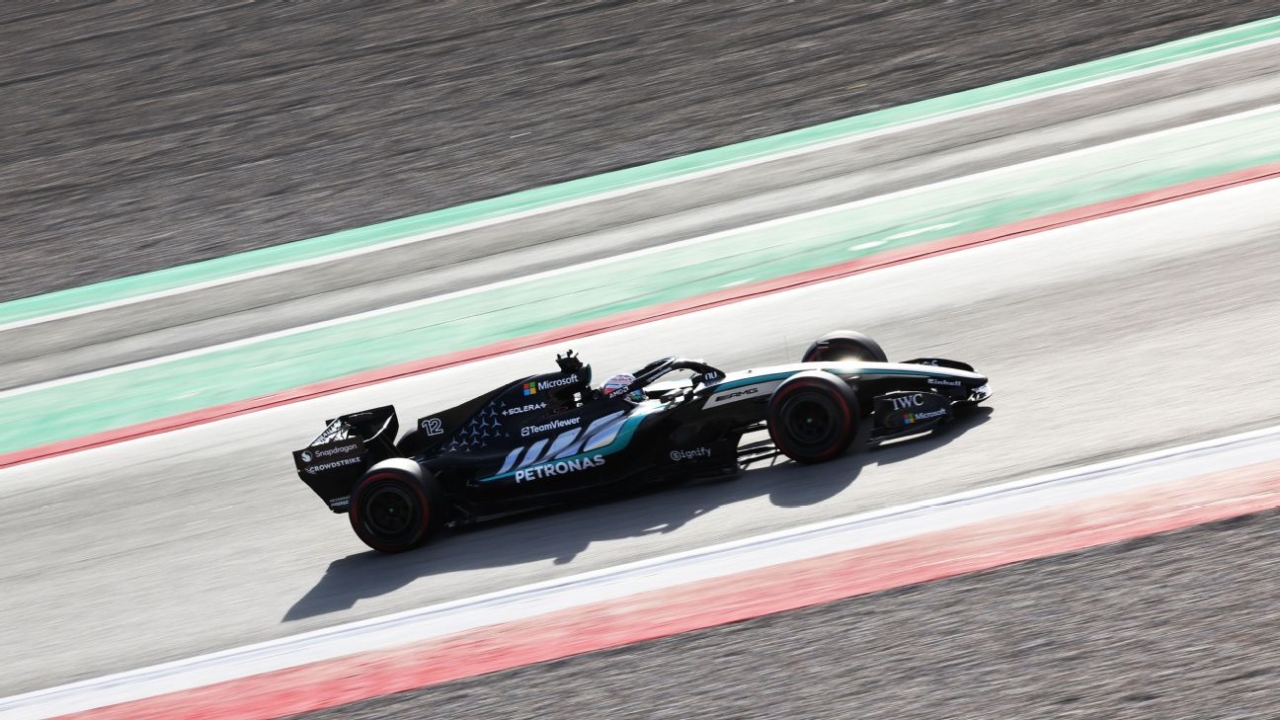
The initial test — or rather, “shakedown” — of the 2026 Formula 1 preseason has concluded. Following five days of activity at the Circuit de Barcelona-Catalunya, the top of the timing screens displayed a prominent red color, a sight that those in Italy are likely celebrating ahead of the first official test scheduled in Bahrain on Feb. 11.
So, what insights do we have — and what remains unclear? — as the sun set on Barcelona? ESPN’s Laurence Edmondson and Nate Saunders analyzed the available data, consulted sources in the pit lane, and offered their best assessment of the performances observed from this new generation of cars.
What we know
New cars perform well on track
While there is still much to learn about these new cars (details below), it is evident that they immediately pass the visual assessment. Initial renders from Formula 1 did not fully convey how the new cars would appear, but the final design is impressive. The vehicles are narrower, with lower rear wings and slimmer front wings, creating a striking overall aesthetic. Drivers often mention that a car’s appearance can indicate its speed, and thus far, these cars appear as quick and agile as F1 anticipated.
The solution was straightforward. By eliminating the overly complex features of the previous models, such as bulky endplates and the chaotic arrangement of exposed carbon fiber, a more streamlined design has emerged. While the old cars appeared cumbersome and overly engineered, the new models have been refined just enough to achieve an excellent visual appeal.
The regulations seem to have prompted several teams to revert to glossy paint finishes after years of making significant sacrifices in livery to reduce weight. The Red Bull, in particular, looks stunning after years of matte finishes. The sight of 22 of these new cars speeding towards Turn 1 at Albert Park is sure to be a spectacular event. — Saunders
Mercedes strengthens its position as preseason favorite
With a total of 502 laps completed over three days and the second-fastest time recorded by the end of the test, Mercedes’ preseason testing began ominously for its competitors. The tone was established on the first day in Barcelona when Kimi Antonelli was the first driver to take to the track as soon as the pit lane light turned green at 9 a.m. local time.
By Thursday’s conclusion, the W17 had covered a total of 2,325 kilometers over its three days on track, nearly equivalent to a round trip between Mercedes’ headquarters in the United Kingdom and the Circuit de Barcelona-Catalunya in Spain — an impressive distance for any F1 car fresh out of the box, especially one built under an entirely new set of regulations. Furthermore, by the third and final day, the team was already engaged in qualifying and race simulations with its drivers — tasks typically reserved for the latter stages of testing.
“We more or less achieved all our objectives,” said trackside engineering director Andrew Shovlin. “We finished a day early [on Thursday], but part of that is due to the car allowing us to execute our program as planned each day.”
Mercedes’ experience in Barcelona echoed the last significant engine regulation change in 2014, which preceded eight consecutive constructors’ championships for the Brackley team. After a series of missteps during the ground-effect era from 2022 to 2025, there is a sense that the return of flat-bottomed cars and a renewed focus on power unit technology could provide Mercedes with a pathway back to the forefront. The extent of their progress will only be revealed during the Bahrain tests, but Mercedes’ time in Barcelona could hardly have been more favorable. — Edmondson
Williams faces significant challenges
There is no denying the difficulties facing Williams: they are already in a precarious position. Team principal James Vowles indicated that while the team could have pushed to participate in Barcelona, it would have compromised spare parts for the initial races. This may be accurate, but Williams will now need to focus on areas that many of its competitors addressed in Catalonia, placing them at a disadvantage right from the start.
They might find some solace in the strong performance of engine supplier Mercedes thus far, but Williams is in a situation where they cannot afford any delays in the Middle East. The team asserts it will be prepared for Bahrain, with a 100-kilometer on-track filming day scheduled before testing begins there.
 play1:51Should the private test stay on the Formula One calendar?
Nate Saunders and Laurence Edmondson discuss whether they believe Formula One’s “secret test” in Barcelona should continue in future seasons.
The exact reasons for the delays in car construction remain unclear. Vowles chose his words carefully when addressing the media during the week, downplaying the notion of an overweight car while not entirely dismissing it as a potential issue for the team. Although he stated that Williams had passed all necessary tests to participate in the test, he was also vague about what had initially hindered the team, aside from “aggressive” development targets. It is well-known that Vowles was taken aback by the inadequacies of Williams’ infrastructure upon his arrival as team principal in 2022, and it is reasonable to assume that some of those issues still require attention behind the scenes. — Saunders
The magnitude of the challenge for Audi and Cadillac
The primary purpose of this week’s test was to provide F1 teams additional time to understand the challenges posed by the new regulations. It was anticipated that some teams would require this time more than others, and it is unsurprising that newcomers Cadillac and the new works team Audi had relatively low lap counts by the end of the week. However, the fact that both teams were on track for all three days marked significant milestones for their projects — particularly in light of Aston Martin’s late arrival and Williams’ complete absence.
Cadillac’s situation is arguably the more remarkable of the two. The team had only 323 days from receiving approval to enter F1 until the first day of this week’s test, yet it still managed to complete a total of 164 laps (in addition to a shakedown earlier in January).
“The target for this week was primarily shakedown — completing various tests related to reliability and ensuring we have a stable platform,” said Cadillac team principal Graeme Lowdon on Friday. “Bahrain will focus much more on performance, aiming to determine how fast we can actually make the cars go.”
The first significant mileage for Audi’s all-new F1 engine and gearbox was also a noteworthy achievement. With only one car on track (as opposed to multiple cars for engine manufacturers supplying customer teams), Audi needed mileage above all else and concluded the test with 243 laps — the majority of which were completed on a productive final day on Friday. Like Cadillac, there is hope that additional lap time can be gained in Bahrain, but the ambitious Audi project at least has a foundation to build upon. — Edmondson
This test didn’t need to be private
Despite considerable interest in the commencement of F1’s new era, a decision was made to keep this week’s test closed to the public, preventing media and fans from attending. F1 stated that the teams requested the test to be private, but the teams noted that F1 had imposed restrictions on the dissemination of information, video, and photographs. Even the end-of-day lap times (which, it should be noted, are of limited significance so early in the preseason) were not released and had to be sourced from individuals monitoring a timing screen at the circuit.
F1 TV conducted a series of brief interviews with drivers and team personnel at the end of each day, but seemingly without any intent to delve deeper than surface-level inquiries. Prior to the test, sources informed ESPN that the real reason F1 insisted on labeling the five-day test as a “shakedown” was due to a contractual obligation with Bahrain to host the first official test in February, and they did not want to overshadow the island kingdom’s track activities.
While the lack of information from this week’s test in Barcelona will likely increase interest in Bahrain, it appears that F1 has missed an opportunity to commence the year with the storytelling and excitement that each team’s efforts warranted. Although the sport may be congratulating itself for controlling the narrative from Barcelona, its most dedicated fanbase (i.e., those who follow F1 testing) have been left to consume what can only be described as “preseason slop” when they should have been enhancing their understanding of these remarkable new cars. — Edmondson
What we don’t know
How competitive the field truly is
With several teams already appearing to be in strong form, the true test of the new regulations will occur when performance runs commence in the heat of Bahrain. In 2014, Mercedes quickly identified an advantage that persisted for several years, but F1 hopes the new rules cycle will foster a more balanced competition. This current set of regulations also incorporates mechanisms designed to assist teams in catching up if necessary, so fans should not anticipate a straightforward repetition of the V6 turbo-hybrid era.
However, regardless of the checks and balances implemented, a fresh set of regulations always presents an opportunity for one team to pull ahead and dominate early on. Barcelona did not provide any indication of this; a single team, such as Mercedes, could be leading, or it could be Mercedes and engine customer McLaren with the rest trailing behind. It is also possible that Ferrari’s promising performance in Barcelona is indicative of their competitiveness, while Red Bull may also be stronger than many initially expected.
One would expect those four perennial favorites to remain the strongest on the grid, but will Aston Martin also be competitive? Can an unexpected team like Haas or Alpine join them, similar to Williams in 2014? And what about the new teams Audi and Cadillac? Will they struggle throughout the year, or will they find that progress comes swiftly?
Ultimately, these are the most pressing performance questions arising from the shakedown. Six days in the desert next month will provide a clearer picture — particularly regarding lap times set in the evening, under the lights when track temperatures cool — of the hierarchy heading into Melbourne. — Saunders
Is Ferrari truly a title contender once more?
On the surface, Ferrari’s Barcelona test was as impressive as Mercedes’ — and arguably even more so. The Italian team completed 440 laps (despite wet conditions on Tuesday) and recorded the fastest time of the test on the final day, clocking in 0.097 seconds quicker than the benchmark set by George Russell on Thursday. It should be noted that Lewis Hamilton’s time benefited from an additional 24 hours of track evolution compared to Russell’s, but in reality, we lack sufficient information about either lap to make a meaningful comparison.
The primary reason Ferrari’s test is less exciting than Mercedes’ is the multiple seasons of disappointment the Italian team has experienced following promising preseasons. For instance, the team entered last year following a strong finish to 2024 and a solid test in Bahrain, yet ultimately concluded 2025 without a race victory. This does not imply that Ferrari will repeat past mistakes this year; it simply highlights that we do not have enough information at this stage to counter the prevailing trend of disappointment established by their performances in recent years.
One reason for optimism, however, is that the car Ferrari showcased in Barcelona appeared relatively basic in its development and was referred to by team principal Frédéric Vasseur ahead of the test as a “Spec-A” version designed to accumulate mileage rather than maximize performance. While this was likely the case for several teams this week, it raises the possibility that Ferrari could arrive at the Bahrain tests as a clear frontrunner with a series of targeted upgrades. Until we have a clearer understanding of the final specifications of all the cars for the opening race in Australia, though, it is premature to start generating excitement around Hamilton’s Barcelona lap just yet. — Edmondson
Will drivers appreciate the new cars?
While the cars appear visually appealing, it remains uncertain whether they will perform and race well. With teams releasing limited media content over the past week, there were few opportunities for in-depth journalism or more probing questions regarding specific details of these cars during the past five days.
 play1:16Will Ferrari’s dominance in testing carry on into the season?
Nate Saunders and Laurence Edmondson discuss Ferrari’s impressive performance at the “secret test” in Barcelona, and whether they believe it will continue into the start of the Formula One season.
One intriguing aspect of the new generation is the level of energy management drivers must now perform lap after lap — an energy boost has effectively replaced the previous overtaking aid known as DRS. However, aerodynamic devices remain in play. Drivers are expected to maintain constant communication with their race engineers (especially in the early rounds) regarding the best strategies for managing the active aero, which refers to the movable front and rear wing flaps they can adjust with buttons from within the car, a topic that will likely be a significant discussion point at the start of the year.
This is a crucial issue for F1. Most drivers grew to dislike the previous generation of ground-effect cars, and F1 designed the new generation to be more agile and conducive to wheel-to-wheel racing.
One of the most vocal critics of the old cars was four-time world champion Max Verstappen, widely regarded as the best driver in the current field, who has previously suggested he would consider leaving the sport if the new cars do not provide an enjoyable driving experience. This scenario would be the worst-case outcome for F1, but a great deal has been invested in these new machines, and it remains uncertain whether, behind the typical preseason smiles of drivers simply pleased to be back in a Formula 1 car, they are satisfied with what they are experiencing. — Saunders
Has Red Bull perfected its power unit?
Since Red Bull decided to independently produce its power unit for 2026, questions have arisen regarding whether this bold new strategy would prove successful. Honda’s initial choice to exit the sport after 2021 left the team with little option but to start anew, and the project began in earnest in 2022 at the team’s facility in Milton Keynes.
Red Bull Powertrains’ fresh start led to reasonable expectations that it would take time to reach the performance levels of established manufacturers like Mercedes and Ferrari. However, the early indications from Barcelona are exceedingly encouraging for the two Red Bull-owned and -powered teams, which completed a total of 623 laps with the new DM01 power unit.
 play1:55Will Adrian Newey bring about a change at Aston Martin?
Nate Saunders and Laurence Edmondson evaluate Aston Martin’s limited laps in Barcelona and discuss whether Adrian Newey’s project offers hope for Aston Martin supporters.
Moreover, judging by the sleek appearance of the RB22’s sidepods, Red Bull’s aerodynamicists have enjoyed collaborating with their in-house engine department to optimize the overall car package. Additionally, recent speculation suggests that Red Bull, like Mercedes, is taking advantage of a regulatory loophole that permits a higher compression ratio when operating at elevated temperatures, potentially giving Red Bull a competitive power unit right from the start.
Of course, it is still early in the process, which is why the true capabilities of the Red Bull power unit remain uncertain, but what was once perceived as the team’s vulnerability heading into 2026 could actually turn out to be one of its strengths. — Edmondson
How competitive are Aston Martin and Honda?
Aston Martin concluded the test with the fewest laps completed (65) among the teams present in Barcelona, and sources confirmed to ESPN that the team spent the entirety of Friday operating at significantly lower engine modes compared to its competitors. This was reflected in the fastest times recorded between the quickest Audi and Cadillac cars.
A key aspect of the team’s ambitious project has been the partnership with Honda as its exclusive engine supplier this year. The Japanese manufacturer briefly opted to exit F1 in 2021, halting all future projects in the process, only to be enticed back by Aston for when Honda’s collaboration with Red Bull concluded last year. Honda lost valuable time as a result, and sources have indicated to ESPN that integrating that engine has posed some challenges thus far, but such difficulties were anticipated for a team undergoing a major engine transition in conjunction with a regulatory change.
A straightforward conclusion might be that Fernando Alonso is facing another challenging season — reminiscent of his experiences with Honda at McLaren — and that his team is ill-prepared for the upcoming campaign. However, any delays with Aston Martin should be viewed with an important caveat: Adrian Newey.
The renowned designer, who was appointed team principal of the project late last year, has consistently pushed the boundaries of development during preseason. When he was at Red Bull, it was not uncommon for the team to present entirely different cars from one preseason test to the next; Aston Martin’s delayed start to the week suggests a similar approach may be in play this time around. — Saunders
Source: espn.com
