
Reasons behind Verstappen’s potential departure from F1 due to new regulations
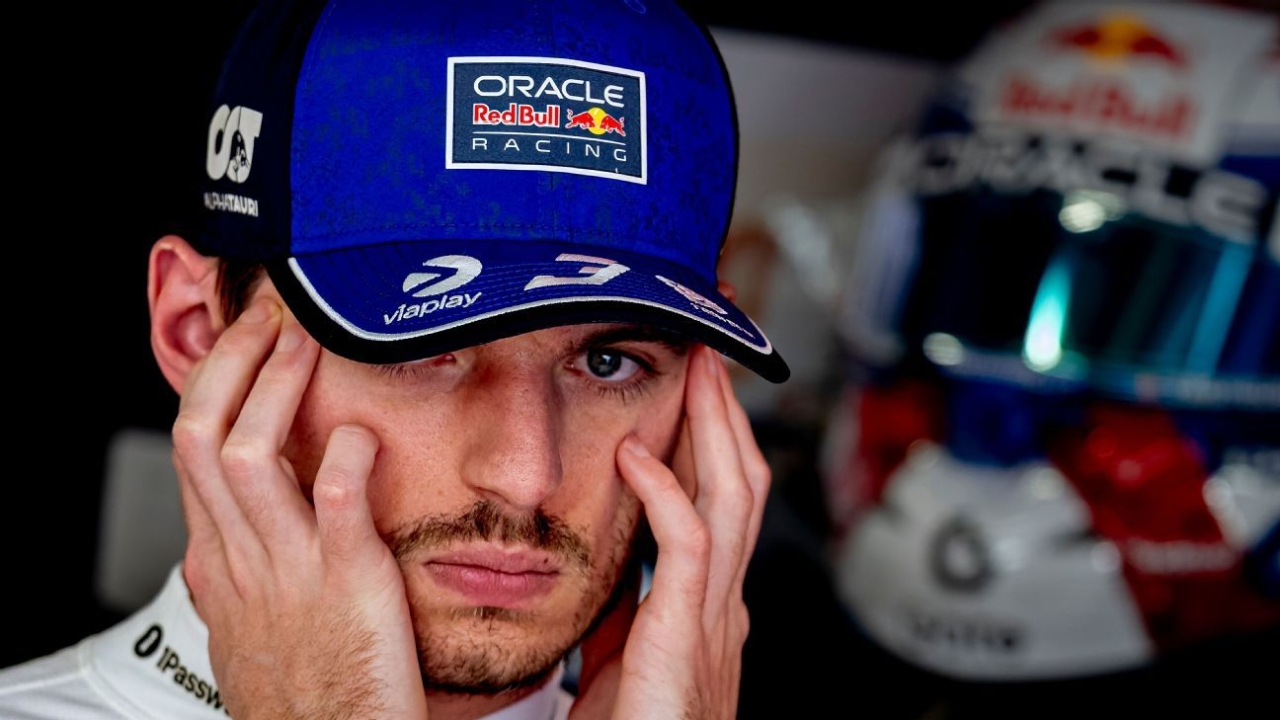
Max Verstappen’s surprising threat to leave Formula 1 is indeed startling, but it has been anticipated for some time. It is important to note that this is not merely an empty threat from a driver frustrated by no longer having the top-performing car.
The four-time world champion, who will be 29 in September, seems to be on the verge of making a significant decision—either retiring permanently or, as sources have suggested to ESPN, taking a break from Formula 1. The four-week hiatus resulting from the cancellation of two races in the Middle East marks the start of a period that will influence his future.
The most significant rule change in F1 history, which involves a shift to hybrid engines with a strong focus on capturing and utilizing battery-powered electrical energy, has angered Verstappen and appears to have pushed him toward this drastic choice. He has compared the new cars to Mario Kart, described them as a “joke” and “anti-racing,” and stated that anyone who appreciates the overtakes facilitated by battery boosts does not “understand what real racing is about.”
Compounding the situation, his Red Bull team seems to be considerably off the pace. Verstappen struggled to finish eighth at the Japanese Grand Prix after being knocked out in Q2 during qualifying. His best finish this season has been sixth place at the opening race in Australia.
For those who have been following the situation closely, this news may not come as a surprise. Verstappen has previously suggested that his time in F1 may be limited, but he provided the clearest insight into his current thoughts during the Suzuka weekend, particularly after the race.
When asked by BBC Radio Five Live if he might “walk away from F1 at the end of the year,” Verstappen replied: “That’s what I’m saying. I’m considering everything within this paddock. Privately, I’m very happy. You also wait for 24 races. And then you just think about whether it’s worth it? Or do I enjoy being at home with my family more? Seeing my friends more when I’m not enjoying my sport?”
In the media area after the race on Sunday, he stated: “Every day I wake up, I convince myself again [to keep racing]. And I try.”
This is the closest he has come to explicitly indicating he could leave.
Around the same time on Sunday, Dutch media outlets closely associated with Verstappen began reporting similar sentiments, prominently featuring the term “retirement.”
Comments he made on Saturday after being eliminated from Q2 also went somewhat unnoticed, as he cryptically mentioned there was “a lot of stuff also for me personally to figure out” regarding the upcoming races. He appeared quite despondent that evening.
“I’m not even frustrated anymore,” Verstappen remarked after qualifying. “I’m beyond that, so that’s a bit … I don’t know the right word in English. I don’t know what to make of it, to be honest. Probably no words. I just cannot … I don’t get upset about it, I don’t get disappointed, frustrated by it anymore with what’s going on.”
The notion of Verstappen departing from F1 feels more tangible than ever. It would be a legacy-defining decision for the Dutchman, leaving the sport at the peak of his abilities.
The broader implications should not be overlooked. The four-time world champion’s threat to depart feels like a crisis for F1’s new era of vehicles, a set of regulations the sport has struggled to manage the narrative around since the beginning of the year. The sport now faces a new reality—unless something extraordinary occurs in the coming months—that these rules may be remembered as so detrimental that they caused one of the sport’s greatest drivers to leave before reaching his 30th birthday.
Is he serious?
He is absolutely serious, and that has never been more evident. Importantly, there are also avenues for him to exit his current contract. Verstappen’s agreement with Red Bull—reportedly valued at around $70 million annually—extends until 2028. This was a lucrative extension signed shortly after he secured his first title in 2021.
The details of that contract have previously garnered attention. Much of the focus during the first half of last year revolved around whether Red Bull’s slow start might enable Verstappen to activate a performance-related clause during the summer break, coinciding with rumors of a potential move to Mercedes—rumors that Mercedes boss Toto Wolff actively helped to perpetuate. Ultimately, he entered the break in third place, which did not trigger the clause, and then delivered an impressive second half of the season, finishing just two points shy of a fifth title. Speculation regarding a future move to Mercedes seemed to dissipate by the end of the season, but Wolff remains a long-time admirer of Verstappen and still regrets missing out on signing him all those years ago.
Sources have informed ESPN that a similar exit clause exists for 2026, specifically added with F1’s new regulations in mind, given Verstappen’s long-standing concerns about them. Various reports indicate that he has a mechanism to leave his current deal if he is not ranked first or second in the competitive order by mid-year. Considering Red Bull’s early challenges, it would require an extraordinary set of circumstances for that exit route not to be available to him.
This clause was included to allow him to evaluate the competitive landscape under the new rules and make a decision about his future based on that assessment. The assumption was that he would still find enjoyment in racing, and this would merely facilitate a move elsewhere on the grid. However, it now appears that this clause could serve as Verstappen’s pathway to an early exit from the sport.
Sources have suggested to ESPN that Verstappen is leaning more toward a sabbatical rather than a complete retirement, but there is no guarantee of a return once a driver departs—even for someone of his caliber. Returning to the paddock would require that any potential time away leads him to miss F1, and given his mood throughout 2026 (and a significant portion of 2025 as well), there is no assurance of that either.
Verstappen could command a high price to return with any of the sport’s leading teams, but that assumes he would even want to race elsewhere if he chose to come back. Verstappen has a long-standing connection with and loyalty to the Red Bull organization that provided him his entry into the sport.
The nature of Red Bull’s F1 contracts also allows him to step away from racing while still fulfilling his agreement with the company in an ambassadorial or alternative role, and sources have indicated that this option would also be available to him. Both Daniel Ricciardo and Sergio Pérez were offered, and declined, similar opportunities when they left the company’s F1 teams in recent years, although neither had the advantage of departing on their own terms.
Regardless of how long he chooses to step away and whether he remains associated with Red Bull, Verstappen would be forgoing a substantial amount of money, but he addressed this during his BBC Five Live interview on Sunday as well.
“As a kid, this is what I wanted to do, and back then I had no idea what I was going to achieve and how much money you make,” he stated. “You never think about that as a kid. And it’s also not about that. I want to be here to have fun and have a great time and enjoy myself. At the moment that’s not really the case.”
Why is he so disillusioned?
Verstappen has been open to the possibility of an early exit from Formula 1 for quite some time. Even as early as 2021, after securing his first championship, he mentioned in his initial media interviews that one world title was all he had ever truly aspired to win. The rest seemed like a bonus.
The Dutch driver has never appeared to be someone who wanted to emulate fellow multiple world champions Lewis Hamilton and Fernando Alonso by racing into his 40s. When he reached his 200th race start at the 2024 Dutch Grand Prix, Verstappen was asked if he would compete in another 200: “No,” he replied, “we are past halfway [point] for sure, but it’s been already an incredible ride.”
The notion of a lengthy Formula 1 career has never appealed to Verstappen. This is perhaps understandable considering that, at 17, he became the youngest driver to ever start a race, a year before he became the youngest driver to win a race at the 2016 Spanish Grand Prix, during his Red Bull debut. We are approaching the 10-year anniversary of that victory.
His recent ventures into sports car racing have provided insight into his mindset regarding racing. Red Bull permitted him to compete at the Nürburgring last year when there were concerns he might leave the team entirely. He raced there again earlier this month and is set to participate in the Nürburgring 24 Hours in June—an opportunity for the Red Bull driver to rediscover joy in motor racing.
Life has also changed significantly for Verstappen. He and his long-term partner Kelly Piquet welcomed their first child last year, and his interview with the BBC at Suzuka suggested that a life spent racing globally has become less appealing as he has matured. This is a sacrifice that everyone in Formula 1 makes, but for drivers, it seems much easier when they are enjoying themselves.
This has become a crucial aspect of the situation, and is why F1’s new generation of cars is a key factor in his current mindset.
It would be simple to frame his growing disillusionment as a driver merely reacting to no longer winning. Red Bull has embarked on its own engine project this year, and despite what initially appeared to be a promising preseason, it seems to be lagging significantly behind Mercedes’ leading hybrid power unit. Verstappen’s chances of securing a fifth world title with Red Bull this year seem exceedingly slim, and predicting the potential to close the gap in future seasons is uncertain.
However, framing Verstappen’s mood solely as a response to that competitive situation would be inaccurate. As early as 2022, he was expressing concerns about these regulations. He consistently voiced his skepticism regarding F1’s transition to a 50-50 split between internal combustion and electrical power. He was making these statements even when he was aware that the clauses in his contract would allow him to join the top team a year into the regulatory changes.
This 50-50 power split was crucial in securing Audi’s commitment to enter the sport as a new manufacturer. On paper, this was a significant achievement for the sport’s efforts to remain relevant to the automotive industry, but that same split in hybrid engines has been at the core of the considerable negativity surrounding the cars within the paddock.
Fans appear to be divided on the regulations, while driver complaints have been numerous. Whether they love or hate them, it is undeniable that both qualifying and racing have undergone significant changes with the new rules, which require an unprecedented level of focus on charging and deploying battery power during every single lap.
Verstappen’s criticisms have been the most prominent, but there have been many other notable remarks. Reigning world champion Lando Norris stated that F1 has transitioned from its best cars in 2025 to its worst in 2026. Alonso has referred to the series as “the battery world championship” and remarked that the extreme lifting and coasting necessary through high-speed corners (essential for charging batteries) is now so simple that Aston Martin’s hospitality chef could drive his car without any difficulty.
The Japanese Grand Prix did little to quell the discussion surrounding the new cars. Charles Leclerc, arguably F1’s best qualifier, criticized the format on Saturday at Suzuka, stating “it’s a f—ing joke” that the cars no longer reward risk due to the demands of the electrical components of the hybrid engines. Leclerc has previously defended the cars, having been one of the standout performers in the thrilling battles created by the battery boosts during the opening three weekends.
 play0:34Leclerc ‘still convinced’ new F1 cars are good for racing
Charles Leclerc reflects on his third place finish at the Japanese Grand Prix.
Suzuka also highlighted a genuine safety concern, as Oliver Bearman crashed while attempting to avoid the Alpine of Franco Colapinto ahead of him. The varying levels of battery power available to each driver resulted in the Haas having a closing speed of nearly 50 mph. Grand Prix Drivers’ Association head Carlos Sainz later criticized F1 and the FIA for not heeding drivers’ repeated warnings regarding that type of crash, stating that the sport had not taken action “because the racing is exciting.”
Verstappen is far from alone in expressing his dissatisfaction with the cars, but his criticisms have carried the most weight due to the broader implications surrounding his overall mindset. The sport’s decision-makers seem to have privately acknowledged that significant changes are necessary to adjust the formula, but it remains uncertain how such changes can be implemented without creating further issues down the line, or whether F1 can even unite all relevant stakeholders to enact meaningful reforms.
Can Verstappen be convinced to stay?
Red Bull team principal Laurent Mekies suggested that his team simply needs to provide a better car to retain Verstappen beyond 2026.
“We are having zero discussions about those aspects,” Mekies stated on Sunday regarding the possibility of Verstappen leaving. “We have a lot of work to do, but I’m sure that by the time we give him a fast car, he will be a much happier Max.”
“And when we provide him with a car that he can push and make a difference with, he will also be a happier Max. So, honestly, that’s 100% of our discussions right now, is that.”
Clearly, Verstappen has not been satisfied with the current situation at Red Bull. After the Chinese Grand Prix, he invited Mekies and his long-time race engineer Gianpiero Lambiase to fly home with him on his private jet—sources indicated that this was unprecedented. Another source described it as an opportunity for open and honest discussions between Verstappen and key members of his race team to address their disappointing start to the new season.
While Red Bull achieved an incredible turnaround in the latter half of 2025 with an upgrade at the Italian Grand Prix in September, there are increasing doubts within the team about whether it is in a better or worse position since the sudden departure of long-time boss Christian Horner last July. Undoubtedly, improving the situation at Red Bull would help alleviate some of the concerns in Verstappen’s mind.
However, on Sunday night in Japan, Mekies also referenced the more critical aspect of the puzzle, at least in the short term.
“As per the regulations, as you know, they are coming with some good aspects and more tricky aspects,” he said. “And as a sport, along with the other teams, we will meet during the break to discuss how we can adjust them to improve things.”
These potential adjustments now appear to be essential in determining Verstappen’s next steps. F1 has four weeks to concentrate on addressing its engine issues. It is a complex situation, and the process for what follows is not yet established.
For Verstappen, his desire is clear. He has previously stated “they know what to do” regarding the necessary changes, and his assertion that the new rules resemble all-electric series Formula E “on steroids” is the clearest indication of which aspect of the regulations he would like to see altered. If it were up to him, he would likely eliminate the electrification component entirely, and he is not alone in that sentiment.
Many senior figures within the paddock that ESPN has spoken to agree that the rules are fundamentally flawed due to the 50-50 split, and an unresolved question is how far rule changes can shift that balance back in favor of traditional combustion power while achieving unanimous agreement among stakeholders and without creating unintended consequences in the future. F1 and the FIA will be able to implement changes on safety grounds to address concerns stemming from the incident between Bearman and Colapinto, should a clear path be identified, but the sport’s decision-makers are cautious about any other hasty reactions following just three races of a regulation change intended to last until 2030.
Verstappen has expressed hope for significant changes by 2027, but even that is not guaranteed. F1’s governance presents a challenging obstacle for broader changes, as the sport must persuade manufacturers who have invested heavily in that very 50-50 energy split to move away from it—those who are currently performing well are often the most resistant to enforcing substantial changes.
“It depends on what they decide for next year,” Verstappen remarked earlier during the Suzuka weekend, in one of his less candid moments regarding his current mindset. “For this year, I think they’re trying their best, but it’s also political, which I fully understand from other manufacturers—rightly so.”
Of course, F1 would not and should not be swayed by the preferences of one driver, even one as talented as Verstappen. He is at the extreme end of the spectrum regarding the criticisms the cars have received, and the sport consistently maintains that fans are enjoying the new style of racing witnessed in 2026 thus far. Whether everyone shares that sentiment is another matter entirely, but F1 has been steadfast in its belief that critics of the new formula need to exercise patience. F1 chief Stefano Domenicali, who has maintained constant communication with Verstappen regarding his growing frustrations, urged fans and the media to “keep calm” about the new formula ahead of the season.
However, these regulations may forever be associated with Verstappen’s name should they lead him to depart. What better overarching statement could critics of the new rules make than to point to one of the greatest drivers of all time—a driver who has, quite literally, compelled the rules governing wheel-to-wheel racing to be rewritten throughout his remarkable career—simply hanging up his helmet and deciding he no longer wishes to participate.
Thus, in the context of Verstappen’s future, the upcoming months appear to be a pivotal period for F1. Most alarmingly, there does not seem to be an easy or obvious solution to prevent the four-time world champion’s seemingly imminent and inevitable departure.
Source: espn.com

