
McLaren expresses concerns over insufficient information regarding Mercedes F1 engines
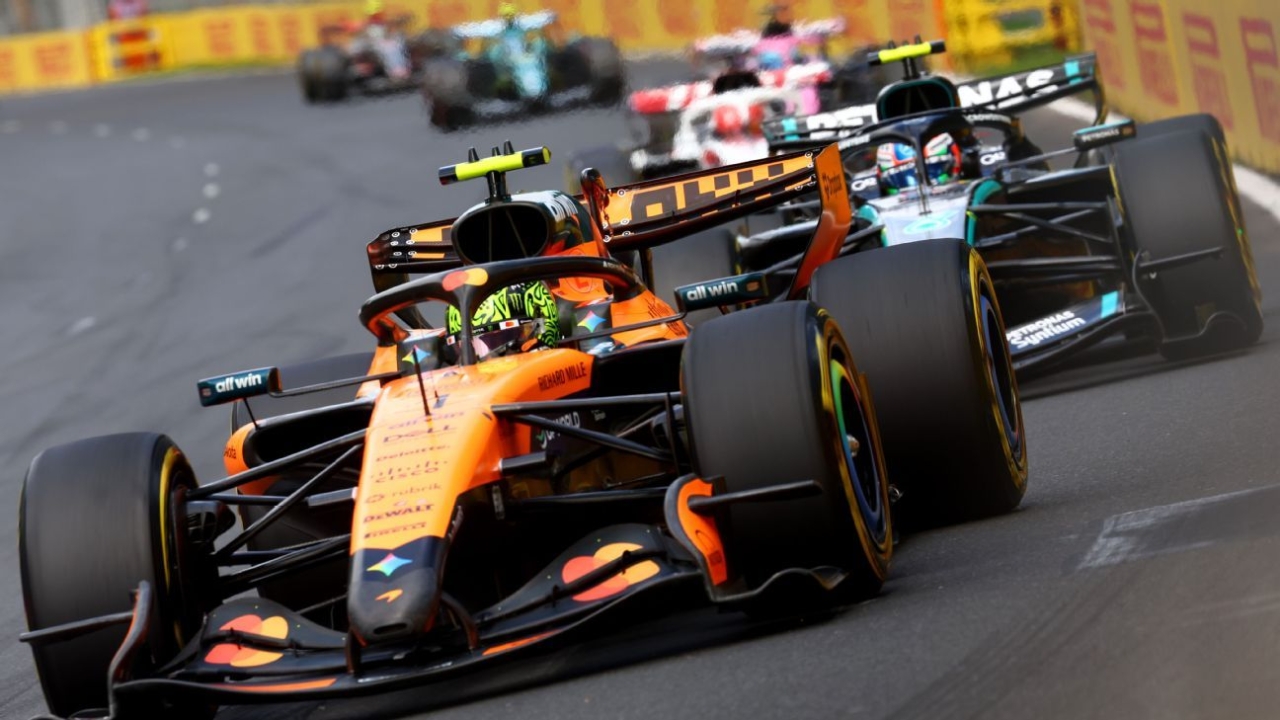
McLaren has indicated that the exchange of information from its engine supplier Mercedes “hasn’t met expectations” under the new regulations in Formula 1, leaving the team at a disadvantage in maximizing the capabilities of its power unit this season.
During the season opener in Australia, the defending champions qualified 0.8 seconds behind George Russell’s pole position time and concluded the race over 50 seconds behind the leading Mercedes.
This year, McLaren, Williams, and Alpine are all customers of Mercedes engines and have commenced the season significantly behind the works team, which appears to be leading the pack based on the initial race.
F1 engine suppliers are required to provide identical hardware to their customers; however, with the new regulations for 2026, a substantial portion of performance is linked to the operation of the power unit’s hybrid system.
Despite having access to the same power unit, McLaren believes it is still working to fully comprehend how to harness the same potential as the Mercedes works team.
“We need to improve our ability to utilize the power unit’s potential, which, based on what I observe HPP [Mercedes High Performance Powertrains] is achieving, seems to indicate there is more available,” stated McLaren team principal Andrea Stella.
“Currently, it’s not clear how to achieve that — for us, we are on a path of gaining knowledge, but certainly, we are at an earlier stage compared to the works team.
“The works team and HPP have collaborated for an extended period. They will have worked together to discuss how to optimize the power unit, which is understandable. However, we will certainly enhance our collaboration with HPP because we believe there are some immediate opportunities we should be able to capitalize on.”
Although the factory Mercedes team is not required to disclose its insights to rival McLaren, Stella noted that the information flow from Mercedes’ engine division has not aligned with his team’s expectations.
“What they are accomplishing indicates they possess a deeper understanding, and perhaps the information exchange hasn’t been as anticipated,” he remarked.
Stella disclosed that McLaren has already expressed its concerns to its engine supplier.
“The discussions with HPP regarding obtaining more information have been ongoing for several weeks,” he explained. “Even during testing, we were essentially going on track, operating the car, analyzing the data, and thinking, ‘oh, that’s what we have — good, now we need to respond to what we have.’
“However, that’s not how one operates in Formula 1. In Formula 1, what occurs on track is simulated [beforehand]; you know what is happening, you understand what you are programming, and you know how the car will behave.
– Lewis Hamilton confident Ferrari are ‘right in the fight’ despite Mercedes Melbourne dominance
– F1’s new rules create ‘Mario Kart’ racing in Australia season opener
– Max Verstappen to fulfil goal of competing at Nurburgring 24 Hours
“Thus, you also have your strategies for how to evolve it that you have determined in advance because you know what to expect from the car. Therefore, I must say, as a customer team, this is the first time we feel we are at a disadvantage even regarding our ability to predict how the car will perform and how we can enhance it.”
McLaren had outperformed Mercedes at the conclusion of the previous regulations cycle while utilizing its engine, but the operational parameters of the prior generation of power units were well understood and had a lesser impact on overall performance.
The increased focus on electrical power under the new regulations means that a variation in approach at one corner can significantly influence an entire lap.
“There is one more aspect to consider, and this may help you understand the type of Formula 1 we are currently experiencing,” Stella added. “Everything is highly sensitive.
“Why are the tools crucial? Because altering the amount of lift and coast before Turn 1 affects the deployment throughout the entire lap, which also complicates matters for the drivers as they must optimize their driving and battery usage, as this has become a fundamental aspect of driving a Formula 1 car now.
“So, when everything is so sensitive, the reliance on the tools becomes even more critical. Unlike last year, where the behavior of the power unit and electrical energy deployment was more stable, we had the tools, but we weren’t as dependent on them.
“But now, it is essentially all about the tools because modifying a detail in one area impacts something much larger in a distant part of the circuit, which is challenging to predict.”
Williams team principal James Vowles reported a similar gap between his team’s comprehension of the Mercedes power unit and that of the works team.
“What Mercedes is achieving with the power unit has taken us by surprise,” Vowles stated ahead of Sunday’s race. “It took a qualifying session for us to truly realize just how far off the pace we are. In that respect, that’s likely three tenths [missing from the engine] – something in that range.”
Vowles, who transitioned from Mercedes to Williams in 2022, expressed that he also anticipated the Mercedes engine department to be more forthcoming about its leading power unit.
“I had expected that to some degree, yes. That’s why I mentioned I was caught off guard yesterday.
“It is not as open as one might think, as that is where the performance is derived. Therefore, it is up to us to find ways to work around it.
“We must recognize that we, as Williams, do not possess the same level of sophistication in other technologies, and that is certainly our responsibility. Conversely, there is some inherent knowledge they have that we lack. And it is up to us to figure that out.”
Source: espn.com
