
Lewis Hamilton asserts that Mercedes’ additional power provides them with an advantage in the F1 world championship.
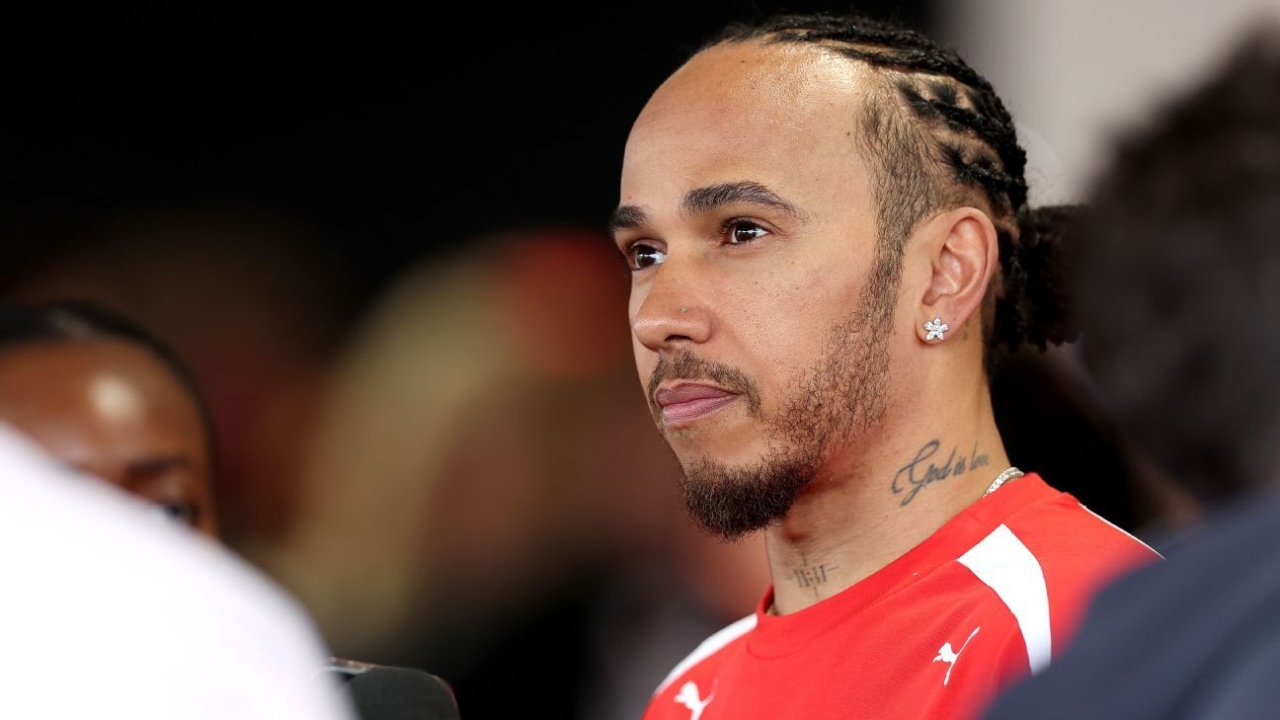
Lewis Hamilton is of the opinion that his previous team Mercedes could potentially secure this year’s Formula 1 world championship within “a few months,” following George Russell’s performance in the season’s initial qualifying session on Saturday.
Russell achieved pole position ahead of teammate Kimi Antonelli for the Australian Grand Prix on Sunday, finishing with a 0.785 second lead over his closest non-Mercedes rival, Isack Hadjar, and a 0.960 second advantage over Hamilton’s Ferrari, which qualified in seventh place.
This outcome appeared to validate the concerns of competing teams, who had suspected that Mercedes was concealing its performance during preseason testing to shift focus away from a regulatory dispute regarding its engine’s performance.
Since last year, competing manufacturers have been urging the FIA to reassess how the engine’s compression ratio is evaluated, believing that Mercedes has found a method to pass the scrutineering test in ambient temperatures while increasing the ratio—and thus power output—when the engine operates at higher temperatures on the track.
Prior to the season’s commencement, the FIA, F1, and all five engine manufacturers reached a compromise, agreeing that the compression ratio would be measured in ambient conditions throughout the season, in addition to being assessed at 130 degrees Celsius starting from the Monaco Grand Prix. The FIA also announced that in 2027, the cold test would be eliminated, and the ratio would only be measured when the engine is hot.
Regarding Mercedes’ performance in Australia, Hamilton noted that a significant portion of Russell’s qualifying edge stemmed from enhanced power on the straights.
“It’s evident that they didn’t reveal the engine power during testing due to the discussions surrounding compression ratios, and they’ve clearly done an impressive job with their engine, which we have as well,” Hamilton stated.
“However, I want to comprehend why there’s a 0.2 second or greater advantage solely from power per sector, and if it relates to the compression issue, I want to know why the FIA hasn’t addressed it and what measures are being taken to correct it.
“I hope it’s not related to the compression ratio; ideally, it’s just raw power, and we need to improve our performance. But if it is the compression issue, I would be disappointed that the FIA would permit that situation—if it doesn’t adhere to the regulations—and I will be urging my team to pursue the same approach to extract more power from our engine.”
When Hamilton was asked if the advantage might only last for the first seven races until the Monaco Grand Prix (and possibly two fewer if the Bahrain and Saudi Arabian rounds are canceled due to regional conflicts), the Ferrari driver remarked that it would still provide Mercedes with a substantial lead in the championship.
“If they maintain that for a few months, then the season’s effectively over,” he said. “I mean, not completely over… but seven races, a few months, you can lose a significant number of points when you’re a second behind.”
-
Norris: F1 has transitioned from the best cars to the worst
-
Russell claims opening pole as Mercedes excels in qualifying in Melbourne
-
Verstappen exits qualifying in Melbourne after crashing
In a broader discussion about the regulatory changes for 2026, which have faced criticism from several drivers on the grid, Hamilton expressed that the increased focus on managing electrical energy does not align with the core principles of F1.
“The car is quite enjoyable to drive; it’s just the power,” he said. “The [electric] power is effective when available, but it doesn’t last.
“We begin the lap at half throttle coming out of the last corner and for a quarter of the straight, then we accelerate to full throttle. This approach contradicts what Formula 1 represents—going flat out, full attack, yet we are lifting and coasting.
“That aspect is not very favorable. And I don’t believe the drivers particularly appreciate it.”
Source: espn.com
