
Lando Norris states that Formula 1 has transitioned from possessing the finest cars to the least effective under the new regulations.
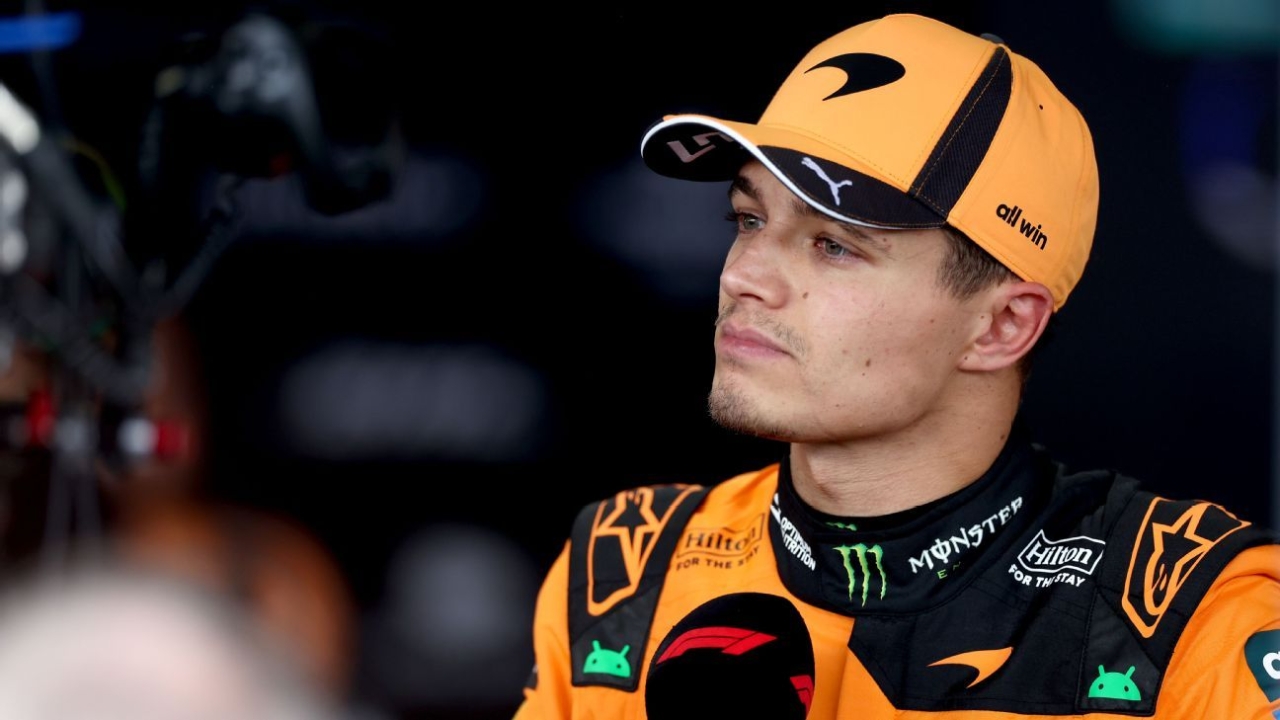
Defending champion Lando Norris asserts that Formula 1 has transitioned from possessing the finest cars in the sport’s history to the least favorable following the implementation of new regulations for the 2026 season.
The new era of F1 commenced on a challenging note, as several drivers expressed dissatisfaction with the cars’ characteristics after the initial qualifying session of the season in Australia.
The updated regulations have introduced hybrid engines that operate with a 50% reliance on sustainable fuels and 50% on electric power, leading to a formula that emphasizes battery management—sometimes at the cost of maximizing performance in corners.
Albert Park in Melbourne, the site of this weekend’s season opener, is anticipated to be one of the most demanding circuits for energy management, with onboard footage revealing drivers losing power on straights as the hybrid systems automatically shifted to energy recovery modes.
Norris, who qualified sixth after missing a significant portion of practice due to reliability problems, provided a pessimistic evaluation of the new formula.
“We’ve transitioned from the best cars ever created in Formula 1 and the most enjoyable to drive to likely the worst,” he remarked.
“It’s disappointing, but you must adapt and make the most of what you have. It’s definitely different. It’s not at all like it was last year.
“It’s not a matter of simply pushing harder in corners. Sometimes if you push too much, you deplete the battery and end up going slower. You need to learn how to navigate this.”
During qualifying, Norris encountered a cooling fan that had been discarded by Kimi Antonelli’s Mercedes, resulting in a collision as it was inadvertently left in the car’s sidepod when exiting the pits.
Norris mentioned that he did not notice the debris because he was focused on his steering wheel to monitor the battery charge level.
“I’m focused on my steering wheel, which is why I miss the debris, as I need to check what speed I want to achieve at the end of the straight [to recharge the battery], and whether I need to brake 30 meters earlier or 10 meters later,” he explained. “That’s part of the challenge.”
Norris believes that his fellow drivers share his concerns regarding the effects of the 50/50 power distribution in the new formula, although he acknowledged that George Russell, who claimed pole position for Mercedes on Saturday, is likely still enjoying the new experience.
“I think everyone is aware of the issues—it’s just that it’s a 50-50 split,” he stated. “It simply doesn’t function well.
“The reality is that you have to decelerate significantly before corners, and you must lift off everywhere to ensure the [battery] pack is at an optimal level. If the pack is too high, you’re also in trouble.
“It’s just challenging. But, yes, it’s what we have. It doesn’t feel great as a driver, but I’m sure George is happy, so in the end, it doesn’t really matter. You just have to maximize what you can do.”
The 50/50 power distribution was introduced to attract new engine manufacturers to the sport based on its environmental credentials, successfully drawing in Audi while also persuading Honda to remain in the competition.
– Aston Martin fears driver ‘nerve damage’ from F1 car, may not finish race
– Australian Grand Prix 2026: Race start time, how to watch, full schedule
– The craziest F1 start ever? Why Melbourne might see chaos from the off
Norris expressed that the rulemakers would have been wiser to heed the drivers’ perspectives, as he believes their interests align closely with those of F1’s fans.
“I think we have the sport’s best interests at heart more than others,” he noted.
“We also desire the best for the sport. Simultaneously, we are not trying to implement changes solely for our enjoyment.
“We aim for cooler cars, a more appealing viewing experience, and increased excitement, among other factors.
“The regulations have been altered to accommodate what manufacturers desire. However, if 20 other drivers are expressing concerns, I question what is truly beneficial for the sport.”
Source: espn.com
