
Is 2026 the year for Ferrari? Lewis Hamilton and Charles Leclerc’s F1 aspirations as ‘Macarena’ wing captures attention.
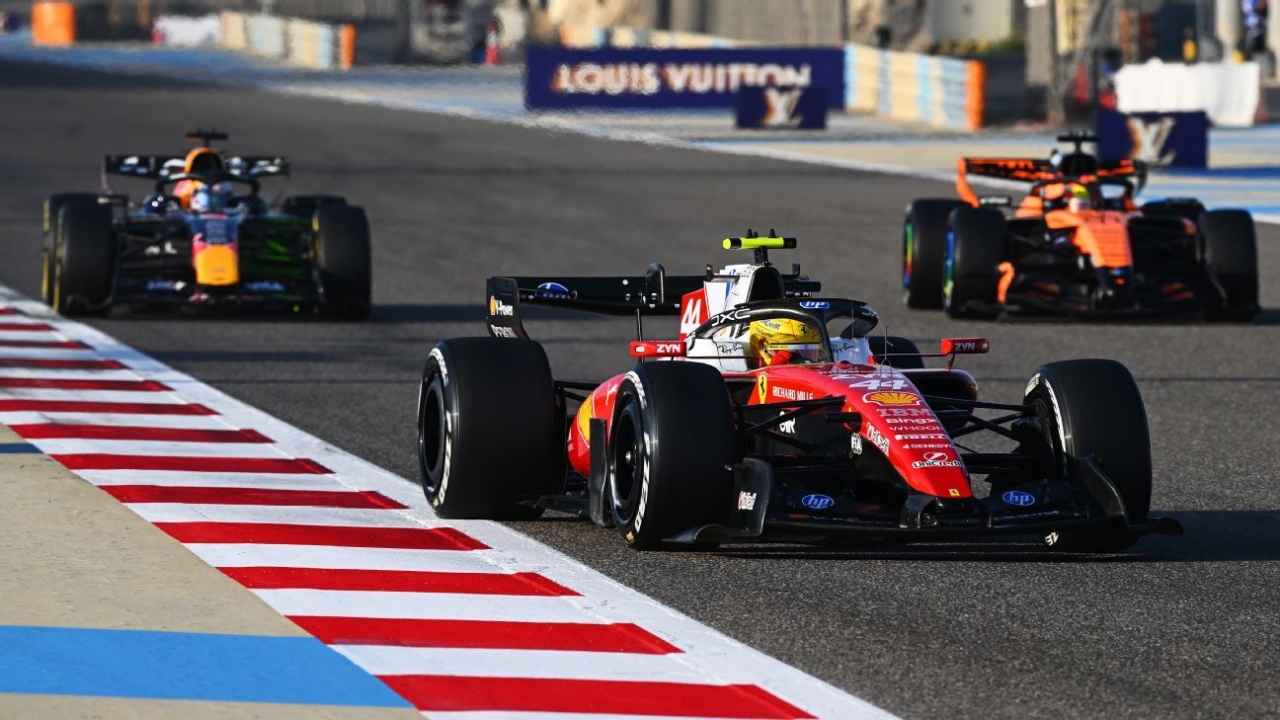
Is this the year for Ferrari? This is a question that Formula 1 enthusiasts have posed every year for almost twenty years, to the extent that it has evolved into more of a meme than a sincere inquiry.
The pattern is well-known: initial excitement builds ahead of the season, only for on-track setbacks—sometimes occurring early, sometimes later—to dispel the optimism.
Even though Ferrari is the most successful team in F1 history (boasting 15 drivers’ championships and 16 constructors’ championships), it seems unable to escape this cycle. With each passing season that fails to add a new championship trophy (Ferrari last won the constructors’ title in 2008 and the drivers’ title in 2007), the shine of its historical successes appears to fade.
Close calls have occurred over the last 15 years. Fernando Alonso nearly clinched the title in 2010 and 2012; Sebastian Vettel arguably had a competitive car in 2017 and 2018; and Ferrari was narrowly defeated by McLaren for the constructors’ title in 2024. Yet, despite the strengths of the Italian team, which currently features a star driver lineup of Charles Leclerc and Lewis Hamilton, a crucial element seems perpetually absent.
No amount of driver acquisitions, management changes, or support from Ferrari’s devoted tifosi has managed to restore the team’s former glory since 2008, yet here we find ourselves again, at the beginning of a new era in F1, questioning once more if this is Ferrari’s year.
– Bold predictions for F1 in 2026: Ferrari will end its title drought
– Australian Grand Prix 2026: Race start time, how to watch, full schedule
– Does winning the first race of F1’s new era guarantee a title?
– The craziest F1 start ever? Why Melbourne might see chaos from the outset
A new hope
Despite the prolonged title drought, optimism remains high in Maranello, and there is no better moment to surge to the front of the grid than with a new set of regulations in place.
Initial indications from preseason testing suggest that Ferrari’s SF-26 is, at the very least, a reliable foundation. Leclerc topped the timesheets during the Bahrain test, the new power unit demonstrated remarkable reliability, Ferrari’s engineers introduced cutting-edge aerodynamic solutions, and the car seems to have a distinct advantage over its rivals in terms of race starts.
However, drawing from the disappointments of previous seasons, team principal Fred Vasseur continues to advocate for a calm approach among his team. He is acutely aware of the pitfalls of celebrating premature optimism, and the Frenchman has prioritized the car’s development throughout the entire season over ensuring it secures pole position for the opening race in Australia.
This strategy follows a challenging 2025 season in which Ferrari realized as early as the second round that it could not operate its car at the optimal ride height without causing illegal levels of plank wear. An effort to find a solution was initiated, but as Vasseur noted at the season’s conclusion, his team had to “pay the bill in the first third of the season” to address the issue while its competitors continued to advance on their own more successful development trajectories. It became evident after just a few races that the gap to the leading McLaren team would ultimately be insurmountable. This led Vasseur to make a pivotal decision in early April of the previous year.
If Ferrari continued to focus on developments under the 2025 regulations, it would only yield marginal improvements in a losing battle, but that same resource had the potential to unlock significant performance gains for the 2026 project. Consequently, Vasseur redirected the entire focus of Ferrari’s design team towards long-term benefits with the SF-26, even if it meant short-term frustrations on the track in 2025.
“This decision to halt [2025 development] after five or six races was a difficult one,” Vasseur stated. “I still believe it was the right choice, but if I underestimated anything, it was the psychological impact on every single team member, including the drivers.
“Because it was for good reasons, to concentrate on ’26, to try to maximize this [upcoming] season, but on the other hand, you are in the season with 20 races remaining, and you know that somehow you won’t be bringing any further developments. It’s challenging, and I probably underestimated this for them, but also for myself.”
Italian innovation
Vasseur’s decision in April finally yielded visible results during preseason testing last month. After focusing on reliability at the initial test in Barcelona, a range of innovative solutions emerged on the Ferrari in Bahrain, particularly around the rear of the car. Features on the car’s diffuser and additional bodywork extending from its rear crash structure caught the attention of technical journalists during the second week of testing, before Ferrari captured the paddock’s interest with its eye-catching party trick on the penultimate morning.
Employing a unique approach to F1’s new active aero regulations, which permit movable upper elements on the front and rear wings to reduce drag, Ferrari tested a rear wing that rotates the upper flap completely upside down when activated. Dubbed the “Macarena” wing by a laughing Vasseur during an interview with French television, it distinguishes itself among the various interpretations of the new active aero regulations—most of which function similarly to last year’s DRS device.
Although the Macarena wing was only on the car for a limited number of laps before Ferrari reverted to its more traditional design, the experimentation highlights the time and resources Maranello’s aerodynamicists have had to explore innovative concepts since last April. What, if any, advantage the Macarena wing provides—and whether Ferrari will even utilize it at the opening round in Australia—remains to be seen.
Fast starters
Aside from the rear wing innovation, Ferrari seems to possess a more tangible advantage over its competitors regarding race starts. During simulations at the conclusion of test sessions in Bahrain, the Ferrari was achieving rapid launches from the grid while cars with rival power units struggled to execute their starts effectively.
An unintended consequence of the overhaul in F1’s power unit regulations this year has made it considerably more challenging to achieve a clean start when the lights go out. The removal of the MGU-H from the hybrid system means that electrical energy can no longer be utilized to prepare the engine’s turbo for a standing start, resulting in the less refined method of holding the throttle open for 10 seconds to spool the turbo. This noisy process has proven difficult for most of the grid to master unless, it seems, the car is powered by a Ferrari engine.
The prevailing theory is that Ferrari’s engineers anticipated potential challenges surrounding race starts and opted for a smaller turbocharger that requires less revving to reach its optimal rpm for a race start. For rival drivers like George Russell, whose Mercedes lined up 10 places ahead of Hamilton for one of the practice starts in Bahrain but still fell behind the Ferrari into Turn 1, this advantage could be pivotal early in the season.
“To win a race, you’ve also got to get off the line quite well,” Russell remarked. “And I think the two starts I’ve made this week [in testing] were worse than my worst ever start in Formula 1.
“And, Lewis, down in P11, got into P1. So, at this stage, I don’t think it matters how quick you are [in qualifying].
“I think what’s going to trip you up, it’s always going to be that tallest hurdle. And that’s what we’re trying to get our heads around right now, and we’re stumbling on some at the moment.”
It should be noted, however, that rival teams will likely resolve their starting issues as the season unfolds. It also remains uncertain whether a smaller turbocharger, which Ferrari also employed under the previous regulations, presents inherent disadvantages at circuits that are more power-sensitive and those located at higher altitudes.
Should Ferrari fans start celebrating?
Taking a moment to reflect on the Bahrain tests, it’s important to remember that recent history is filled with seasons where Ferrari made a strong start but failed to mount a significant title challenge.
The last major regulation change in 2022 saw Leclerc begin the season with two race victories and a second-place finish in the first three Grands Prix. His performance at the start of the season was such that by the time he left the third round in Australia, he held a 46-point lead over eventual champion Max Verstappen and was already being hailed as a strong title contender.
As is likely to occur under this year’s regulations, the competitive landscape shifted rapidly in 2022, and as Red Bull reduced weight from Verstappen’s car, he went on to secure 14 more victories after Australia. Meanwhile, Ferrari found itself trapped in a developmental dead end by the midpoint of the season, resulting in only one additional race win for Leclerc and a 146-point deficit to Verstappen by the end of the year. With this context, it is prudent to temper any assertions that Ferrari is in the best position to claim this year’s title—even if it secures victories in the first two races in Australia and China.
But will this dose of realism prevent us from asking if this is finally Ferrari’s year? Not at all.
Source: espn.com
