
George Russell: Sufficient ‘easy opportunities’ to enhance F1 regulations for Miami Grand Prix
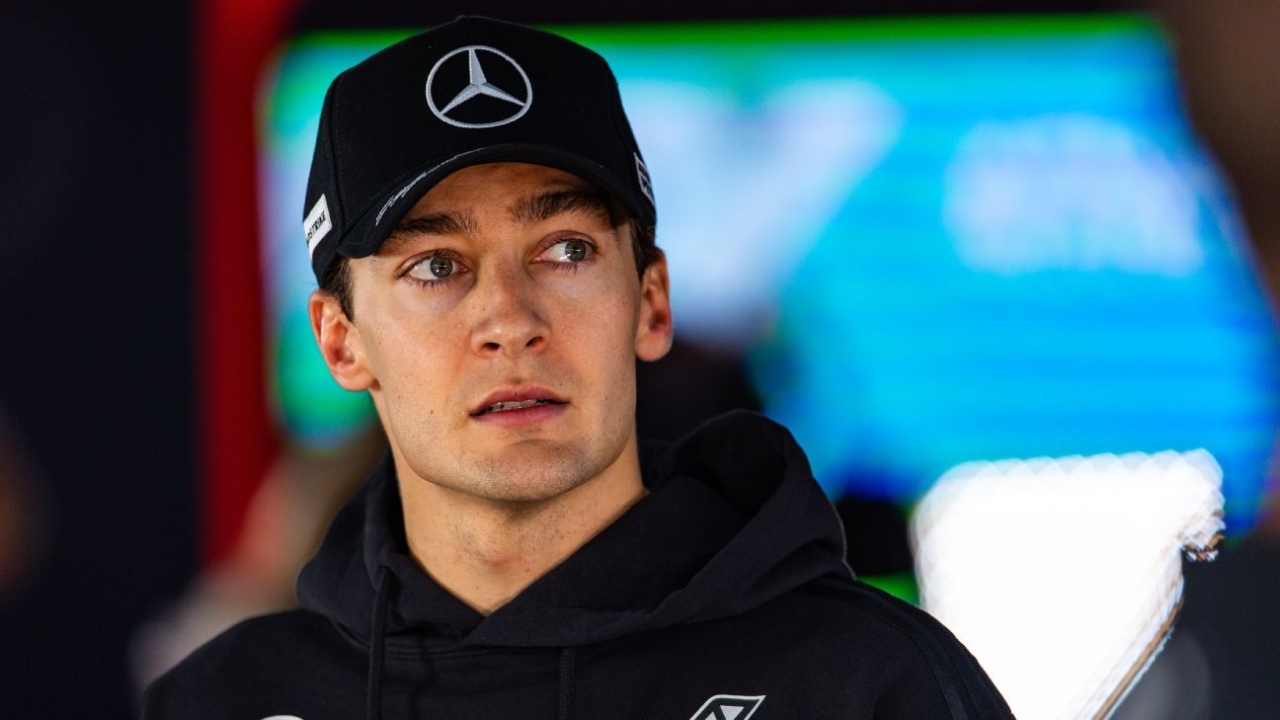
George Russell, a driver for Mercedes, has stated that the drivers in Formula 1 are unified regarding the modifications needed in the sport’s regulations prior to the upcoming event in Miami, and he believes there is ample “low-hanging fruit” available for short-term improvements.
Following a series of grievances concerning F1’s new regulations after the initial three races, the sport’s governing bodies are utilizing the current month-long hiatus in racing to assess possible adjustments to the rules ahead of the Miami Grand Prix.
The primary concerns raised during the opening races are linked to the tripling of battery power allowed this year, which has compelled drivers to concentrate on energy management during qualifying laps and has led to concerning speed differentials between cars utilizing varying levels of battery power.
A serious incident involving Haas driver Oliver Bearman during the last race in Japan underscored the risks associated with these unexpected speed variations, while drivers have voiced numerous complaints regarding the necessity to manage energy instead of driving at full throttle during qualifying laps this season.
Russell, who serves as a director of the Grand Prix Drivers Association, indicated that the drivers are in agreement on the key issues that F1 and its governing body, the FIA, should prioritize.
“I believe the two main points are flat-out qualifying, meaning no lift and coast, and then addressing the closing speeds,” Russell remarked.
“The closing speed during the Bearman and Franco Colapinto incident was twofold. Firstly, Bearman was utilizing his [electric] boost button, providing himself with 350 kilowatts [of power], which gave him an excess of power in an unusual section of the track.
“Conversely, Colapinto had used his boost on the main straights half a lap earlier and was low on battery, resulting in a power deficit. This, in my view, is where these differences in closing speeds originate.
“I believe the FIA is certainly very much aware of this. From the drivers’ standpoint, we are looking to minimize that closing speed in atypical areas.”
– George Russell expresses understanding if Max Verstappen decides to leave F1
– ‘I’m content’: Verstappen enjoying his Nürburgring side quest
– Red Bull reorganizes technical department amid F1 challenges, significant departures
The FIA is conducting three meetings this month to develop ideas and finalize plans for regulatory changes ahead of the Miami Grand Prix at the beginning of May.
The first two meetings have taken place to generate ideas, including modifications to how power units deploy and recover electrical energy.
One proposal is to allow an increase in the amount of energy the hybrid system can recover while the driver is at full throttle — a process referred to as superclipping — from the current limit of 250KW to a new threshold of 350KW.
Russell believes this is a clear method to decrease the amount of lift and coast during a lap — when a driver conserves energy by completely releasing the throttle before braking zones — and enable drivers to approach flat-out qualifying laps.
“There will need to be a compromise somewhere because currently, the cars are configured to achieve the fastest lap times possible, which is resulting in this lift and coast driving style and some energy management here and there,” he noted.
“However, there is a lot of low-hanging fruit. For instance, the minus 350 kilowatts superclip is an obvious solution and will significantly reduce lift and coast. Additionally, there are other minor aspects of the regulations that stipulate the rate at which the engine can be derated [reduced electric output].
“On a very short straight, there isn’t sufficient time to transition from 350 kilowatts [of deployment] to a superclip because the straight is too brief. Minor adjustments to these regulations could lead to substantial enhancements in the overall driving experience. Thus, this break has provided a valuable opportunity for everyone to address these issues.
“The FIA has been in extensive communication with several drivers, and this has been a collective effort. From the FIA’s technical perspective, this is likely the closest relationship we have had with them in many years. This is encouraging to observe.”
Source: espn.com

