
F1’s revised regulations lead to ‘Mario Kart’ style racing in Australian season debut
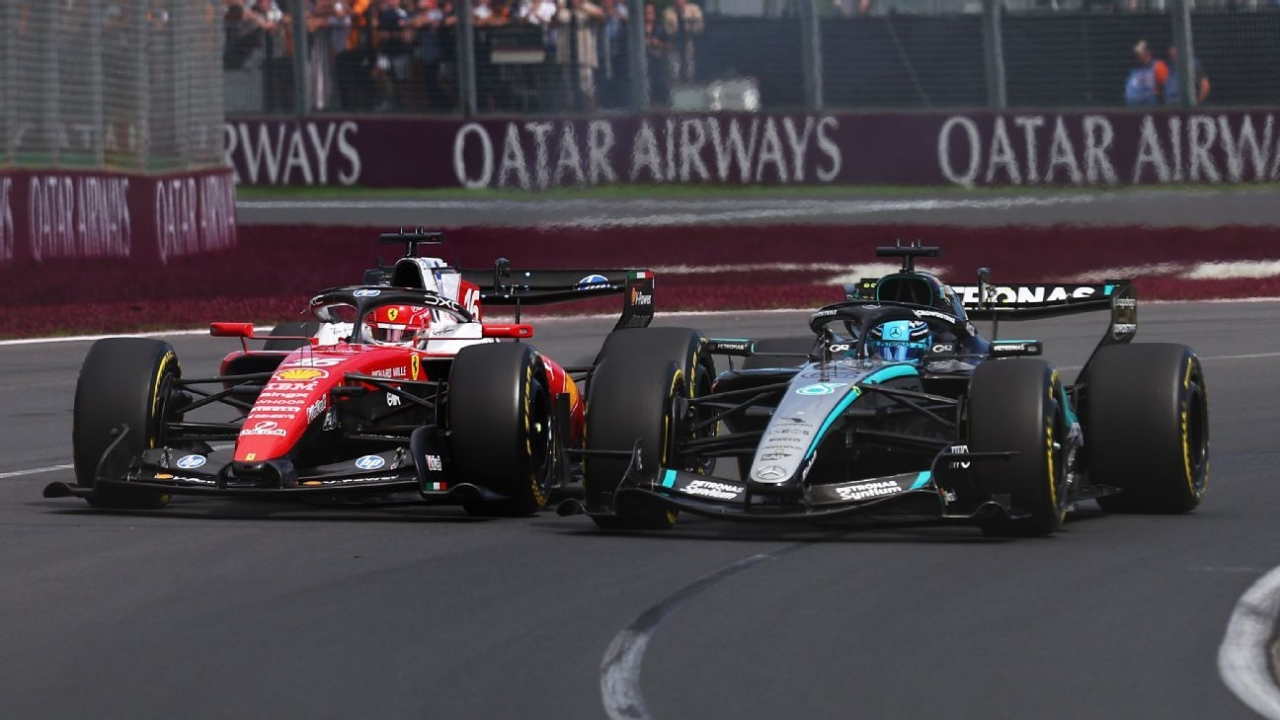
MELBOURNE, Australia — For 12 exhilarating laps, as George Russell and Charles Leclerc exchanged the lead during the Australian Grand Prix, it was easy to overlook the controversy surrounding Formula 1’s vehicles that overshadowed the opening weekend of the 2026 season.
The two competitors, both aspiring for their first drivers’ championship this season, captivated the Albert Park audience with a series of impressive overtakes at different sections of the track. Russell and Leclerc continued their fierce contest until the virtual safety car’s deployment allowed Mercedes to make a pit stop—something Ferrari, perhaps characteristically, chose not to do—resulting in the preseason favorite ultimately securing a comfortable one-two finish with Kimi Antonelli in second place.
Their rivalry provided a much-needed highlight for F1 following what could only be described as a harsh beginning to the sport’s new era—one marked by redesigned cars and, most controversially, power units that feature a 50-50 division between combustion energy and electric power. The brief yet thrilling duel between Russell and Leclerc offered F1 a clear positive to emphasize: amidst the negativity, two teams vied for victory and swapped positions on the track.
F1 quickly shared a statistic: last year’s season opener recorded 45 overtakes, while Sunday’s race featured 120. Leclerc and Russell accounted for seven of those during the initial phase.
The opening weekend felt like a mix of highs and lows. The positives were impressive, while the negatives were quite significant. And there was certainly an abundance of the latter.
Drivers expressed strong criticism of the new regulations after exiting their cars following Saturday’s qualifying; three world champions—Max Verstappen, Lewis Hamilton, and Lando Norris—voiced their concerns about the cars in various ways. Norris remarked that F1 had sacrificed the most enjoyable cars to drive for the least enjoyable, and a notably negative atmosphere permeated the paddock after qualifying, further intensified by Mercedes’ dominant front-row lockout.
Russell and Leclerc helped alleviate some of that negativity during their brief contest, and Ferrari’s rapid starts may well become a recurring element in energizing races this season. Witnessing Leclerc’s red car lead into Turn 1 was precisely the image F1 needed after a challenging few weeks from a public relations standpoint. If this trend continues, the prospect of Ferrari potentially ending its title drought could be sufficient to diminish the criticism surrounding these contentious new cars.
However, it is important not to become overly enthusiastic about a single exciting battle. As was the case after qualifying, the optimism expressed by the drivers who contended for the top positions was not mirrored by those further down the grid.
Most drivers appeared to maintain their critical stance, with some discovering new reasons to dislike the revised F1. While the lead battle could be seen as a strong endorsement of the energy deployment that has become vital to the new power units, this aspect of Sunday’s race resonated just as prominently as the criticisms from Saturday.
Video game racing
During his intense battle at the front, Leclerc humorously remarked on the radio, “This is like the mushroom in Mario Kart.”
This comment referred to the overtake and boost mode buttons available to drivers during a race. Both modes are integral to the complex new hybrid engines and were significant selling points of the new regulations.
Unlike the previous drag reduction system (DRS), drivers can utilize the boosts at their discretion, which F1 hopes will foster strategic battles throughout races. Russell described it as a “yo-yo effect,” and his contest with Leclerc certainly felt that way as they alternated in overtaking each other. Haas driver Oliver Bearman echoed this sentiment after the race, stating, “Using the boost button, I felt like I was a bit in a video game.”
The question of whether Formula 1 should resemble a video game is debatable. While Saturday’s criticisms focused on how unremarkable a qualifying lap felt around Albert Park’s circuit when drivers were primarily conserving energy, Sunday’s concerns revolved around the moments when drivers could utilize it in battles with other competitors.
There was little doubt regarding the reigning world champion’s perspective on the video game-like racing. When asked if the boost modes now available to him felt artificial, Norris responded, “Way too much. It’s chaos; you’re just waiting for something to happen and go quite horribly wrong, and it’s not a pleasant position to be in, but there’s nothing we can really do about that now.”
“It’s unfortunate; it’s very artificial. Depending on what the [power unit] decides to do and how it behaves at times, you can be overtaken by five cars or find yourself unable to do anything about it, so, yeah, there’s nothing we can change about it, so there’s no point in discussing it further.”
Haas’ Esteban Ocon shared Norris’ skepticism and offered an intriguing perspective on the position exchanges he experienced, albeit ones that were not broadcasted.
“Very painful,” he described racing with the new cars. “It’s painful because as drivers, you can’t do much. Once you activate the boost button, whether you manage to overtake or not, you become vulnerable again on the next straight. The other driver will overtake you again, which happened with Pierre [Gasly] three times. It also occurred with [Gabriel Bortoleto] when I was battling him twice. I just overtook and got overtaken again.”
One could cynically substitute the names Ocon mentioned with Russell and Leclerc and arrive at a very different (and less favorable) depiction of the lead battle. Critiques of the new formula and the racing it has produced seem to depend on a driver’s position relative to others in the competitive hierarchy.
While F1 was quick to publish data on the number of overtakes, it did not specify how many of these passes occurred after a driver activated a boost mode. Given the significant emphasis on the battery boost, one would assume that most, if not all, of them did.
This raises a broader existential question about whether the battery boost has supplanted one of the most esteemed and celebrated aspects of wheel-to-wheel racing. Leclerc himself hinted at this when discussing his duel with Russell.
“I believe it will certainly alter the way we approach racing and overtaking,” he stated. “Previously, it was more about who was the boldest at braking latest. Perhaps now there is more strategy involved in every move you make because each boost button activation comes with a significant cost afterward, so you always try to think several steps ahead to ultimately finish first. But it’s definitely a different approach to racing.”
This sport will need to confront a more significant question: is what Leclerc described what Formula 1 should embody? While it may foster a more strategic style of racing, Ayrton Senna was not celebrated for his ability to utilize a battery boost better than his competitors. This was merely one instance, but a prevailing sentiment among the media on Sunday evening was that F1 has shifted some of the skills required by drivers when it comes to overtaking.
“It wasn’t natural in terms of how you have to approach it,” Gasly remarked, before listing the various aspects of his role in the cockpit that have now changed. “There’s just much more than just driving involved. It’s the battery. The energy. The differences between the [power units], with deploying more into Turn 1, less into Turn 3, more into Turn 6, the lift-off you need to do to recover, etc. We’re taking quite a bit away from pure driving.”
Of course, this was all after just one race. Circumstances may evolve, and driving styles may adapt. Fans might develop a new appreciation for the added tactical acumen that will clearly be necessary to outmaneuver rivals in the future, but listening to much of the feedback, it was difficult not to recall one of Verstappen’s early critiques of the regulations: they resemble all-electric series Formula E “on steroids.”
Verstappen actually reversed that statement when discussing how he envisions the sport evolving in the coming weeks and months, and it was easy to picture one of the key elements that the grid’s most exciting wheel-to-wheel racer was missing.
“I love racing, but we can only take so much, right?” the frustrated Dutchman stated on Sunday. “I think they are willing to listen, FIA and F1; I just hope there is some action. I mean, it’s not just me saying it; I believe many are expressing similar sentiments, whether they are drivers or fans. We all want the best for the sport. It’s not that we are critical just for the sake of being critical; we are critical for a reason; we want it to be F1, proper F1 on steroids.”
“Today, that was again not the case.”
Source: espn.com
