
F1 drivers criticize new vehicles at Australian GP – what issues are arising and can they be resolved swiftly?
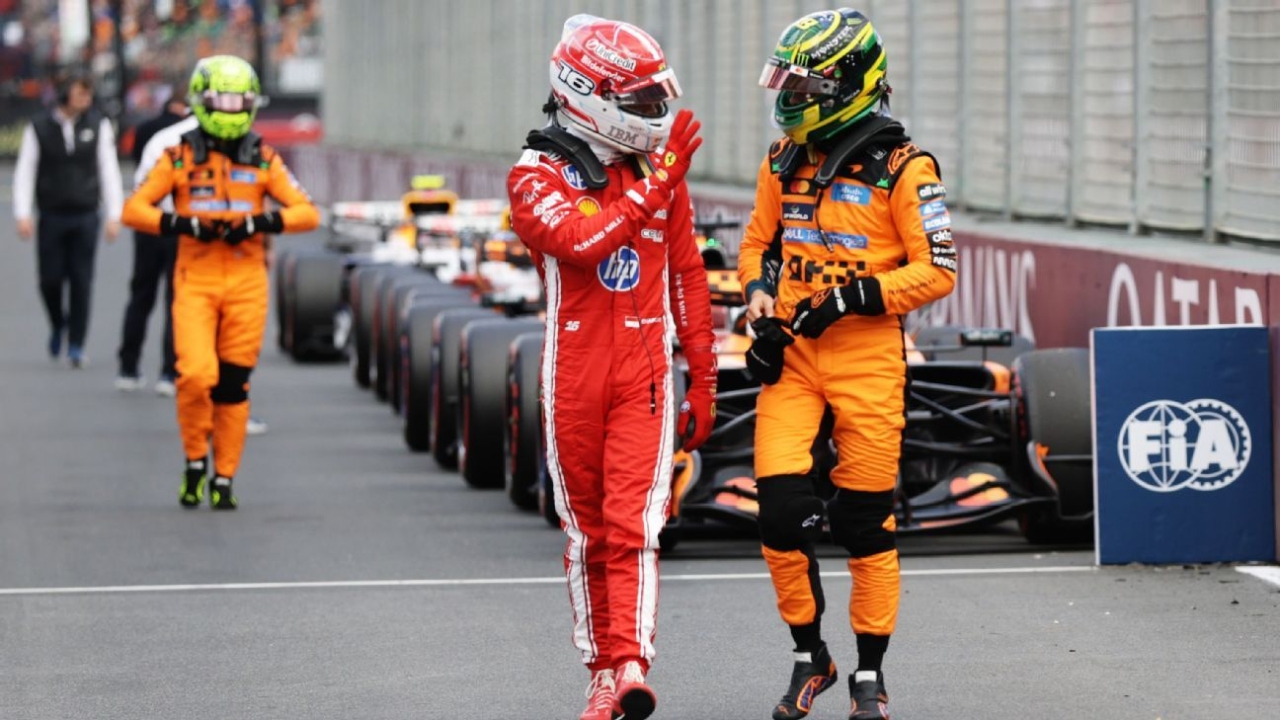
MELBOURNE, Australia — The new Formula 1 cars, which have sparked considerable debate, not only failed their initial test but also stumbled significantly at the first call of “action.”
The inaugural qualifying session of a fresh regulatory era in Melbourne was expected to highlight the sport’s future. Instead, it resulted in a mostly unremarkable hour of activity and a wave of harsh criticism from the drivers immediately following the event. Saturday’s performance was even more disappointing than the most skeptical observers had anticipated.
“We’ve transitioned from the finest cars ever created in Formula 1 and the most enjoyable to drive to what is likely the worst,” expressed a disheartened new world champion, Lando Norris, after the session. “It’s frustrating, but you have to accept it and make the most of what you have. It’s definitely different. It’s certainly not like last year.”
Max Verstappen, a four-time world champion who has often hinted at the possibility of leaving the sport if he no longer finds joy in it, stated he was “not having fun at all driving them,” later telling Dutch media that he has felt “no emotion” while in the cockpit this week.
Although this new era features aerodynamic designs that appear more aesthetically pleasing than recent F1 cars, the issue lies beneath the carbon fiber. New regulations have introduced hybrid engines with an equal split between combustion and electric power, leading to a greater emphasis on battery management, which sometimes compromises cornering performance well below the typical threshold. Striking footage circulated on social media during Friday’s practice showed cars losing power while at full throttle at the end of straights as hybrid systems transitioned to the now-essential energy recovery modes.
The added electrical components were significant in persuading Audi to enter as a new manufacturer, yet they are largely disliked by the drivers. In February, after just a week of driving the new car, Verstappen famously remarked that the new vehicles resembled all-electric series Formula E “on steroids,” a characterization that Formula 1 may find challenging to shake off regarding its new generation of cars.
Grid grits its teeth, but Russell’s all smiles
What stood out in the media area on Saturday afternoon was how drivers were clearly eager to express their frustrations. During his session, ESPN inquired of Norris if there was anything about the new cars he appreciated. The Brit looked contemplatively at the ground for seven seconds, then looked up and replied simply: “No, not really.”
Notably, Norris was the last champion of the previous generation of ground-effect cars, which spanned from 2022 to 2025. Drivers are seldom enthusiastic about vehicles that replace title-winning machinery — unless they quickly evolve into contenders for the title themselves — and those ground-effect cars were not universally adored either. When Norris’ comment about F1 transitioning from the best to the worst car due to a single regulation change was relayed to Lewis Hamilton, who shares his compatriot’s discontent with the new generation, the seven-time world champion laughed and said: “Well, he did!”
Drivers who seem to have the best chance at clinching a championship often become the most vocal supporters of the current rules package. In F1, this is a longstanding narrative. Norris himself acknowledged this, stating: “I’m sure George [Russell] is smiling, so it doesn’t really matter at the end of the day.”
The sport has been attempting to manage the response to the new cars — CEO Stefano Domenicali has indicated that drivers should refrain from making any critical remarks about the new vehicles, while he also urged fans and the media not to “panic” a few weeks ago when the first criticisms from drivers were making headlines. Panic may begin to set in over the next few days.
Saturday afternoon felt somewhat like a dam breaking. It was always going to be a pivotal moment in the introduction of the new generation, and F1’s reaction to it will be intriguing. Drivers can tolerate nearly any type of car if they believe it might lead them to a championship, but when frustrations about the cockpit experience combine with a sudden realization of how far ahead another team might be, it creates a volatile situation. Qualifying showcased the disheartening reality of Mercedes’ dominant front row lockout — poleman George Russell finishing nearly a second ahead of third-placed Isack Hadjar, who made a strong impression on his Red Bull debut.
Unsurprisingly, given all these factors, Russell was indeed smiling broadly about the new generation of car as he participated in the news conference for the top three finishers — a situation he is likely to become accustomed to quickly in 2026.
“The car, to be fair, especially in these conditions when they’re lighter, is super fun to drive,” Russell stated. “It’s much more agile, the car performs significantly better at low speeds, and the ride quality is much improved.
“Of course, you’re missing a bit of high-speed downforce, but that will come. I mean, we’re only at the first race of the new regulations. Then, of course, on the PU side, there’s a lot to learn. It’s quite challenging on a track like this, but it’s part of the game.”
Russell’s commanding performance only heightened the prevailing atmosphere of negativity. Mercedes had been cautious to downplay their advantage in the weeks leading up to Australia, and there was a moment during Friday’s first practice session when many questioned whether the German manufacturer’s supposed edge had indeed been exaggerated.
Over the years, numerous F1 teams have faced accusations of “sandbagging” — the term used for the practice of concealing one’s true pace during testing — and Mercedes’ 2026 may well be remembered as the prime example of this, given their performance on Saturday. “If they maintain that pace for a few months, then the season’s over,” Hamilton remarked at one point regarding his former team.
However, this was not merely a case of one team being significantly ahead while others were merely sore losers. These frustrations have been accumulating for some time. Ferrari’s Charles Leclerc echoed Norris’ sentiment, stating: “I’ve experienced more enjoyable times.”
Norris’ McLaren teammate Oscar Piastri smirked and nodded when quotes from other drivers were shared with him. Footage from Piastri’s car circulated on social media on Friday, showcasing the alarming decrease in speed he experienced through the Turn 10 corner, due to a phenomenon known as “super clipping,” where energy harvesting activates and slows the car down despite the driver being at full throttle.
When one journalist remarked that the onboard footage appeared quite “depressing” from the outside, Piastri again smiled and nodded his head, without repeating the headline-grabbing term. However, what he did say was equally concerning. “I think everyone can see the current situation, but I believe it will probably improve a bit,” the Australian noted. “However, there are clearly some fundamental issues that won’t be easy to resolve, and I’m not sure how we address that.”
Piastri’s home circuit was always going to be a challenging starting point for the new cars, given its lack of multiple heavy braking zones. Nico Hülkenberg, who provided one of the more balanced assessments of the week of racing thus far, offered a positive perspective.
“To be honest, it was to be expected,” the Audi driver commented regarding the extreme energy management. “It was part of these regulations. Melbourne is a very energy-hungry circuit, and actually, I think it’s the fourth most demanding. To have the first race at such a challenging energy track right away, all things considered, the cars are running, it’s functioning, you know? We’ll see tomorrow.”
F1 will be hoping that Melbourne was an extreme case for the reasons Hülkenberg mentioned: it was always going to be an outlier due to its layout. Piastri suggested he anticipates different challenges as the series moves across the calendar. “We’ll face different challenges at other tracks because the circuits seem to fall into two categories at the moment, being energy-starved and energy-rich,” Piastri explained. “And there are issues with either of those scenarios, but I think when you’re energy-starved like this, it’s much more apparent.
“I don’t know what the Mercedes lap looks like, but we were lifting and coasting three times a lap. We experienced two super clips during the lap, and in some corners, we effectively had about 450 horsepower less, so it’s a significant challenge to comprehend. It’s tough overall.”
Are there any obvious fixes?
Alarmingly, we are already witnessing impulsive reactions. During preseason testing, Andrea Stella proposed several adjustments that might address various quirks caused by the new engines. F1 will implement a new, extended start procedure for Sunday’s race to counteract the longer time it now takes for the turbo engines to generate enough power to get a car moving.
Some absurdities occurred this weekend that underscored how much F1 and the FIA are struggling to manage these options. At the drivers’ briefing on Friday, sources informed ESPN that a lengthy discussion took place, with many drivers expressing their concerns about the new race cars.
On Saturday morning, FIA official Nikolas Tombazis held a news conference to announce that the governing body was removing one of the sections for “straight mode,” the new term for the movable front and rear wing devices otherwise known as active aerodynamics. During the Friday meeting, several drivers had discussed the lack of downforce they experienced when activating “straight mode” on the curved run between Turn 8 and Turn 9 and suggested it was not entirely safe.
The FIA responded accordingly, but teams were outraged — these cars require setups that are extremely precise, and a change made just before the final practice session risked forcing teams to start over in terms of how they were configuring their cars. After 30 minutes of confusion, the FIA issued a statement indicating they had reversed their own decision.
Strangely, the FIA suggested that drivers like Gabriel Bortoleto had advocated for the change, but the Brazilian clarified that he had merely pointed out that he had not felt much grip when using the system. Bortoleto was frustrated that his name had been made public as the individual who first raised the issue. ESPN understands that drivers have agreed that their behind-closed-doors briefings should remain confidential, and Verstappen expressed his displeasure that the information was leaked, calling it “not very professional.” It should be noted that the media learned of the driver feedback from the press conference that Tombazis himself had called on Saturday morning.
While it was a minor and ultimately inconsequential exchange in an otherwise hectic day, the FIA’s decision, the subsequent team outrage, and the reversal that followed indicate a broader struggle to understand how to implement changes that will genuinely enhance this new formula. Williams driver Carlos Sainz highlighted the issue that F1 will need to grapple with in the coming weeks as it seeks to regain drivers’ support: quick fixes may not resolve anything when the hybrid nature of the new engine regulations appears to be the root cause of the current dissatisfaction.
“It’s evident that so far no one is satisfied,” Sainz remarked. “The only sentiment we have is that there seems to be a lot of temporary solutions piled on top of one another to try and address the fundamental issue… that I believe this 50-50 hybrid system is causing us numerous challenges.”
Unfortunately, it does not seem that a solution to these challenges will be forthcoming anytime soon.
Source: espn.com
