
F1 chief states that critics of new rules and regulations have ‘short memories.’
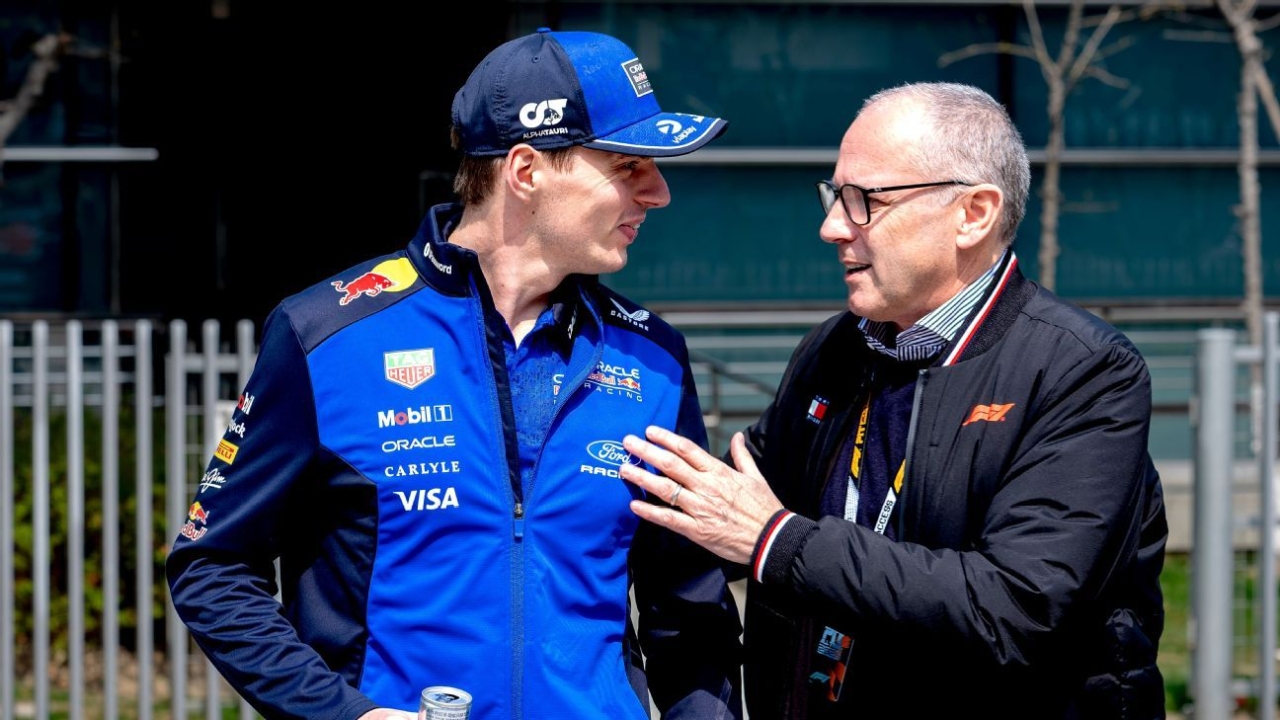
According to championship CEO Stefano Domenicali, those who criticize Formula 1’s new racing format and its contentious vehicles have “short memories.”
This year, Formula 1 implemented significant changes to its cars, introducing new aerodynamic designs and engine configurations.
The engines have sparked considerable debate, with a nearly equal division between combustion and electric power, leading to a heightened emphasis on the management of battery power during both qualifying and races.
Among the drivers, four-time world champion Max Verstappen has referred to the new cars as “anti-racing,” comparing them to Mario Kart, while Fernando Alonso has humorously dubbed Formula 1 the “battery world championship.”
Fan reactions have also varied, particularly regarding the new style of so-called yo-yo overtaking enabled by the battery boosts.
In an interview with Autosport regarding the new regulations, F1 chief Domenicali defended the changes.
“You know, overtaking … some people are claiming it is artificial,” he stated. “What constitutes artificial? An overtake is still an overtake.
“People tend to forget. Back in the turbo era of the 80s, I was already closely following Formula 1, [and then] the lift and coast strategies were utilizing different turbos and speeds. You had to conserve fuel during races, as the fuel tanks were too small. You couldn’t afford the time.
“Perhaps some of the older critics or commentators have a short memory. If you look back to the 80s, during the turbo era, these situations were present.
“It’s always been part of the game. Overall, the reaction from fans has been very positive.”
– George Russell: Plenty of ‘low-hanging fruit’ to enhance F1 regulations for Miami GP
– Red Bull reorganizes technical department amid F1 challenges, key exits
– F1 chief urges Max Verstappen to acknowledge the impact of his remarks
Formula 1 is currently in a phase that may lead to adjustments in some regulations ahead of the Miami Grand Prix on May 3.
Technical representatives from the sport have already engaged in initial discussions regarding potential changes, although F1 has emphasized that any modifications will be relatively minor and focused on addressing specific driver concerns rather than comprehensive changes to overtaking.
A meeting scheduled for April 20 between Domenicali, the governing FIA, and the teams is expected to result in some minor adjustments, particularly related to qualifying.
F1 has been eager to highlight what they perceive as an overwhelmingly positive response to the new racing format, despite the majority of drivers expressing dissatisfaction with the product.
“The interest in what we are doing is remarkable,” Domenicali remarked. “Three events have sold out. In terms of viewership, we are experiencing growth, with increasing numbers. The attention on our sport has never been better. We consider all feedback … but maintain a clear direction for the future.”
F1 has not provided a detailed analysis of the TV metrics mentioned by Domenicali, other than sharing figures indicating that its “top 10 markets” have collectively seen an increase in overall numbers.
It has also not clarified how it has been gauging fan feedback, whether positive or negative.
Domenicali noted that there is unprecedented interest in the product from younger audiences.
Discussing new commercial partners recently welcomed by the sport, he stated: “It’s not just Kit-Kat. It’s LEGO. It’s Disney. We are shifting our focus to engage the younger generation.
“We are transitioning from B2B [business-to-business] to B2C [business-to-consumer]. On the consumer side, [we aim to] capture their interest in aspects that are integral to their lives.
“That is the focus we want to maintain. To see and experience Formula 1 in unexpected places. Now we are present.
“We must remain relevant to the younger generation—they need to recognize ‘ah, Formula 1, it is here, it is there, it is everywhere.’
“We are discussing a sport where the core will always be cars, competing against other drivers. The human element will always be central to it. While AI is emerging, the human factor will remain at the heart of our product.”
Source: espn.com
