
Aston Martin drivers express concerns for their safety due to Honda’s problems.
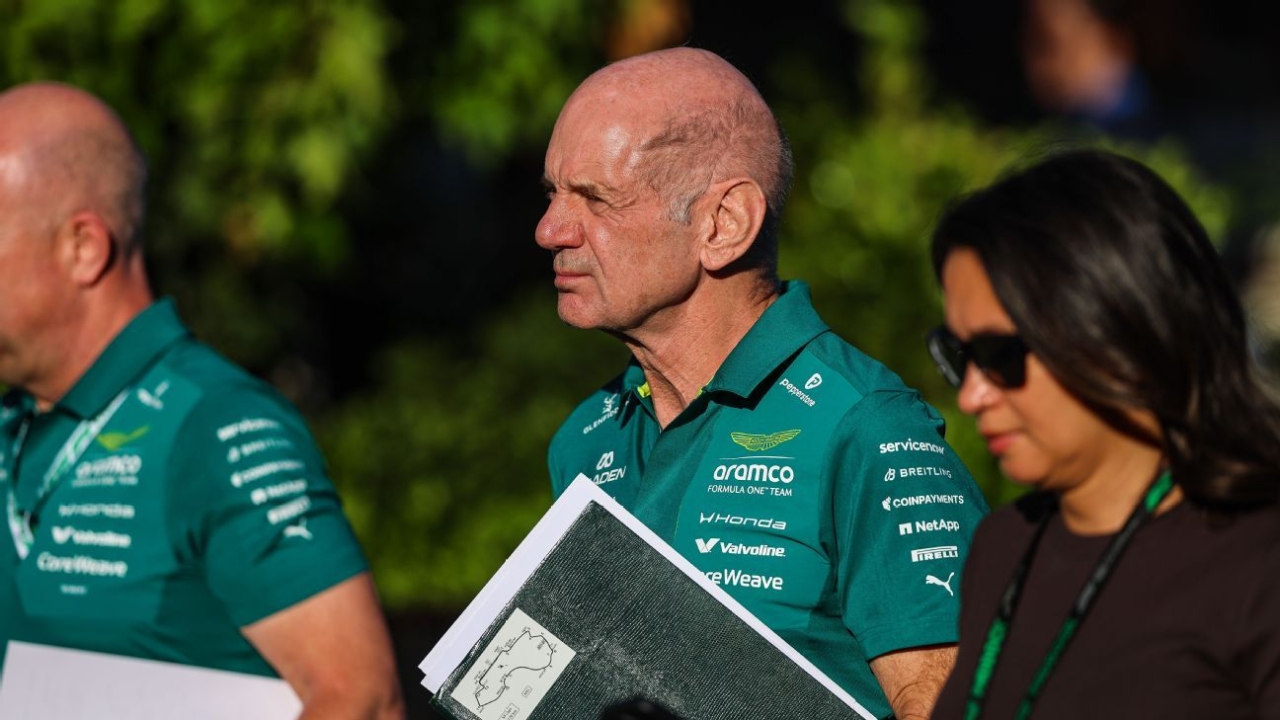
Aston Martin’s collaboration with engine supplier Honda is facing significant challenges even before the first race of the season. Following just one day of practice at the opening round in Australia, the team is confronted with the serious possibility that neither of its cars will participate in the 58-lap grand prix on Sunday.
Should Aston Martin manage to reach the race, there is a concerning risk that its drivers, Fernando Alonso and Lance Stroll, could experience permanent nerve damage due to severe vibrations transmitted from Honda’s power unit to the chassis. Measures have been implemented to enable the car to accumulate essential mileage, but the likelihood of competing effectively this weekend now appears exceedingly unlikely.
This situation prompts an inquiry into how Aston Martin, one of the most financially supported teams on the grid with renowned designer Adrian Newey leading the charge, and Honda, a highly successful engine manufacturer in recent years, found themselves in this predicament.
– Bold predictions for F1 in 2026: Ferrari will end its title drought
– Australian Grand Prix 2026: Race start time, how to watch, full schedule
– Does winning first race of F1’s new era guarantee title?
– The craziest F1 start ever? Why Melbourne might see chaos from the off
Why might the cars miss the race?
As of Friday, the team was left with only two functioning batteries for Honda’s hybrid power unit, with no additional spares available. This means that any further battery failure during final practice, qualifying, or the race would prevent that car from continuing in the Australian Grand Prix weekend. Team principal Newey has also dismissed the possibility of receiving new supplies from Honda’s factory in Japan, as there are currently no spare batteries available.
While the battery situation is critical, it is not the primary issue. The real concern lies in its vulnerability to the intense vibrations originating from other components of the power unit, which could render it inoperable.
The impact of vibration on the battery was apparent during preseason testing, which significantly limited the team’s mileage in Barcelona and Bahrain. With no clear solution to the source of the vibration in sight, the focus shifted entirely to safeguarding the battery to ensure the car could at least attempt to complete a race distance in Australia.
Honda developed a countermeasure on its dynamometer in Japan, but an attempt to implement it during the first practice in Australia was thwarted by a different issue.
“So we’ve encountered a new problem, if you will, [with] communication internally between the battery and its management system,” Newey explained between practice sessions. “However, the more fundamental issue remains the vibration problems that we continue to face.”
This “new” problem resulted in the disposal of two additional batteries, leaving Aston Martin with just one per car for the remainder of the weekend. Fortunately, the second practice session proved to be more fruitful, and Honda was able to confirm that the countermeasure is functioning as intended.
“With Lance and Fernando completing a combined 31 laps, we were able to collect the necessary data to confirm that the items we implemented first on the dyno at HRC Sakura are effective on the track,” Honda’s chief trackside engineer Shintaro Orihara stated.
“Consequently, there are fewer battery vibrations occurring based on our analysis gathered during the session.”
It may seem astonishing that a company of Honda’s stature would arrive in Australia with only four batteries—two of which were rendered unusable within the first hour of running. However, considering that F1’s sporting regulations limit each car to two batteries per season for cost-saving reasons, it highlights the seriousness of depleting them at such a rapid pace.
Additionally, the complexity of the technology and the financial constraints imposed by the power unit cost cap make it somewhat more understandable why Honda lacks an abundance of spares to rely on.
Can the vibration issue be solved?
Despite extensive efforts to protect the batteries, vibrations remain the central challenge. The exact nature of the issue and the time required to resolve it are still unclear, but the concerning implications for the drivers were emphasized by Newey during a press conference on Thursday.
“It is crucial to remember that the power unit, the combination of the internal combustion engine and possibly the MGU as well, is the source of the vibration,” he stated. “It acts as the amplifier, while the chassis is the receiver in this scenario.
“A carbon chassis is inherently a stiff structure with minimal damping, so the transmission of that vibration into the chassis has not seen any progress. This vibration is causing several reliability issues, such as mirrors detaching and tail lights falling off, all of which we are addressing.
“However, the more significant concern is that this vibration ultimately affects the drivers’ hands. Fernando feels he cannot complete more than 25 consecutive laps without risking permanent nerve damage, while Lance believes he cannot exceed 15 laps before reaching that threshold.”
If the countermeasure to protect the battery proves effective throughout the Australian weekend, the focus can shift to addressing the source of the vibration. Each lap of on-track activity will provide additional data for engineers to analyze, although both Honda racing president Koji Watanabe and Newey have ruled out a quick resolution.
“I believe there is a clear directive for Honda to work on reducing the vibration emanating from the power unit,” Newey remarked. “They are actively addressing that.
“It will not be a quick fix, as this involves fundamental balancing and damping projects that they will need to undertake. I cannot comment on how quickly they can achieve that, but it must be their primary focus.
“Currently, this vibration issue is consuming energy in every aspect. Our mechanics were working until four o’clock this morning, so they are understandably exhausted. The factory has been providing substantial support, so it is imperative that we address this as swiftly as possible.”
While the well-being of the drivers and mechanics is the top priority, the vibration issue is also hindering the team from assessing the car’s performance. Until it is resolved, the potential of Newey’s first Aston Martin chassis, particularly when operating in qualifying configuration with low fuel, remains uncertain.
“I feel somewhat powerless because we clearly have a significant power unit problem, and our limited running also means we are not learning about the car,” he added. “Thus, our information regarding the car itself is quite restricted due to the minimal running we’ve done, especially at low fuel, as fuel serves as a damper to the battery.
“Honda has significantly limited our ability to conduct low fuel running, creating a self-perpetuating issue.
“Moreover, it requires considerable energy, in the human sense rather than the kilowatt sense, on our part to collaborate with Honda and develop the best overall solution, as we could easily say, ‘Well, it’s not our problem,’ but it is our problem since the car is ultimately a combination of the chassis and power unit.”
How did Honda end up in this position?
Honda arguably had the most competitive power unit on the grid at the conclusion of the last regulatory cycle, which was effectively utilized by Red Bull to secure four drivers’ championships and two constructors’ championships between 2021 and 2024. This recent success makes the current predicament even more difficult to understand, particularly as Aston Martin partnered with Honda specifically to obtain its own works engine to aid in its pursuit of titles.
However, the team that developed Honda’s V6 turbo-hybrid under the previous regulations is not the same as the team currently operating in Honda’s power unit division. This change occurred because many engineers responsible for the development of Honda’s last power unit departed the racing department when the Japanese manufacturer opted to exit F1 at the end of 2021.
As part of that decision, Honda committed to continue supplying Red Bull with engines until the end of 2025, but only under an FIA-mandated freeze on development for all manufacturers. With no obligation to F1 beyond 2025, Honda’s power unit team disbanded, with members either moving to other areas of the company or, if they chose, to different industries.
It was only towards the end of 2022 that Honda decided to reverse its exit strategy after being persuaded to remain in the sport by a combination of F1’s 2026 regulations and its recent championship success with Max Verstappen and Red Bull. By that time, the new regulations had already been published, and established power unit manufacturers, along with newcomers Audi and Red Bull, had begun their preparations.
“A bit of history is important there,” Newey noted. “Honda exited at the end of 2021 and then re-entered the sport, in a sense, at the end of 2022, after being out of competition for roughly a year and a bit.
“When they reformed, it became evident that many of the original group had disbanded and moved on to work on solar panels or other projects, resulting in the new group lacking the experience of their predecessors.
“Additionally, when they returned in 2023, it marked the first year of the budget cap for engines, meaning all their competitors had been developing continuously through ’21 and ’22 with their existing teams and without budget constraints.
“They re-entered with, let’s say, only about 30% of their original team, and now in a budget cap era, which placed them at a significant disadvantage, and unfortunately, they have struggled to catch up.”
This may provide an explanation for Honda’s difficulties, but it was followed by an even more surprising assertion. When asked if Aston Martin was aware of the extent of Honda’s talent drain between 2021 and 2023, Newey responded: “No, we weren’t.
“We only became aware of it in November of last year when Lawrence [Stroll, team owner], Andy Cowell [former team principal and now chief strategy officer], and I traveled to Tokyo to discuss rumors suggesting that their initial power target would not be met for race one.
“From that discussion, we learned that many of the original workforce had not returned when they resumed operations. So, the answer is no.”
It is evident that the relationship between Aston Martin and Honda is already under considerable pressure. Newey has consistently attributed the blame to Honda over the initial two days in Australia, leaving little doubt regarding where he places responsibility for the ongoing challenges under his oversight.
A comprehensive account of events from Honda’s perspective is unlikely to emerge due to the company’s business practices, leaving Aston Martin’s viewpoint as the prevailing narrative. Whether this account is entirely accurate may never be fully known, but one message is clear from both parties: the only path forward is collaboration.
“We are working closely together to identify the root cause, and we are also discussing and conducting numerous dyno tests,” Watanabe stated on Thursday. “Then we will select options for necessary countermeasures in collaboration with Adrian. So, we are always working closely together.”
Newey added: “We are where we are with Honda. Our current focus is to collaborate with Honda to achieve the best possible outcome. Realistically, this season is primarily about addressing the vibration issue to ensure reliable running, and from there, we can assess how much performance they can enhance in the combustion engine, in particular.
“Simultaneously, Honda must begin working on the ’27 engine, as it is evident that a significant increase in combustion engine power is required for ’27, and that must be their sole focus.”
Source: espn.com

