
Antonelli demonstrates his potential as a title contender in Japan’s F1 race.
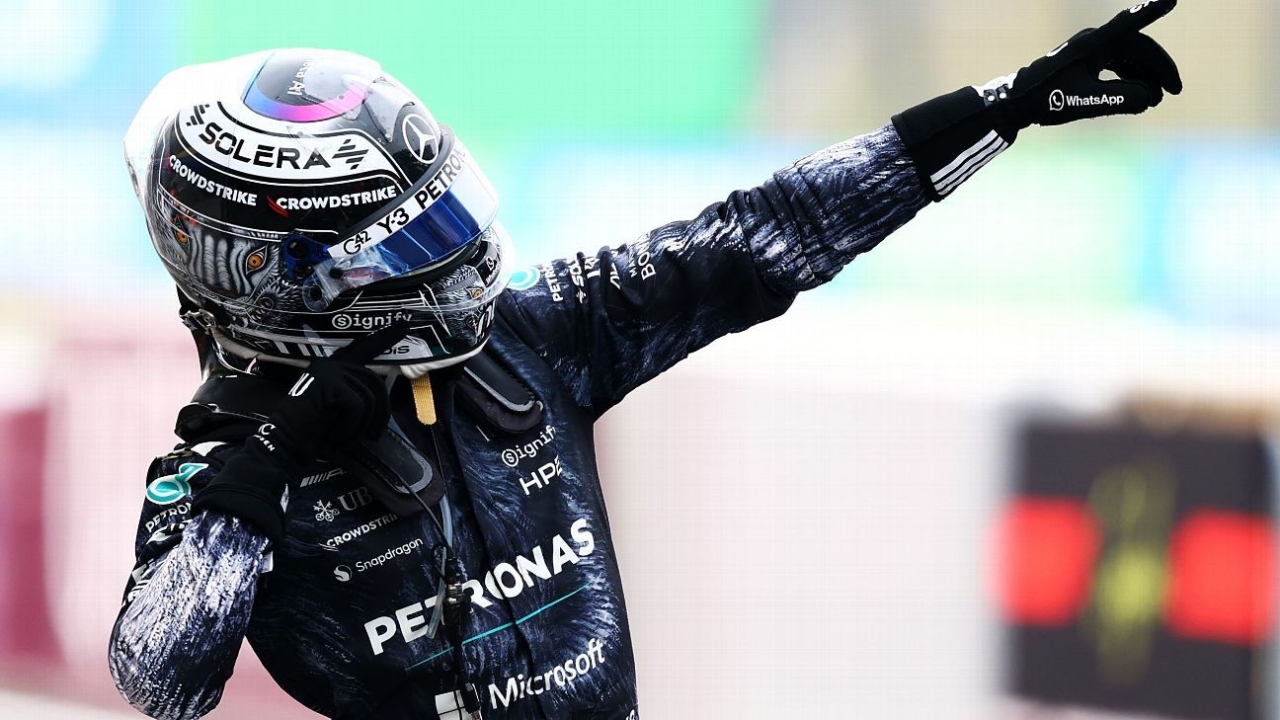
SUZUKA, Japan — Toto Wolff’s communication regarding Kimi Antonelli’s potential has remained steady since the Italian teenager first entered a Mercedes Formula 1 car: allow him time. There were instances during Antonelli’s inaugural season when doubts about his preparedness were valid, yet Wolff has consistently maintained his confidence and alleviated the pressure.
Now, following just the third race of his second season, Antonelli holds a nine-point lead in the world championship, thanks to back-to-back victories in China and Japan. He has acknowledged that luck played a significant role in his latest win, but his performance level was no less remarkable as a result.
For Wolff, the messaging continues to be prudent, yet increasingly hopeful.
“When we made the decision to give him the race seat a year and a half ago, we anticipated this trajectory,” he stated after Antonelli’s win on Sunday. “The fluctuations you expect from an 18-year-old driver in his first year, and eventually by the second year [we hoped] the success would come, and I believe this is occurring.
“Now, could we have foreseen two wins out of three races at the start of the year for Kimi? No, but, you know, today he was fast when it counted. Yes, luck was on his side, but I think all of that contributed to his consecutive victory.”
Was Antonelli’s win purely down to luck?
In the early moments of Sunday’s race at Suzuka, Antonelli’s youthful exuberance seemed to jeopardize his chance at victory as he mishandled his start from pole position. By releasing the clutch too swiftly, the rear tires of his Mercedes W17 spun uncontrollably when the lights turned green, allowing five competitors to overtake him as he slid toward the first corner.
Teammate George Russell, who also had a poor start due to what appeared to be trailing brake pressure, fell from second to fourth as the front runners approached Turn 1. If two cars had dropped from the front row to fourth and sixth by the end of the first lap at Suzuka in previous seasons, it would have signaled the end of a victory pursuit. However, as has been the case in all three grands prix this season, the inherent pace of the Mercedes meant that the slow starts for Antonelli and Russell were more of a nuisance than a complete disaster.
By lap six, Russell was tailing race leader Oscar Piastri, and by lap 11, Antonelli had recovered to fourth place. McLaren opted for a strategic move and pitted Piastri before Russell on lap 18, prompting Mercedes’ strategists to instruct both drivers to extend their stints longer than initially planned.
In theory, the clear air would enable Russell to capitalize on his car’s performance advantage and provide the chance to maintain the lead over Piastri after he made his own pit stop several laps later. However, once released into clear air, Russell’s pace did not meet the expectations of the pit wall, and it increasingly appeared that he would lose a position to Charles Leclerc if he remained out much longer on his first set of tires.
Meanwhile, Antonelli was setting a rapid pace on his medium compound tires, creating the possibility of gaining a position on Leclerc after his pit stop, provided he was not delayed by Russell. This led Mercedes to pit Russell on lap 21, ensuring he emerged ahead of Leclerc and did not hinder Antonelli.
Post-race, Mercedes was confident that Antonelli’s pace was sufficient to bring him back into contention for victory regardless of the subsequent safety car period. He was lapping approximately 0.5 seconds faster than Russell before their pit stops and was the fastest driver on the track on lap 21, despite having the oldest tires.
Ultimately, Antonelli’s remarkable pace was not the decisive factor in the race win, as a perfectly timed safety car period effectively secured him victory on lap 22. Oliver Bearman’s significant crash at Spoon corner occurred just one lap after Russell had pitted, providing Antonelli with the ideal opportunity to make a time-efficient tire change and maintain the lead—undeniably fortunate for Antonelli and unfortunate timing for Russell.
“I don’t really know why I pitted at that moment,” Russell remarked after the race. “I think it was because Charles was approaching, but, you know, what can you do? That is pure luck.
“If that had been one lap later, we would have won the race. And if there had been no crash, perhaps we would have regretted not pitting at that time. And in racing, sometimes it works in your favor, sometimes it doesn’t.”
Antonelli recognized his good fortune, but that should not diminish the clear pace advantage he exhibited over the rest of the field—including his teammate—at that point in the race.
“I think we were certainly fortunate with [the] safety car, but on the medium [tire], we were really strong once I had some clear air, and then on the hard [tire] the pace was just incredible,” he stated. “I can’t say what would have happened, how the outcome would have been, without the safety car, but yes, it definitely made my life a lot easier.”
Can Antonelli take the title fight to Russell?
This victory makes Antonelli the youngest driver to lead the F1 world championship at 19 years and 216 days old. It should be noted that leading the standings after three races means little unless you also lead it after an entire season, but the early indicators suggest that Antonelli has developed into a much more well-rounded driver in 2026.
“It’s been a significant step,” Antonelli said after his second grand prix victory on Sunday. “Experience plays a crucial role—obviously last year I went through a lot, and it taught me significantly more than I expected, and for sure it’s aiding me so far this year. Of course, there’s still much work to be done, but I definitely feel much more in control of the situation.”
The cancellation of the next two rounds in Bahrain and Saudi Arabia means Antonelli will remain the championship leader by default for the next month. When racing resumes in early May, Russell will undoubtedly aim to reaffirm his seniority within the team and challenge Antonelli at the Miami Grand Prix, but Antonelli is fully aware of the areas he needs to enhance to close the gap with his teammate.
 play0:54Antonelli reflects on second straight F1 win after Japanese GP victory
Kimi Antonelli and Oscar Piastri speak after the Japanese Grand Prix.
“I’ve been narrowing the gap with him,” Antonelli added. “I think still in qualifying he has the advantage, especially in Q3. He consistently manages to find that little bit of extra speed, which I’m working on.
“But in terms of race pace, I believe we have a really solid foundation. So yes, I feel he’s obviously a super, super strong, very complete driver. I think he demonstrated that many times last year, and that’s why it won’t be easy, and that’s why I need to execute everything as perfectly as possible.”
Despite the rising challenge from Antonelli, Russell downplayed suggestions that momentum could propel his teenage teammate into an even larger championship lead in the upcoming races.
“No, not at all,” Russell stated. “It’s three races down in 22. As I mentioned, one lap different today and the victory would have been mine, and I’m confident of that.
“In China, without the qualifying issue, perhaps I was 0.3 seconds ahead based on the sprint qualifying. So maybe I could have secured pole there and won that race.
“So, it’s just how it plays out. That’s racing. We’re now facing a four-week break, so there’s no momentum to carry forward. We’ll reset and prepare for another race.”
Russell’s experience still positions him as the favorite at this point in the season, but the title contest appears significantly more intriguing than it did after the season opener in Australia earlier this month.
An accident waiting to happen
The incident that shifted Sunday’s grand prix in Antonelli’s favor has also generated one of the major discussion points for the upcoming hiatus from racing. When Bearman lost control of his car on the grass at the entry to Spoon corner, he was traveling at 308 km/h (191 mph) and had to take evasive action after closing in on Franco Colapinto’s Alpine at a speed differential of 50 km/h (31 mph).
The potential for this type of accident had been highlighted multiple times since the beginning of preseason testing, making it all the more frustrating when it occurred in reality. The significant speed disparity between cars not utilizing any electrical power (in this case Colapinto) and those deploying full electrical boost (Bearman) was always likely to result in an incident like Bearman’s, yet no measures were taken to prevent it.
For Carlos Sainz, a director of the Grand Prix Drivers’ Association, the situation was unacceptable.
“These kinds of closing speeds and these types of accidents were always going to happen, and I’m not very pleased with what we’ve experienced up until now,” he said. “Hopefully, we can devise a better solution that doesn’t create these massive closing speeds and a safer way of racing.”
F1’s governing body, the FIA, released a statement indicating it would thoroughly investigate the accident and that it had always intended to reassess the new regulations after the first three races. However, it emphasized the necessity of making the most of the upcoming break and avoiding hasty reactions that could lead to unintended consequences.
“Any potential adjustments, particularly those related to energy management, require careful simulation and detailed analysis,” the statement read. “The FIA will continue to collaborate closely and constructively with all stakeholders to ensure the best possible outcome for the sport, and safety will always remain a core element of the FIA’s mission.
“At this point, any speculation regarding the nature of potential changes would be premature. Further updates will be communicated in due course.”
There is, however, a push to prioritize the issue of closing speeds between cars. Driver complaints regarding F1 qualifying are also set to be addressed, but McLaren team principal Andrea Stella, who raised safety concerns about the new regulations during testing, stated it was clear where the focus should be.
“Regarding the incident involving Oliver, I think this situation, when you know that the closing speed can be as significant as it can be, is not surprising,” Stella said. “We already mentioned this in testing; it is on the FIA’s agenda concerning the aspects of these 2026 regulations that should be improved. We don’t want to wait for incidents to occur before implementing actions.
“So today something happened. I think Oliver, fortunately, seems to have come out of it with just some bruises, but nothing too serious. We have a responsibility to implement the actions that, especially from a safety perspective, should be executed.
“This is a case that should be examined with a certain level of analytical rigor. I don’t believe a simple solution exists, but we have the expertise, the engineers, and the variables to implement some actions. I think this will be a topic of discussion in the meetings that will take place during the break between the FIA, the teams, and F1.
“This should be prioritized on the agenda. It’s difficult for me to say we should do this in a straightforward manner, as it may require a combination of measures rather than a singular solution.”
For all the excitement F1’s new regulations have generated, the opportunity to pause the 2026 season will undoubtedly be a welcome one for the sport’s regulators. It is now essential that this time is utilized effectively.
Source: espn.com

