
Player Development Camps Are Crucial to the Success of USA Hockey
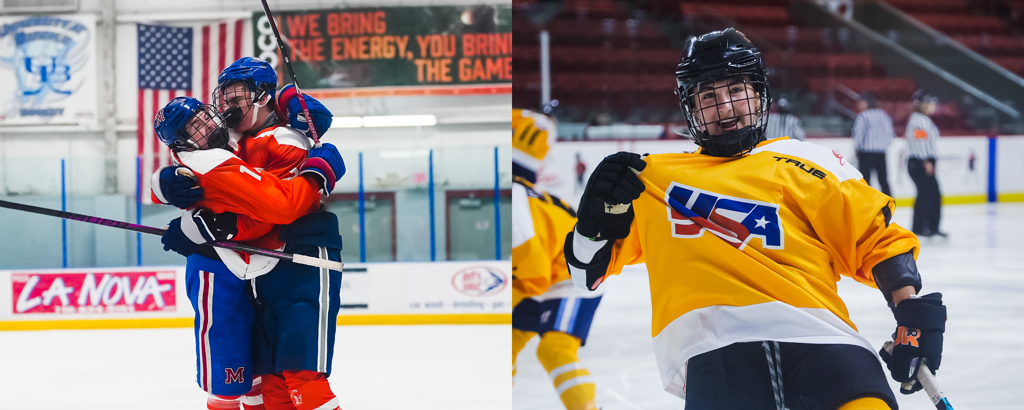
To see the results of USA Hockey’s player development initiatives, one need only observe the gold medals secured this year by the U.S. Olympic Ice Hockey and Paralympic Sled Hockey Teams.
The efforts that led to these three gold medals have been in progress for decades among the individuals involved in these programs. The groundwork for future achievements has also been laid this summer at the 2026 USA Hockey Player Development Camps.
This summer, the top teenage players from across the nation will gather at camps in Amherst, New York, and Oxford, Ohio, for both on-ice and off-ice training aimed at enhancing their hockey careers. Young athletes will come from various regions to showcase their skills against their peers and demonstrate their abilities to scouts from junior, collegiate, and professional levels.
USA Hockey’s development camps trace back to the summer of 1977 in Squaw Valley, California, where the first camp saw the participation of 35 players.
Currently, the combined boys’ and girls’ camps host nearly 1,000 players along with hundreds of coaches and staff, reflecting the remarkable expansion of USA Hockey.
Mark Tabrum, USA Hockey’s director of youth hockey, noted that the growth of the development camps is not only quantitative but also qualitative. In earlier times, talent levels were more inconsistent.
“Every player here has a place. They fit in,” Tabrum stated. “Hockey in the United States has advanced significantly. When you consider the number of players in the National Hockey League and at the collegiate levels, American players are currently very skilled.”
Tabrum attributed the rise in American hockey talent primarily to the steady increase in youth player participation.
“That pyramid at the top continues to improve because we have more players participating each year,” Tabrum explained. “We are now seeing talented players at the upper levels, and this trend will persist.”
The young athletes attending the development camps benefit from high-quality coaching and support from professional staff members.
“We have exceptional individuals here,” Tabrum remarked. “Ultimately, the players compete against their peers within their age group. This gathering features the best of the best. It is rare to have such top players in one environment.”
As Tabrum emphasized, players develop at varying paces, and their skills evolve as they age.
“If they were the standout player in their locality, arriving here means they are now among many skilled players,” Tabrum noted. “They have the opportunity to assess their abilities against the best, identifying areas for improvement and recognizing their strengths and weaknesses.
“Their personal development is unique to each individual. It can certainly be an enlightening experience.”
Kristen Sagaert, USA Hockey’s director of girls’ hockey, highlighted the significant growth of the girls’ game, which is evident in the development camps.
“On the girls’ side, we have over 400 players at our national camp across the three camps,” Sagaert stated. “The resources and coaching available to these athletes have expanded each year. We consistently seek ways to enhance and provide additional resources to these players, both on and off the ice.
“Now, we have strength and conditioning coaches, athletic trainers, team coaches, intern coaches, equipment managers, and video coaches.”
Sagaert mentioned that the experiences athletes encounter at player development camps are comparable to those at national team development camps.
“We offer nutrition demonstrations where they prepare a recipe with our nutritionists,” Sagaert explained. “They participate in strength and conditioning seminars and engage in strength and conditioning sessions in the gym. It is a blend of both on-ice and off-ice development throughout the week. They play games and practice regularly.”
Sagaert indicated that USA Hockey distributes surveys to players, parents, and staff following development camps each year.
“I hold meetings with our strength coaches and athletic trainers to evaluate the camp’s success,” Sagaert said. “We discuss areas for improvement and begin planning for the next year immediately afterward.”
Most importantly, Sagaert emphasized the significance of integrating players into the USA Hockey community at an early stage.
“They receive information and resources regarding what it may take to achieve their hockey aspirations, whether at the collegiate level or with one of our national teams,” Sagaert stated. “They learn about the culture and what is required.
“They have the chance to meet current and former Olympians during their time at camp, providing them with an initial glimpse into the experience. Every athlete on our Olympic roster has participated in a player development camp on the girls’ side.”
Story from Red Line Editorial, Inc.
