
Rosenior struggled to adapt at Chelsea, a fact evident from the beginning.
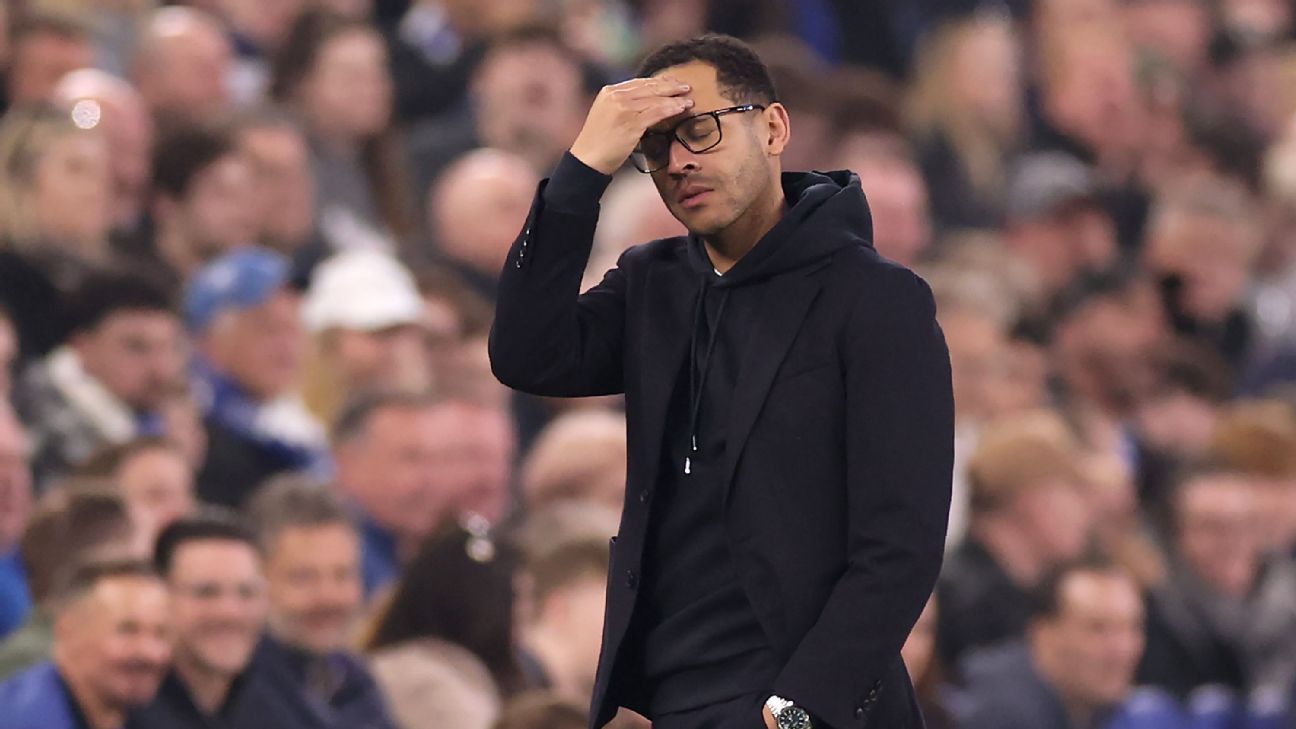
Liam Rosenior’s tenure as Chelsea head coach lasted a mere 106 days, but it was evident from Day 2 that the 41-year-old was not suited for the role he had been appointed to fulfill.
In reality, it was apparent from Day 1 due to his limited experience at the highest coaching levels and the misguided belief of BlueCo, Chelsea’s ownership, that Rosenior could seamlessly transition from coaching partner club Strasbourg to managing a squad of high-profile players at Stamford Bridge following the departure of Enzo Maresca.
More than 24 hours after observing training on his first day, however, Rosenior opted not to engage in team selection or participate on the bench as his new team faced a 2-1 loss against local rivals Fulham on his second day, choosing instead to adopt a more detached stance, sitting alongside Chelsea co-owner Behdad Eghbali in the stands at Craven Cottage.
This marked the beginning of numerous errors by Rosenior. Others would be more conspicuous and embarrassing: the peculiar assertion that his players were “respecting the ball” while surrounding referee Paul Tierney in a pre-match huddle, his strange claim of having “managed the school team when I was 11,” and the choice to give Alejandro Garnacho a tactical note in the 85th minute of an 8-2 aggregate defeat to Paris Saint-Germain.
All of Rosenior’s blunders and his corporate jargon of “alignment” and “process” contributed to his becoming a figure of mockery, with some former teammates ridiculing his unrecognizable demeanor. Sources informed ESPN that Rosenior was deeply affected by some of the criticism, leading him to privately confront his detractors, with one expressing surprise that the Chelsea coach allowed himself to be distracted by the backlash.
But why was that initial misstep at Fulham significant? It was significant because it underscored Rosenior’s inexperience and failure to understand that as Chelsea’s coach, following in the footsteps of José Mourinho, Carlo Ancelotti, Antonio Conte, and Thomas Tuchel, every action and statement is scrutinized and evaluated far beyond anything he had encountered earlier in his career.
Having stepped into a role after his predecessor failed to secure a victory in any of his last four matches, a more experienced coach would have seized the opportunity to make an immediate impact, demonstrating to skeptical players and fans that he possessed the requisite skills and character for the Chelsea position. Instead, Rosenior remained passive as supporters chanted discontented songs about the ownership.
He projected an impression of confidence in his abilities, yet failed to convince anyone of his competence. Three months later, following a stretch of seven losses in eight matches and five consecutive Premier League defeats without scoring that culminated in Rosenior’s dismissal, it would be challenging to argue that the players were persuaded by their untested young coach.
During Rosenior’s time, Chelsea did not secure a victory against any of their traditional Big Six rivals or other prominent European teams. He faced three defeats against Arsenal, that humiliating UEFA Champions League loss to PSG, and his team also fell to Manchester City and Manchester United.
There was also the decision to impose an internal two-match suspension on Enzo Fernández for discussing the possibility of a move to Real Madrid, while Marc Cucurella made similar positive comments about Barcelona and questioned the decision to dismiss Maresca, yet the Spain defender faced no repercussions.
Rosenior indicated that the Fernández suspension was a “club decision,” suggesting it was made by senior figures above him, which only served to further undermine him in the eyes of the players and supporters. The framework that Rosenior had willingly agreed to operate within was ultimately the reason for his lack of success.
BlueCo’s vision, led by sporting directors Paul Winstanley and Laurence Stewart, is that the head coach is merely a component of a larger system.
This is why Chelsea’s last two appointments—Maresca and Rosenior—were selected from relative obscurity to fit into the club’s structure. After winning two trophies and qualifying for the Champions League in his first season, Maresca sought a greater influence in recruitment, leading to his swift departure once he voiced criticism of the BlueCo model.
Rosenior was unlikely to be as confrontational as Maresca, but while that may have aligned with the club’s interests, it frustrated supporters who perceived him as a “yes man.”
The players were also aware that he was not the ultimate authority, but rather a figure hired by multiple superiors. Those same superiors are now likely to face increased scrutiny from the owners following their poor decision to appoint Rosenior.
Sources have indicated that the unsuccessful experiment, which leaves Chelsea facing the prospect of failing to qualify for the Champions League, may prompt a reevaluation at the highest levels regarding the BlueCo model and the necessity for a more experienced coach. Xabi Alonso, Cesc Fàbregas, and Andoni Iraola are likely to be considered, while Frank Lampard—who has two previous tenures as Chelsea coach—could also be a candidate after leading Coventry City to promotion to the Premier League.
By diminishing the role of head coach through the hiring of Rosenior when he was clearly outmatched, Chelsea now faces a credibility issue of their own making.
Rosenior’s failure stemmed from his inadequacy, but those who appointed him may bear even greater responsibility than the man who lasted just 106 days.

