
Ranked: Top and bottom managerial positions for clubs and national teams
Are there any significant managerial positions that won’t become available in the near future?
The statistics suggest otherwise. On average, a manager in England remains in their role for just under a season and a half. In other words, any head coach in England who manages to last two full seasons has beaten the odds.
This figure, however, encompasses everyone — and nearly every individual in England operates under a condition of financial instability. With almost the entire professional hierarchy facing the threat of relegation or promotion in any given season, “panic” often becomes the prevailing mindset. When concerns arise about a team’s performance potentially costing tens or hundreds of millions in revenue, valuation, or both, the simplest course of action is to dismiss the individual hired to lead the team.
However, there are a select few clubs across Europe that are not burdened by these issues: large organizations that will continue to generate substantial income even during a couple of challenging years. One might assume these clubs are less inclined to make hasty decisions compared to others — but that is not the case, or at least they are not expected to be.
In England, Chelsea appoints a new coach every few months, Tottenham Hotspur’s Thomas Frank is on precarious ground, and Manchester United is currently under the management of Michael Carrick, whose contract only extends until May. Pep Guardiola is anticipated to depart from Manchester City within the next couple of seasons. Arne Slot’s position is not secure despite leading Liverpool to their second-ever Premier League title in his very first season with the club less than a year ago. While Mikel Arteta enjoys a favorable situation at Arsenal, with the Gunners pursuing a potential Quadruple, it is unlikely he will remain there indefinitely … right?
Outside of England, Real Madrid has yet to confirm whether Álvaro Arbeloa will remain after this season, Luis Enrique’s contract with Paris Saint-Germain concludes after next season, Barcelona’s Hansi Flick has not lasted more than a couple of seasons in any of his previous roles, Diego Simeone now has new private-equity owners at Atlético Madrid, Bayern Munich’s board is perpetually dissatisfied, and Italian clubs essentially dismiss coaches as a customary practice to mark the passage of time.
There is enough impending uncertainty before considering that the World Cup is scheduled for this summer, which implies that several of the world’s most renowned coaches — including Thomas Tuchel, Julian Nagelsmann, Carlo Ancelotti, and Mauricio Pochettino — may also be seeking new positions in a few months. Additionally, this means that several of the wealthiest national teams might be in search of new coaches.
Thus, in anticipation of what appears to be an impending shift at the pinnacle of the managerial hierarchy, we have compiled a list of the 25 most significant club and national team roles globally — and ranked them from most to least desirable.
Ranking Methodology
As is customary, simplicity is favored in ranking methodologies. Therefore, this list incorporates three factors, all weighted equally: (1) What is the coach’s salary? (2) How stable is the position? And (3) How skilled is the team?
For the first factor, I researched reports on various managerial salaries and made estimates where necessary. This is based on the current coach’s earnings. While not flawless, this is why it is rated equally with the other two criteria. Otherwise, I would prioritize potential salary as the most significant factor.
For stability, I examined how many different managers have overseen at least 10 matches for the team this decade. For talent, the market valuations from Transfermarkt will serve as our reference.
To select the 25 teams that warranted inclusion: I included the “Big Six” in the Premier League, the “Big Three” in Spain, Bayern Munich and Borussia Dortmund in Germany, the two Milan clubs in Italy, and Paris Saint-Germain in France. For national teams, I opted for the “traditional” top nine of Argentina, Brazil, Spain, France, England, Germany, Portugal, Italy, and the Netherlands. Additionally, to cater to my audience, I included Mexico and the United States.
 1. Manchester City
Pep Guardiola has been at the helm for nearly a decade, he earns a substantial salary, and he oversees one of the most talented and deep squads globally.
Manchester City benefits from essentially limitless sovereign wealth, and that funding is utilized through a vast, professional global infrastructure — not at the behest of a disgruntled prince. For a club capable of making impulsive, emotional choices, City seldom appears to do so.
What these rankings cannot account for: the next coach will not be afforded the same authority or patience that Pep was granted, you are being compensated by an organization with a detailed entry on Amnesty International’s website, and the club’s 115 financial charges for allegedly violating the Premier League’s financial regulations will still loom over you.
 2. Arsenal
This situation is akin to the City role — minus the complications associated with being paid by a sovereign entity. While you may not receive the same financial compensation for yourself or your team, you also have the advantage of living in London. Furthermore, Arsenal possesses a squad that appears better suited for the near future.
Similar to City, however, the next Arsenal manager following Mikel Arteta is unlikely to receive the same level of patience and authority as Arteta. Nevertheless, overall, this is a wealthy team willing to invest, has demonstrated they know how to allocate funds effectively, and they are unlikely to dismiss you after a few poor results.
 3. Atlético Madrid
If I were to categorize these roles, this would represent the conclusion of the top tier, highlighting the uniqueness of Guardiola, Arteta, and Diego Simeone in contemporary football. By most accounts, they are the three highest-paid coaches in the sport — with Simeone at the top. They are also the three longest-serving managers at the Champions League level — with Simeone leading the way into his 14th year.
From a broader perspective, Atlético Madrid appears to be the ideal position: you receive the highest salary globally for a coaching role, you reside in a major city that easily attracts players, and you do not face the excessively high expectations associated with managing Real Madrid. When examined more closely, it looks even more appealing: Simeone might be the last true manager in the sport. He has more influence over Atlético Madrid than any “head coach” at any other major club.
The question remains, however, for how much longer? Apollo Global Capital, a private-equity firm with approximately $900 billion in assets, acquired Atlético Madrid in November. Do you genuinely believe they will allow the coach to continue making all of the club’s significant decisions?
 4. France
 5. England
These are the two most skilled national teams globally, and it is difficult to foresee any changes in that regard in the near future. Didier Deschamps has been the coach of France since 2012, while Gareth Southgate served nearly a decade before being succeeded by Thomas Tuchel, who immediately became one of the highest-paid national team managers.
While you won’t earn what you could at one of Europe’s elite clubs, and you won’t have the opportunity to develop talent or implement complex strategies as you would in a club environment, you do get to coach players who are as talented as those at any club, experience significantly less stress, and actually have time to spend with your family.
 6. Paris Saint-Germain
 7. Real Madrid
Do you wish to earn a substantial salary while coaching the best players in the world, yet risk being dismissed simply because those players decide they do not favor you or someone in management fails to comprehend the randomness of the Champions League knockout stages?
If so, these are the two positions for you.
 8. Liverpool
This position might rank higher if these were subjective evaluations, as Liverpool has demonstrated a willingness to compensate a manager generously in Jürgen Klopp, and they make the most calculated decisions of any club on this list. Additionally, their organizational structure has a solid track record.
However, I do not believe they intend to pay their manager as much as they did Klopp because they prefer a head coach rather than a manager, which is the role Arne Slot occupies. Furthermore, there remain numerous uncertainties regarding Richard Hughes, the club’s sporting director since 2024. This past summer marked the first time in about a decade where one could observe Liverpool’s actions and think, “Yeah, I’m not entirely sure I grasp the plan here.”
 9. Spain
Spain compensated Luis Enrique more than they are currently paying manager Luis De La Fuente, indicating that a more prominent name could still earn a substantial salary coaching La Roja. Moreover, you are aligning yourself with Lamine Yamal, which suggests potentially 15 more years (?) of elite performance from your versatile superstar.
Nevertheless, I still believe England and France are less likely to experience a talent decline in any given generation compared to Spain.
 10. Argentina
Coaching Lionel Messi with Argentina appears to be one of the safest roles in sports. Despite lacking a history of top-level management, Lionel Scaloni was granted this opportunity, and he has since won three consecutive major trophies, is the reigning World Cup champion, and has been the coach since 2018.
However, if we examine the period prior to 2018? No major trophies, considerable psychological challenges, and three managers in the three years leading up to that. I question how stable and automatically successful this position will appear once Messi finally retires.
 11. Portugal
Managing Cristiano Ronaldo at this moment would be a daunting task: you essentially need to persuade one of the most renowned and influential athletes in history that he should come off the bench or that he cannot play 90 minutes every match. If you cannot achieve that, which is likely, you must find a way to construct your team around a largely immobile 41-year-old striker who still takes poor shots and contributes nothing defensively.
That said, the Portuguese federation has had only five different full-time managers since the 2002 World Cup, and there remains a wealth of talent ready to be unleashed in the post-Ronaldo era.
 T-12. Germany
 T-12. Bayern Munich
This is purely coincidental, but Germany and Bayern Munich received identical scores based on the three different criteria. However, I am uncertain how much these roles could differ.
The German federation revamped the domestic landscape in 2004 and is generally recognized as one of the more progressive governing bodies in the sport. Unlike the tough, unyielding teams of the past, the modern iteration of Germany seems to favor an aggressive, creative, possession-based style of play that we see — or rather used to see — at the highest levels of club football. Since 2006, there have been three managers for Germany.
At Bayern, you receive a high salary and manage an excellent team, but winning the Bundesliga no longer holds the same significance — that is the result of winning 12 of the last 13 titles. Additionally, the club’s board is filled with individuals who frequently express dissatisfaction to the media regarding whatever issues they have.
 14. Brazil
This is one of the few national team positions that can compete with some of the top club roles in terms of potential salary. Moreover, Brazil has a vast, predominantly soccer-playing population that will consistently produce a wealth of talent.
However, the expectations are nearly unattainable: you are expected to replicate the past success of a nation that is no longer the center of talent in world soccer while also maintaining the free-flowing, joyful style of play that everyone associates with the country. If anyone could achieve that, it would likely be the current manager, Carlo Ancelotti.
 15. Barcelona
While they have stabilized under Hansi Flick, we need not look too far back to recall a time when Barcelona was leveraging assets to sign Robert Lewandowski and attempting to publicly pressure Frenkie de Jong into accepting a pay cut.
Luis Enrique achieved everything with Barcelona, yet fans were critical of him initially: he only lasted two seasons after winning the Champions League. It is also uncertain whether they can still afford to pay top-tier salaries for their managers.
 16. Tottenham Hotspur
The club invested significantly to bring Thomas Frank from Brentford, indicating a willingness to allocate funds to the managerial position. Although they have had five coaches since 2020, I would argue that this is more reflective of the types of decisions they have made rather than a quick-trigger mentality.
Moreover, the decision-makers have changed over the past five years, and Thomas Frank currently has the team near the relegation zone. I believe he would have been dismissed at several other clubs on this list by now.
 17. Italy
I would characterize this as more of a “it can’t get any worse” type of role.
Italy has not won a World Cup match since they literally won the World Cup final in 2006. Regression to the mean suggests that if you take this job, you are likely to improve on that simply by sheer luck. However, the talent level appears significantly lower than all the previously mentioned countries, and I am uncertain if it will improve anytime soon.
 18. Internazionale
The highest-paid coach in the world is former Inter Milan manager Simone Inzaghi, who reportedly earns close to $30 million annually with Al Ahli in Saudi Arabia. Meanwhile, the current Inter Milan manager, Christian Chivu, might be the lowest-paid coach on this list.
Nonetheless, Inter continues to perform well and appears to be the top team in Serie A this season. The past decade of success has established Inter as the clear number one club in Italy.
 19. United States
Many American fans view this as an excellent position, and it has finally become so since a few hedge-fund billionaires pooled enough resources to pay the U.S. men’s national team manager $6 million annually to potentially oversee only three significant matches in two years.
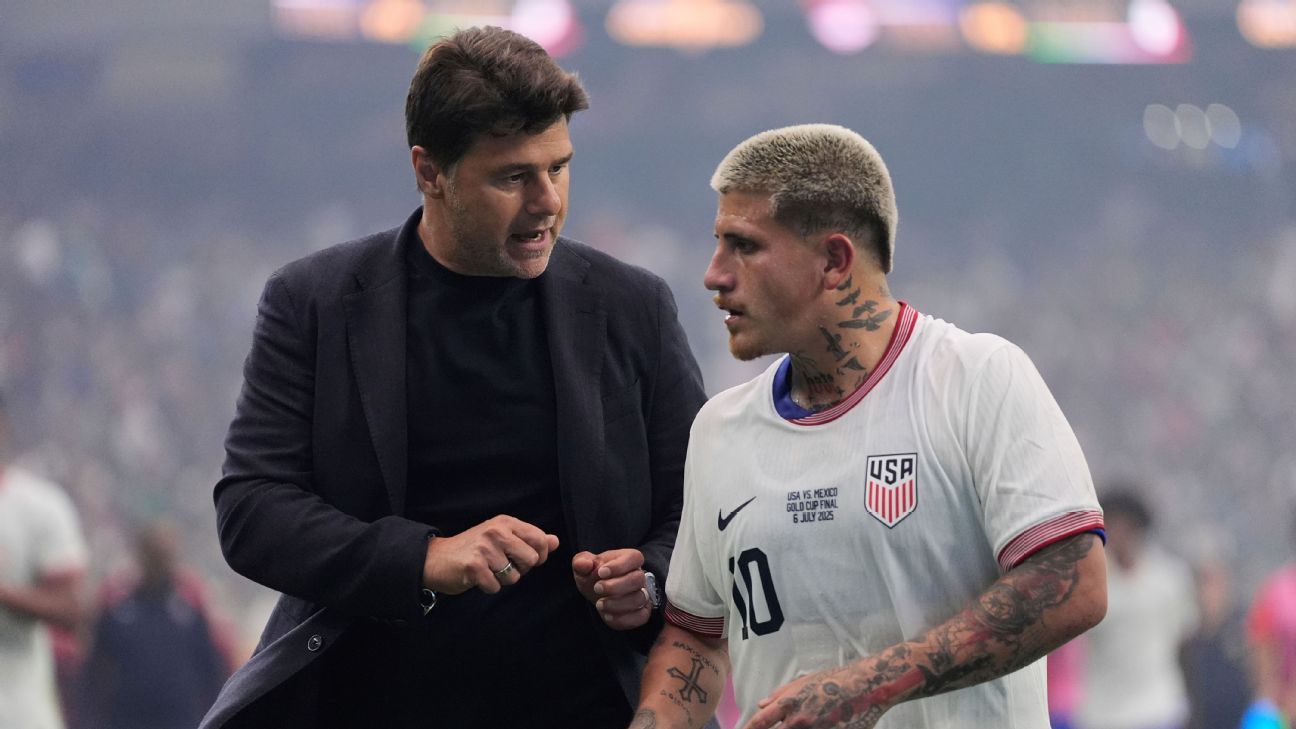
Consider that for a moment: Mauricio Pochettino might only end up managing three matches with real stakes when the World Cup arrives. The Gold Cup did not feature his top roster, the Nations League is still subjective, and there were no World Cup qualifiers. A successful cycle for Pochettino might entail advancing past the group stage this summer and winning one match, bringing him to a total of five competitive
