
Post-Poch Era: USMNT Requires a Strategic Succession Plan Following the World Cup
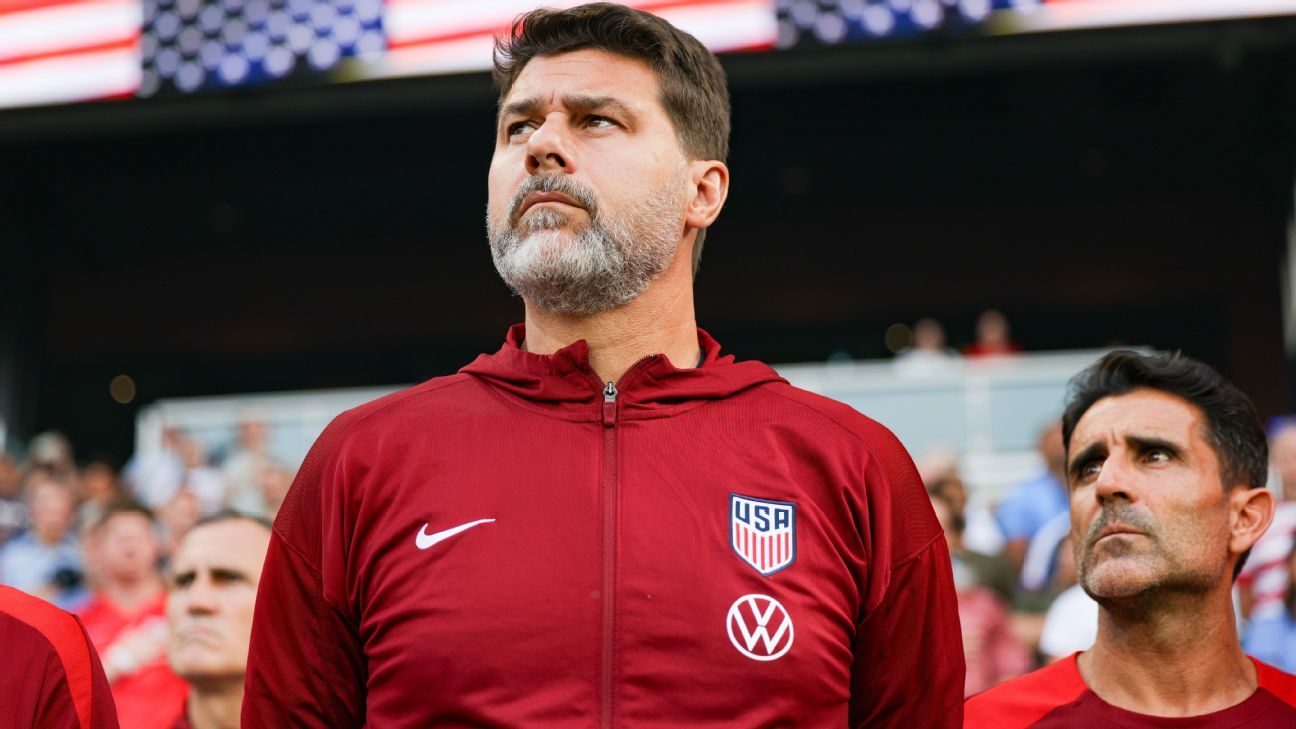
There was a period when appointing a men’s national team manager with Mauricio Pochettino’s credentials seemed unattainable for the U.S. Soccer Federation. It appeared to be too… everything. Too ambitious. Too costly. Too unrealistic.
Pochettino’s appointment altered that perception. The Argentine’s entry was facilitated by a significant shift in philosophy within the federation, which utilized various funding sources—specifically private donors and increased commercial income—to fulfill the financial obligations. This also indicated a rise in ambition, suggesting that the U.S. men’s national team program could aspire to attract a top-tier manager and have that interest reciprocated.
The pressing question now is: Has the standard been permanently elevated, and will U.S. Soccer continue to function in this manner, or was the hiring of Pochettino merely an isolated incident aimed at maximizing the opportunity presented by co-hosting a FIFA World Cup?
When this question was directed to U.S. Soccer CEO J.T. Batson, he affirmed the first possibility.
“If you examine our entire leadership team, we’ve successfully attracted world-class talent not only for our sporting organization but also for the organization as a whole,” he stated to ESPN as the USMNT trained ahead of its friendly against Portugal last month. “Thus, I believe our expectations have consistently [increased] regarding the talent we attract and the talent we cultivate and support at U.S. Soccer. This is part of our objective to achieve world-class status.”
This inquiry has gained even more significance in the past week due to the unexpected resignation of sporting director Matt Crocker.
The individual responsible for hiring Pochettino, as well as U.S. women’s national team manager Emma Hayes, is now absent. His legacy will extend beyond the forthcoming World Cup; it will be reflected in the new national training center near Atlanta, as well as in the “U.S. Way,” an initiative—certainly not the first—to overhaul player development in the nation.
This situation creates a leadership gap. Will current U.S. Soccer vice president of sporting Oguchi Onyewu be appointed as Crocker’s successor, or will the USSF leadership seek alternatives? The decision will likely influence who becomes the USMNT manager after the World Cup.
It has long been anticipated that Pochettino will leave following the conclusion of the U.S. team’s World Cup campaign. At times, he has seemed to struggle with the realities of the U.S. role, particularly the differences in soccer culture between the U.S. and, for instance, his home country of Argentina. Additionally, there was his rather peculiar remark following two friendly losses to Belgium and Portugal, where he lamented the absence of any USMNT players in the world’s top 100.
While no one would dispute the accuracy of that observation, it has not prevented the USMNT from achieving memorable successes at World Cups, including two results against Portugal since the beginning of the century. It also contradicted his “Why not us?” philosophy so close to the World Cup.
Moreover, Pochettino has expressed a desire to return to Europe, particularly the Premier League, due to its prominence in club football.
However, regarding continuity, Pochettino has not dismissed that possibility either. Prior to the Portugal match, when questioned about links to Tottenham Hotspur and Real Madrid, Pochettino remarked, “Who knows what is going to happen? As I mentioned, we are open. We don’t have a contract for the future, but why not if we are happy and the federation is satisfied?”
As is common in coaching scenarios, there are numerous variables concerning Pochettino’s future with the USMNT. A strong performance in the World Cup will heighten demand for Pochettino’s services and complicate the U.S. effort to retain him. Conversely, a disappointing performance would make retention easier, but would the USSF still want him back under those circumstances, considering the substantial investment made to bring him on board?
Batson also noted that even if Pochettino departs, he may maintain some connection with U.S. Soccer.
“One of the primary reasons Mauricio [joined] was his strong belief in the long-term vision of what we are pursuing in U.S. soccer,” Batson stated. “While it is well-known that the focus is on our performance this summer, [Pochettino and his staff] have been very thoughtful in assisting us with our short-, medium-, and long-term strategies and supporting us in any way they can. This has been consistent from the outset, along with the acknowledgment that we must concentrate on the summer, perform well, and regroup afterward to determine what the future should entail.”
This does not imply that U.S. Soccer is in a state of passivity. The planning process is already underway.
“We have a regular process of continually reviewing succession planning for all our key roles at U.S. Soccer,” Batson added. “These discussions are ongoing. We are prepared for any eventuality, whether it involves the CFO, the head coach, or any other position, as part of our growth as an organization, which we are addressing regularly.”
If Pochettino does leave—which still appears likely—and with Batson asserting that the standard has been raised, who might the USSF pursue? There are several compelling candidates.
France manager Didier Deschamps will be stepping down after the World Cup; could he consider the challenge of advancing this U.S. team? Former England manager Gareth Southgate—despite the criticism of his pragmatic approach—led the Three Lions to two major finals and a World Cup semifinal; might he be persuaded?
The USSF would likely also evaluate some domestic candidates. Former LAFC manager Steve Cherundolo is probably at the top of that list, given his background as a USMNT player and the three trophies he secured while in Los Angeles. B.J. Callaghan would also likely be considered, having previously held the position, albeit on an interim basis, and having done commendable work with Nashville SC. Pellegrino Matarazzo is an intriguing candidate due to his American heritage and experience managing in Europe, currently with Real Sociedad, although he recently stated in an interview with ESPN that he is “very happy” where he is.
That said, given that the USSF has demonstrated its ability to attract high-profile candidates, none of these options would provide the fan base with the same excitement that Pochettino has generated.
One candidate who would is the most celebrated manager of all: Manchester City head coach Pep Guardiola. And he could be available.
His contract runs until the summer of 2027, but ESPN colleague Rob Dawson reported that no one within the Man City organization is certain about Guardiola’s plans after this season. The Catalan might very well decide to leave the Sky Blues. He also has some familiarity with the U.S., having lived in New York between his coaching stints at Barcelona and Bayern Munich.
Now, is the prospect of Guardiola taking over the USMNT merely a fantasy? Indeed, it is. He mentioned last year that he would take a break from management once his contract concludes. However, the USSF has shown what can be accomplished if it simply reaches out and makes its case. After all, the initiation of that process is just three months away.
