
Mascherano’s departure underscores Miami’s intricate, Messi-focused management strategy.
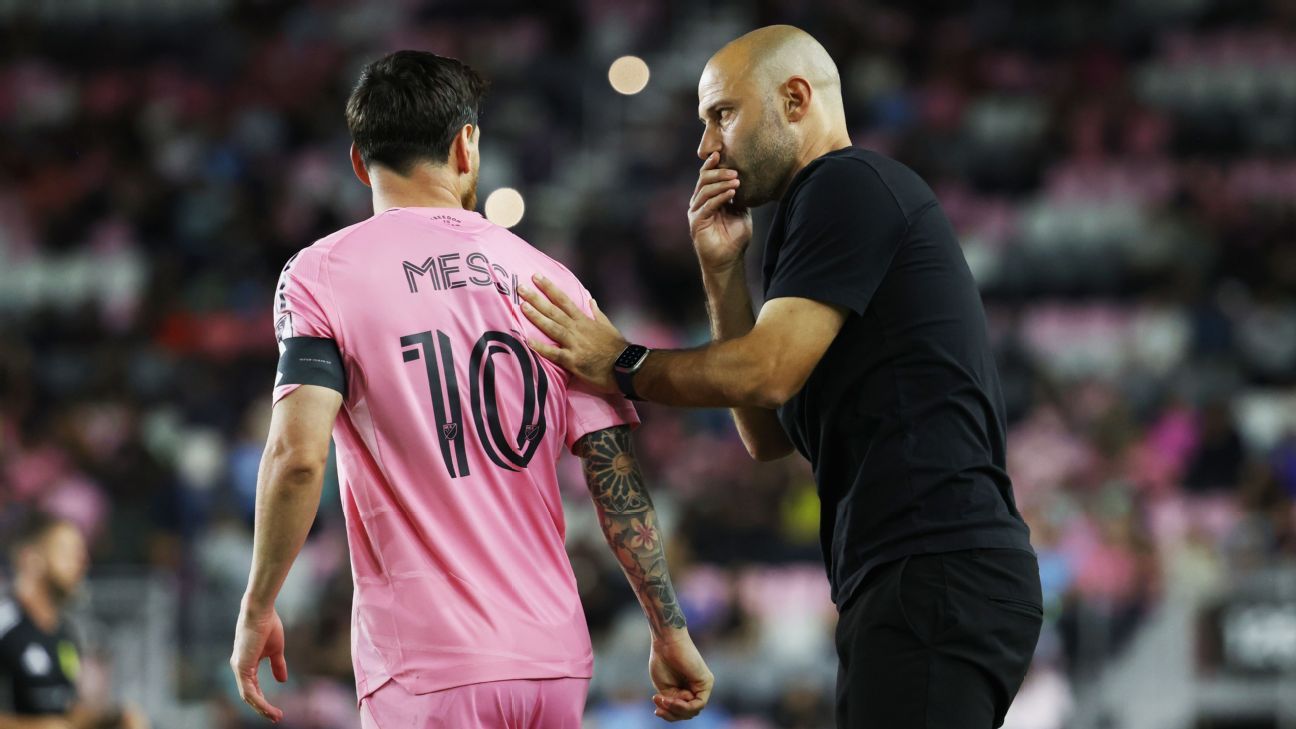
Jorge Mas deserves recognition. The owner of Inter Miami envisioned bringing Lionel Messi to South Florida, surrounding him with some of Messi’s acquaintances, adding complementary players from Argentina and the academy, and aiming to establish a strong presence both on and off the pitch.
And it has proven successful.
The long-anticipated inauguration of Nu Stadium marked a pivotal moment for an organization that experienced several false starts. On the field, the Herons secured a Leagues Cup in 2023, a Supporters’ Shield in 2024, and an MLS Cup in 2025.
However, that vision now requires some adjustments.
The roster of available Friends of Messi—at least on the pitch—is rapidly diminishing. There are not many left. Sergio Busquets, known for his consistent midfield performance, has retired. The same goes for Jordi Alba, who was effective in his offensive contributions down the left side. Luis Suárez, while still part of the team, has seen his role significantly reduced as time continues to take its toll.
Now, one of Messi’s closest allies, manager Javier Mascherano, has stepped down. The former teammate of Messi at both club and international levels announced his resignation as Miami’s manager on Tuesday due to “personal reasons,” a statement that is vague and likely to spark speculation.
This raises questions, not about Mascherano himself, but because it mirrors the phrasing used by Inter Miami to describe Tata Martino’s departure 18 months ago. Martino had led Miami to the aforementioned Supporters’ Shield but faced a first-round playoff exit against Atlanta United, which remains one of the biggest playoff upsets in league history.
Mascherano’s primary shortcoming during his time with Inter Miami was failing to secure the one trophy that has eluded the Herons: the Concacaf Champions Cup. He had two opportunities to win it but fell short both times. Losing to Mexican teams might have been acceptable, but on both occasions, it was an MLS team that eliminated Inter.
To clarify, the Vancouver Whitecaps (in 2025) and Nashville SC (this season) were worthy victors. Their respective victories were not flukes. Nevertheless, it must have been disappointing, especially considering Miami’s payroll significantly exceeds those two teams and is more than double that of all but two other MLS clubs.
Despite that financial advantage, the reality is that Mascherano was given a team in transition this season. While the Herons currently sit in third place in the Eastern Conference and ninth in the Supporters’ Shield standings, early indications suggest that the team lacks the cohesion seen last year, with the components not fitting together as smoothly.
This is somewhat expected, but there are concerns about how far this Miami team can progress, even with Messi. This is particularly true regarding the replacements for their departed stars.
The combination of Yannick Bright and Rodrigo De Paul (with some contributions from David Ayala) possesses a different skill set compared to the departed Busquets. They are more box-to-box players rather than deep-lying playmakers. Sergio Reguilón has seen limited playing time as he recovers from a right knee injury while attempting to fill Alba’s role. Goalkeeper Dayne St. Clair has not exhibited the same confidence he showed last year with Minnesota United. Germán Berterame, the $15 million acquisition, finally scored his first goal for Miami last weekend in the team’s 2-2 draw with Red Bull New York. Berterame’s talent suggests he could become the No. 9 Miami needs, but he appears to be an ill-fitting piece as he adjusts to the weight of Messi’s presence.
It is now up to another friend of Messi, Guillermo Hoyos, who coached Messi during their time at Barcelona’s academy and was most recently the Herons’ sporting director, to restore the Miami Soccer Machine to optimal performance. At least that is the immediate objective. Hoyos is not in a precarious position, but as demonstrated by the higher-profile appointments of Martino and Mascherano, he is entirely replaceable. Could another Friend of Messi be poised to step in? (The prospect of current Argentina manager Lionel Scaloni joining Miami would certainly be noteworthy.)
Hoyos has no option but to embrace the unpredictability that comes with a technical role at the club and hope that the team—and particularly its new signings—achieve some consistency.
Messi is the polar opposite of Hoyos, of course. He embodies Inter Miami, but his tenure as a player with the Herons has a defined end date: June 2028, to be precise. Thus, the need for recalibration.
Betting against Mas is unwise. Since joining the club in 2018, he has consistently achieved significant successes, but advancing the club at this point presents a more complex challenge than it appears. The delicate balance of keeping Messi satisfied while also planning for the future is a challenging task. Achieving success in this endeavor would result in even greater recognition for Mas.
