
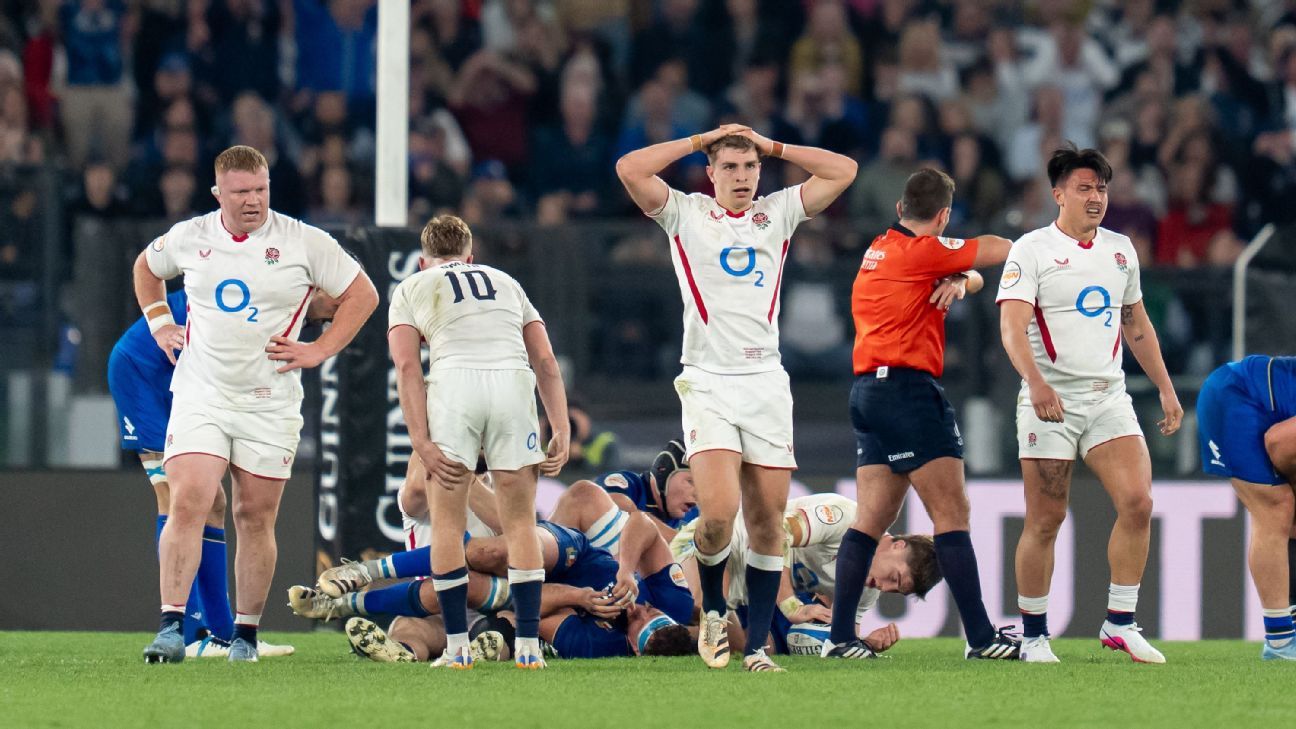
This was not an upset. Italy rightfully triumphed 23-18, marking their inaugural victory over England. History was made at the 33rd attempt, providing Italy with concrete evidence of advancement. For England, this outcome brings despair and uncertainty regarding their future — Questions must be raised about this management.
Italy maintained the momentum and control for a significant portion of this match. This victory was founded on courage and determination, but also on structure and complete belief in their game plan.
Conversely, there was speculation that this match could be crucial for Steve Borthwick, yet England’s discipline ultimately let him and the team down.
They have now faced three consecutive defeats, and with France on the horizon, they are likely to finish fifth with four losses in what was expected to be a competition where they aimed for the Grand Slam.
Shock, despair, embarrassment, frustration — all feelings are subjective from an English viewpoint, but this represents one of the lowest points in English rugby.
We must prioritize Italy. This is their moment of glory. Rome cherishes history, and this team has secured their place in Italian rugby legacy. There are numerous moments that encapsulate this match, but consider their winning try.
England had fought with 13 players on the field, their captain in the sin-bin, while Italy awaited their opportunity and executed it flawlessly.
It is irrational to repeat the same actions expecting different outcomes, so after unsuccessfully attacking England’s line, they shifted to the wing.
Paolo Garbisi delivered a superb cross-kick to Monty Ioane on the flank, who then connected with the impressive Tommaso Menoncello, who broke through England’s weak tackles, powered over Elliot Daly, and set up Leonardo Marin for the match-winning score.
And all this comes just a couple of years after discussions about relegation and the necessity for Italy’s position in the championship to have some risk associated with it.
Fast forward to 2026, Wales are struggling, England are quickly following suit, and Italy has crafted a championship where they defeated Scotland, nearly overcame Ireland, inflicted damage on France, and then triumphed over England 35 years after their first encounter in the 1991 World Cup.
In terms of the Six Nations, they have awaited this moment since they first entered the newly-expanded championship in 2000. This group of players, with legends like Sergio Parisse observing, has accomplished what had long eluded them.
And they earned it. Italy excelled in every aspect of the match except for the scrum — a recurring issue for England.
Menoncello is a joy to watch and scored beautifully in the first half, but this was about the team: unwavering trust in one another and the ability to summon courage from the depths of their being when every fiber must have been pleading for relief.
Their tears flowed before the final whistle, but while they looked around in disbelief as Garbisi kicked the ball into touch to conclude the match, England appeared stunned.
This defeat raises serious concerns about the direction of Steve Borthwick’s England. Jamie George — who was a rare bright spot in this unwelcome chapter of history — stated earlier in the week that change would be the worst possible idea.
However, something must change to realign England. At the start of the championship, England was viewed as potential Six Nations champions. Fast forward to the penultimate week, and they have lost three out of four.
Despite the numerous changes Borthwick made to the lineup and the revised game plan as they aimed for aerial play, this was a familiar sight. With tries from Tommy Freeman and Tom Roebuck giving them a 12-10 lead at halftime, expectations were that England would build on this.
Instead, their discipline fell apart. When Sam Underhill received a yellow card for a shoulder to the head in the 54th minute, Italy already had a player in the bin. Any advantage had vanished, but England held an eight-point lead.
Three minutes after Underhill’s dismissal, Garbisi narrowed the gap to five points, and Maro Itoje followed Underhill eight minutes later for an infringement at the breakdown as his elbow knocked the ball from Alessandro Fusco’s hands.
“[Discipline] is costing us. It’s been a significant factor in games this championship,” Borthwick remarked afterward. He is correct.
England were reduced to 13 players, and their grip on the match slipped, allowing Italy to capitalize, undeterred by the burden of history.
“England appeared desperate, searching for assistance, and none was available,” Matt Dawson stated on the BBC: That encapsulated the situation perfectly.
England struggled, Italy pressed on, scored that try from Marin, and closed out the match. History was made, and rightfully so.
As we approach Round 5, Italy aims to secure their highest finish in the Six Nations, while England seeks to avoid the wooden spoon.
That is the essence of this championship, and this year has been one for the record books. Rome will celebrate tonight, honoring this remarkable achievement, and Italy deserves to revel in this success. For England, one wonders what their next steps will be. This must be the lowest point.
