
Could the new F1 regulations restrict overtaking? Charles Leclerc voices driver apprehensions.
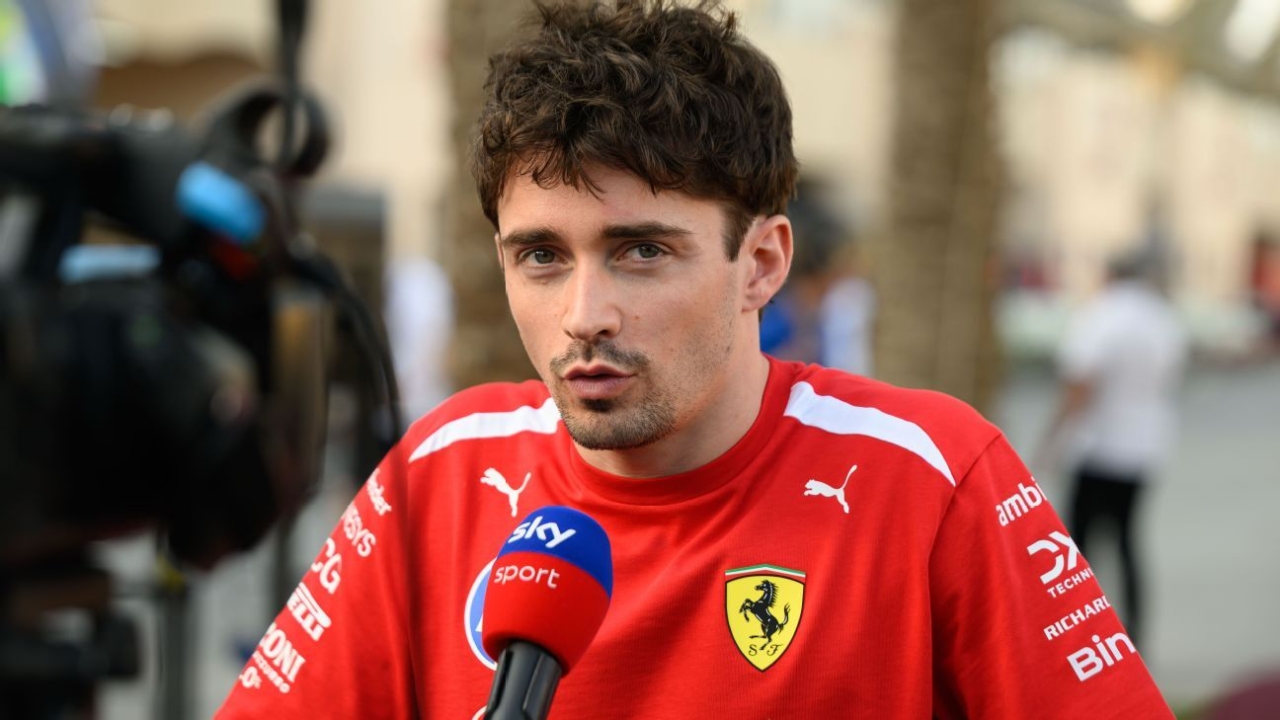
Charles Leclerc is part of an increasing group of Formula 1 drivers who have expressed worries regarding the limited overtaking opportunities under the sport’s revised regulations.
Significant modifications to power unit, chassis, and aerodynamic rules for 2026 have led to a new generation of F1 cars that have already undergone two preseason tests in Barcelona and Bahrain.
The primary aim of the new regulations is to create cars that are powered 50 percent by an internal combustion engine and 50 percent by an electric motor—a goal established to entice manufacturers like Audi into the sport.
The rise in electrification, increasing from 20 percent with the previous generation of power units, has already faced criticism from four-time champion Max Verstappen, who labeled the new formula as “anti-racing” and “like Formula E on steroids.”
While Verstappen’s remarks focused on the necessity for drivers to manage electrical energy rather than driving at full throttle on a flying lap, Leclerc noted that the new overtake mode, which substitutes F1’s traditional Drag Reduction System with an electrical boost, also encounters challenges due to the constraints of the new power units.
To replace DRS, F1 has implemented a system that grants a car within one second of the vehicle ahead access to additional electrical power at high speeds, while the leading car’s capacity to utilize its electric power diminishes.
Referred to simply as “overtake,” this system aims to provide the trailing car with a higher top speed to facilitate a pass under braking; however, Leclerc indicated that it comes at the expense of depleting the battery, making the driver vulnerable to being overtaken again later in the lap.
“I find it, at the moment, extremely difficult to get any overtakes,” he stated.
“It might improve with time in how we manage these kinds of situations, but it always comes with a cost whenever you’ve got to overtake and the price is a lot more costly than it was in the past.
“That’s why I think it’s very difficult to make an overtake and then pull away, like it was the case last year [with DRS].”
A similar concern has been voiced by McLaren team principal Andrea Stella, who believes that “simple” adjustments to the regulations—such as reducing the maximum electrical power output of cars from 350kW to 200kW as previously proposed by the FIA—would enhance the effectiveness of the overtake mode.
“Our drivers have been racing with other drivers during these three days of testing in Bahrain and they found it extremely difficult to overtake,” Stella remarked. “The fact that you have an additional amount of energy when you follow and you are within one second is difficult to exploit because this extra energy may mean that there is just a little bit more deployment at the end of the straight, if anything.
“So I think, again, as an F1 community, we should look at what can be done to make sure that we have a sensible feasibility when it comes to overtaking. Otherwise, we lose one of the fundamental elements of the nature of racing, which is giving drivers the possibility to overtake.”
– Who’s really fastest in 2026? Test one recap
– FE boss to Max after F1 jibe: Come drive our cars
– Russell: Don’t look at Merc, Red Bull gap is ‘scary’
McLaren driver Oscar Piastri echoed some of his team principal’s concerns.
“Overtaking is certainly going to be different,” Piastri stated. “DRS was obviously just a pure advantage you used to gain, whereas now, with the energy boost, you’ve obviously got to harvest that extra energy somehow and then deploy it, which with some of the rules in place is not always that straightforward.
“There’s also some optimisation from all the manufacturers to come, I’m sure, on how to redistribute things and make overtaking as easy as it can be. I think following [from an aerodynamic point of view] is very similar to last year, in all honesty, which is not a big surprise to me.”
Mercedes driver George Russell anticipates that the effectiveness of the overtake mode will differ from circuit to circuit, with some layouts offering better chances than others.
“Of course, you can make an overtake by pressing a boost button and spending all of your energy, but you know if you use it unwisely you’ll just get re-overtaken again thereafter and you may get overtaken by more cars,” he explained. “So you will need to be strategic about it, but again we’ll have to wait and see.
“What is also true is every track is going to be different and then how you use your energy is going to be so different. I think circuits like Barcelona, you’ve only got one straight and you’re quite energy-rich there, so all of the teams will be deploying 350kW for quite a long duration down that main straight—therefore, when you use your boost there’s not much of a gain.
“Whereas if you go to a circuit like Saudi Arabia or Silverstone where you’ve got multiple straights one after another, you can’t deploy all of that energy in one straight, so you may see different strategies or different teams using more energy in one, less in another. I think it’s exciting and I think it’s going to be different. Time will tell.”
Source: espn.com
