
Where Manchester City’s ‘inflated’ transfer spending went
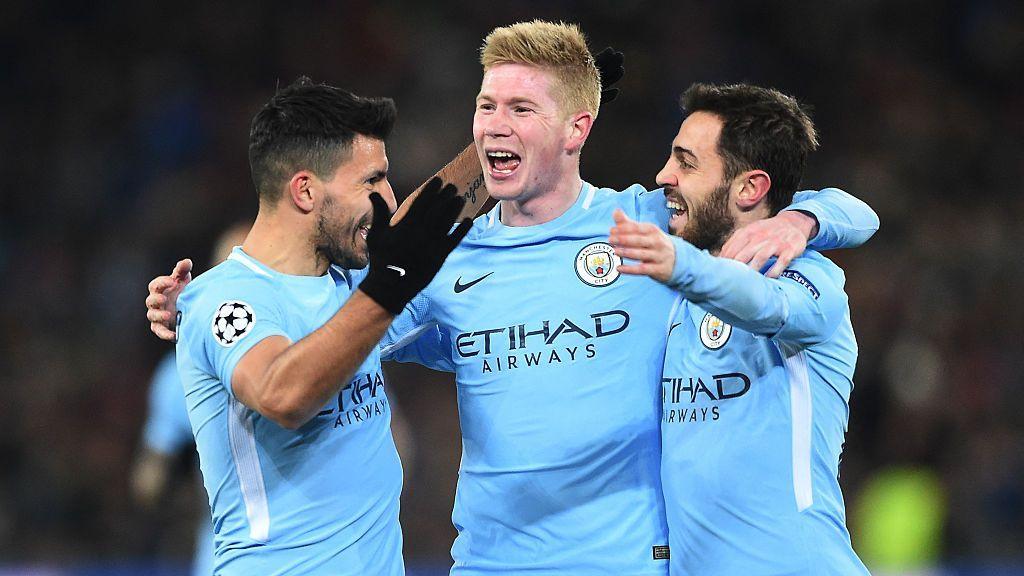
Image source, Getty ImagesImage caption,
The previous clubs of Sergio Aguero, Kevin de Bruyne and Bernardo Silva all received significant transfer fees from Manchester City during their era of financial rule-breaking
- Published18 minutes ago
The money flowed around football. It made a lot of other clubs richer. It helped teams everywhere and especially in the Premier League.
These have been some of the arguments used by those backing Manchester City in the media and online since the verdicts declaring the club guilty came in and an appeal was announced. The suggestion is that there was a net benefit to the game as a whole, and in particular the clubs to whom Manchester City paid big transfer fees.
The more than £900m by which the independent commission found the club had “inflated” its accounts was not all spent on transfer fees.
Clubs have many bills, including wages for players and other staff, utilities, insurance, infrastructure costs, commercial fees and much more.
But the roughly £1.2bn Man City spent on players between 2009-2018 (about £900m net spend) was more than anybody else in that period.
That outlay was vital in making them England’s most successful club, and would surely have been heavily reduced had they not knowingly broken the rules, as the independent commission concluded.
So where did City’s money flow to in the transfer market, and what impact did it have?
-
Man City confirm appeal against guilty verdict
- Published5 hours ago
-
Man City whistleblower to lose witness protection
- Published3 hours ago
Who did Man City pay most money to between 2009 and 2018?
Football transfers include many costs.
The amount required to sign the player is the most obvious, but there are also agents fees, legal expenses, administration money and potentially signing-on bonuses.
That means the money dished out by Manchester City during the ‘asterisk era’ will have reached people and bodies who work in the background of football deal-making and is difficult to track.
But what can be done is analysis of the fundamental interactions between City and other clubs.
Below is a list of every club to whom Manchester City paid transfer fees between summer 2009 and winter 2018, in descending order from the most money to the least.
The list is for senior players and does not include free transfers, loans or academy graduates.
That is 46 different clubs in 19 national league systems.
For some of them, the fees paid by City were the highest the clubs had ever received at the time.
Looking at the spread of money among clubs demonstrates just how far and wide Manchester City’s money was spent.
The split in money spent on transfer fees by City during the timeframe is relatively even across some of the highest-ranked leagues in Europe, though the Premier League is higher than any other.
Just over a quarter of their total transfer outlay was paid to clubs in the English top flight.
They signed players from eight Premier League clubs, and the same amount in La Liga.
A combined £13m was spent on two players in the Championship.
Did the money really help football?
Manchester City’s spending power unquestionably changed the world football transfer market – their willingness to pay higher fees and wages meant prices rose for everybody else too.
And once the world knows that a club has a wedge of cash burning a hole in its pocket courtesy of City, it can be difficult to spend it.
Asking prices may rise, and having an influx of money is no guarantee of it being well spent.
For many of the teams to whom City paid the most during this time, the money did not work out particularly beneficially.
Let’s take a look at some of the more interesting cases.
First up, Wolfsburg. They immediately signed winger Julian Draxler for about half the fee received for Kevin de Bruyne in 2016, as well as others including veteran defender Dante.
Having lost De Bruyne, they dropped from second to eighth in the Bundesliga before narrowly avoiding relegation in the subsequent two seasons.
And things did not go particularly well for second highest-ranked club Monaco either.
The most direct players they signed following the sales of Benjamin Mendy and Bernardo Silva in the same summer to Manchester City – Terence Kongolo and Keita Balde – did not work out in the long run, and the team went from winning Ligue 1 and reaching the Champions League semi-finals to almost being relegated within two years.
The club City purchased most players from in the 2009-18 period – Arsenal (four) – did not mount a serious Premier League title challenge during that time.
Some clubs who did not receive payments from City could also argue that the spending of money from their “inflated” accounts compromised their chances.
For example, Manchester City paid very similar totals to Benfica and Porto during the era, but nothing to Sporting, the club which makes up the big three in Portugal.
Sporting did not win a title between 2009 and 2018. There are many reasons for that, but could one of them be the fact that their direct rivals received money from City that would perhaps not have been on offer had they followed football’s financial rules?
-
What does Man City guilty verdict mean for their squad?
- Published13 hours ago
-
HMRC urged to scrutinise tax implications of Man City case
- Published1 day ago
-
Man City not ‘above the rules’, says No 10 after backlash to Burnham remarks
- Published21 hours ago
There are also some ancillary fees which reached clubs whom Manchester City did not deal with directly.
Some players were subject to sell-on clauses, where the club City where buying the player from owed money to the previous team who owned the player.
For example, Queens Park Rangers earned roughly £9m from Raheem Sterling’s move to City from Liverpool in 2015.
Barnsley took about £7m of the transfer fee paid to Everton for John Stones in 2016, and the Toffees also had to pass on about £2.5m to Wolves when Joleon Lescott moved to Manchester in 2009.
The Sterling and Stones clauses were worth more than most players operating in the English Football League at that time, significantly strengthening the financial positions of QPR and Barnsley.
To this day Barnsley have not sold a player for a higher amount than the fee they are believed to have received for Stones.
But QPR have not returned to the Premier League and Barnsley dropped down to League One from the Championship after two seasons.
Manchester City’s spending during the time in which they were breaking the rules certainly had an enormous impact, on their own upward trajectory, the futures of other clubs around the world and the wider football economy.
But the reality is that it is impossible to unweave the tapestry of football history during that time and since – too much has happened and there are too many indirect consequences.
The effects of that spending will reverberate for years to come.
