
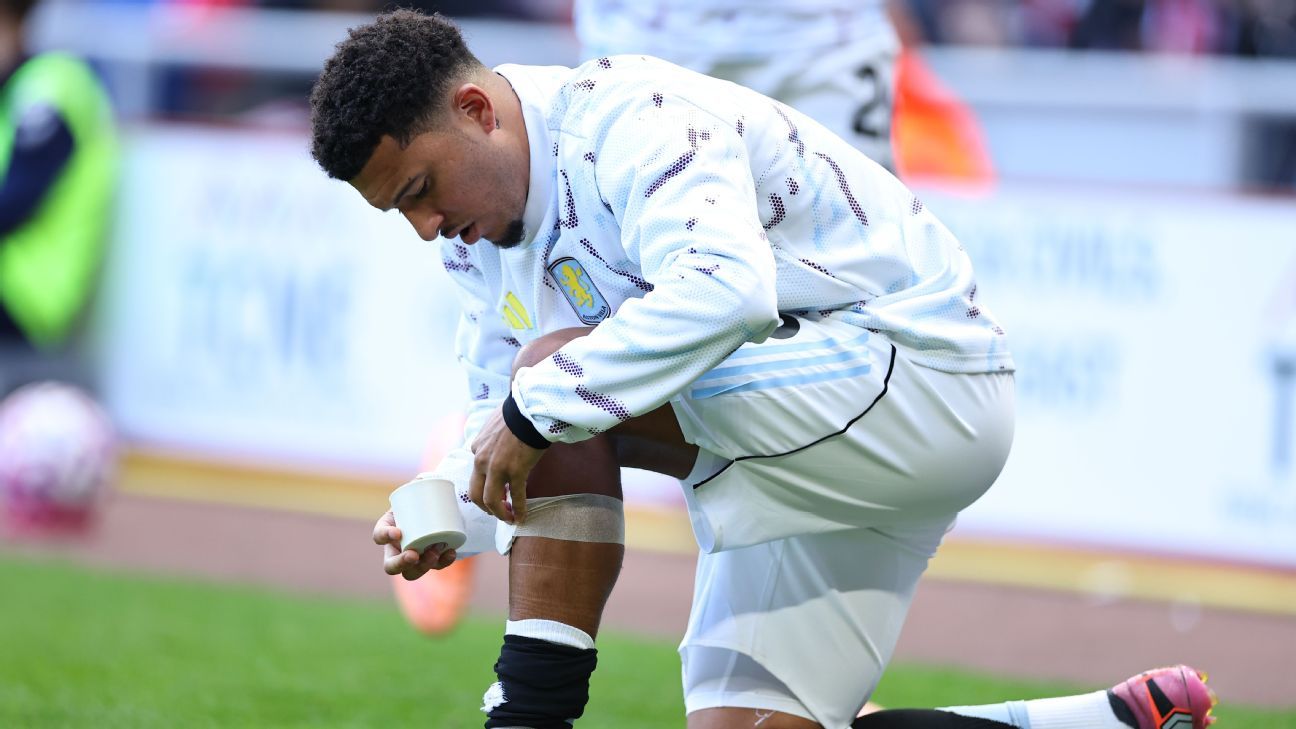
This is a topic that is creating a divide in football, exemplifying a situation where one generation scrutinizes the decisions of another. However, the image of a former Tottenham and Germany player writhing in pain on the field with a severe leg injury earlier this month may shift perspectives regarding the diminishing size of shin pads.
Historically, shin guards extended to cover the entire shin, often measuring up to nine inches in length, constructed from foam or rubber with a hard plastic exterior. Recently, however, some players have completely discarded traditional protection, opting for minimal foam pieces beneath their socks. It appears inevitable that a significant injury will prompt a reevaluation of players’ protective gear.
The injury sustained by Lewis Holtby while playing for Dutch club NAC Breda against Fortuna Sittard in the Eredivisie on April 12 has likely concluded the 35-year-old’s season due to the severity of the wound on his left shin following a challenge with an opposing defender. This incident also sparked a blame game focused on Holtby’s choice of shin pads.
“I find it absurd that the referee [Jeroen Manschot] commented on it,” Breda coach Carl Hoefkens stated after the match. “In the tunnel, Manschot mentioned that Holtby should simply wear shin guards, or better ones. The officials also inspect the shin guards before the match, so they share some responsibility too.”
La aparatosa lesión de Lewis Holtby este fin de semana. ?
Vía ESPNnl/X pic.twitter.com/WgHl4PL5xo
— ESPN Deportes (@ESPNDeportes) April 14, 2026
Breda defender Denis Odoi commented on Holtby’s “small shin guards,” stating, “You’re never too old to learn,” when discussing the possibility of players reverting to “normal” shin pads. ESPN NL analyst and former Ajax and PSV Eindhoven winger Kenneth Perez expressed a more critical viewpoint.
“Players are now using those tiny items, or essentially toilet paper, just to have something there,” Perez remarked. “I have no sympathy for injuries that arise from that.”
“As a club, you can simply mandate that our players wear proper shin guards.”
Observing any top-tier match this season, one is likely to notice players with their socks rolled down nearly to their ankles—Everton’s Jack Grealish and Tyler Dibling wear them low, concealing small shin pads. Others keep their socks just below the knee but still sport shin pads that are half the size of an iPhone, as demonstrated by Burnley midfielder Marcus Edwards during a match against West Ham in February. Arsenal forward Bukayo Saka has expressed his preference for smaller shin pads this season, stating, “I’m a fan of them; I don’t like big shin pads,” while Liverpool defender Virgil van Dijk takes a more cautious stance regarding the protection of his lower leg.
“If you get kicked on your shin and your shin pad is the size of an Airpod, then clearly that’s a significant issue,” Van Dijk noted.
Brighton forward Danny Welbeck mentioned that his younger teammates mock his traditional shin pads, saying, “They tell me, ‘your shinnies are massive,’ but you need a bit more safety, you know?” Conversely, like Saka, Fulham winger Alex Iwobi favors the lightweight guards because “I just don’t like having something heavy on my shin.”
Former England and Liverpool forward Peter Crouch frequently discusses the shin pad topic on his podcast, That Peter Crouch Podcast, under the humorous “Make Shin Pads Great Again” theme. Fulham midfielder Harry Wilson remarked this season that some of his teammates “cut up the sponge you get from the physio and use that.”
If a prominent player suffers a similar injury due to small shin pads, one that sidelines them from the World Cup or occurs on a major stage this summer, the conversation surrounding the trend toward smaller pads will likely intensify.
The shift toward smaller shin pads—and away from larger models that include ankle protection—stems from various factors, including the game becoming less physical with fewer tackles and players desiring to feel as light as possible to enhance their sprinting speed. Additionally, this trend is a consequence of a change in the Laws of the Game in July 2024 when IFAB (the International Football Association Board) revised the rule regarding shin pads (Law 4) to place the onus on the player rather than the match officials to ensure adequate shin protection is worn.
Before this amendment, referees were responsible for enforcing the rule, but many players and clubs disregarded it, leading to criticism—or even legal challenges—against referees for failing to enforce the rules if a player was injured afterward. However, the Law remains ambiguous and subject to interpretation. There is no minimum size stipulated, only that the shin pads must be “entirely covered by the socks, made of suitable material (rubber, plastic, or similar substances), and provide a reasonable degree of protection.”
“The reason we modified the Law was that it is unfeasible to legislate and specify that a shin pad must be a certain size,” David Elleray, IFAB Technical Director and former Premier League referee, explained to ESPN. “So two years ago, we placed the responsibility on the players to wear something they believe offers them protection.”
“The challenge we faced was partly legal. If we maintained the responsibility with the referees and they deemed a shin guard acceptable, then if the player got injured, they might pursue action. Thus, we firmly placed that responsibility on the players and coaches, and for young players, their parents.”
The alteration of the Law has resulted in players prioritizing speed and aesthetics—many dislike the bulkiness of larger shin pads—over safety. Elleray acknowledges that this has not led to a responsible approach from players and clubs.
“We [IFAB] had hoped, or anticipated, that they would adopt a responsible attitude, but there was one recently [Marcus Edwards] that was almost like a sticking plaster,” Elleray stated. “The pressure needs to be on the individual players, coaches, and clubs to ensure their players are protected because it’s impossible to legislate for.”
Former top referee Pierluigi Collina, now the Chair of the FIFA referees’ committee, has urged players to be more conscious of their safety when selecting their shin guards. “Ultimately, the shin pad rule is for their own safety,” Collina told ESPN. “Therefore, they should be mindful of what is genuinely safe for them.”
Despite the shocking nature of Holtby’s injury, it perhaps garnered such attention due to the infrequency of such occurrences. Serious injuries like broken legs and deep cuts appear less common, even with the reduction in shin pad sizes, with muscle tears and ligament injuries to the ankle and knee being more likely to sideline a player.
Proponents of smaller shin pads argue that players no longer experience serious impact injuries, which may hold some validity. In a recent instance of a severe impact injury, Liverpool’s Alexander Isak was wearing small—but not tiny—shin pads when he sustained a fractured leg in a challenge with Tottenham’s Micky van de Ven last December. However, it would be challenging to assert that larger shin pads would have mitigated the severity of Isak’s injury.
Sources from the Professional Footballers’ Association (PFA) have informed ESPN that “primary decisions regarding safety are made by players in consultation with their club and medical teams,” and that players ultimately “feel comfortable with various shapes and sizes of shin pads.” There is certainly no movement within the sport to compel players to reconsider the protection offered by their shin pads.
Football trends have evolved since larger and heavier shin pads were the standard for elite players. The Umbro Armadillo, produced in the early 2000s, was a substantial plastic guard with ankle protectors, worn by Michael Owen and Alan Shearer, while Brazil forward Ronaldo donned Nike’s T90 model. Both designs were considerably larger, heavier, and sturdier than the pads currently favored.
Modern younger players lean toward small, lightweight pads, and this shifting trend prompted two brothers—Kaizer Chiefs midfielder Ethan Chislett and Zack, who plays for UAE-based Palm City—to create their brand of Joga shin pads, which are compact, much lighter, and softer than traditional options. The Joga Shinpad Sleeve, utilized by Chelsea’s João Pedro, is a soft pad the size of an iPhone, encased in a fabric sleeve that covers the shin. Everton midfielder Grealish opts for Joga’s Breathe pads, measuring just 6 cm x 10 cm (2 inches x 4 inches).
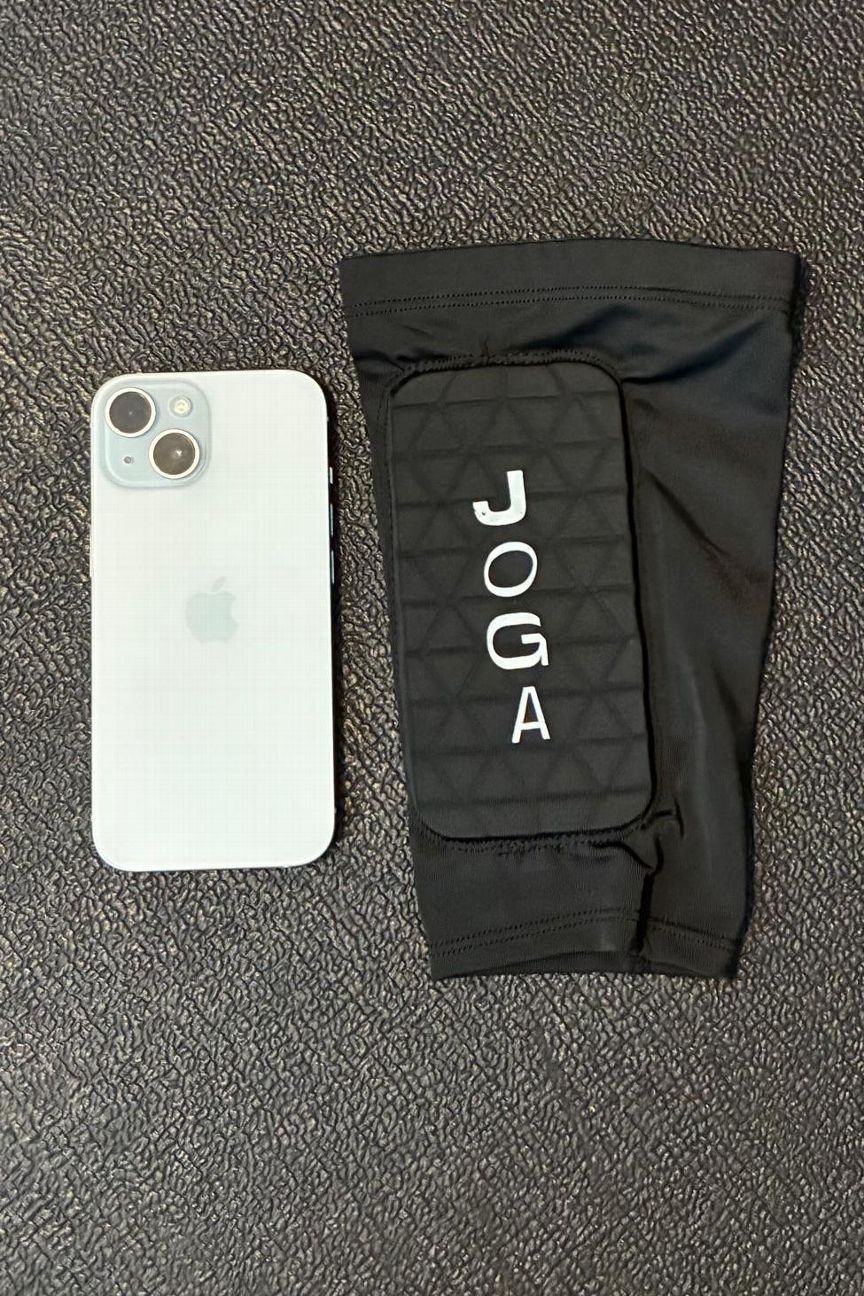
“We were the first to produce a mini shin pad available for purchase,” Zack Chislett shared with ESPN. “I was playing non-league at the time, while my brother Ethan was with AFC Wimbledon, and we observed that pads were shrinking, yet there was no option for players to buy them. They were merely using whatever they could find in the physio’s bag, indicating a clear demand.”
But what drives young players to prefer such small and less protective shin pads?
“When you’re training all week without shin pads and then put on a large pad, sometimes with ankle protection, on a Saturday, it doesn’t feel natural compared to training,” Zack explained. “Some players may feel more comfortable with the larger shin pad, but many younger, more attacking players do not want to feel restricted on the pitch.
“And the game has changed, 100%. Tackles are not as frequent as they used to be; it isn’t as aggressive or physical. I’m 23, and players of my generation simply do not want to wear large shin pads—it would be akin to wearing old, heavy leather boots. It’s just not going to happen.”
Players like Welbeck and van Dijk are being overshadowed by those such as Saka, Iwobi, Grealish, and Joao Pedro regarding the size and protective features of their shin pads.
Perhaps Holtby’s injury will encourage some players to reconsider the dangers of competing without adequate protection, and a high-profile injury during this summer’s World Cup could also lead FIFA to implement stricter regulations on what can and cannot be worn by players. However, at present, footballers are prioritizing speed and freedom of movement, suggesting that shin pads may continue to shrink.

