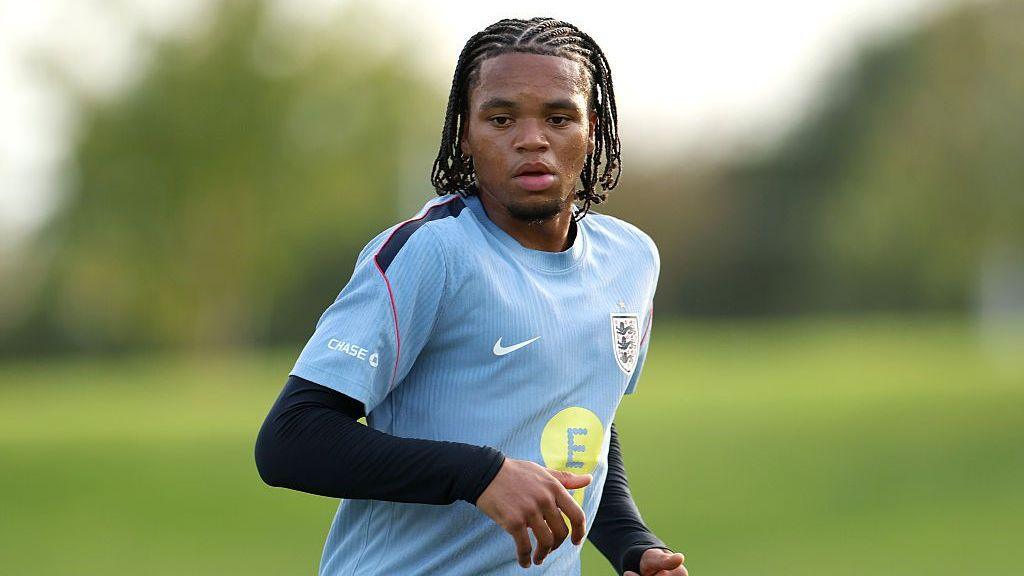
JJ Gabriel and why schoolboys are now a huge part of transfer market

Image source, Getty ImagesImage caption,
JJ Gabriel is one of the most highly-rated prospects in English football
- Published25 September 2026, 07:32 BST
A 15-year-old growing up in the UK faces many tough personal decisions about their future – which school subjects to study, which social circle suits them, and where their priorities lie in life.
But in the past few weeks the choices teenage Manchester United striker JJ Gabriel has been making about his future in football have drawn huge public attention in sports media and online.
Gabriel has informed United he wants to leave the club and join another. BBC Sport has reported that he has stayed away from training and begun talking to other clubs because he and his representatives are unhappy with United’s handling of the 15-year-old’s progress.
That a transfer saga involving a footballer so young could generate so much interest highlights a truth that to many is uncomfortable – money is changing how the football transfer market works, and children are increasingly deemed to be among its most valuable commodities.
So what is behind the rise in transfers involving boys who in some cases are not even old enough to have taken their GCSEs, what kind of influence can the money on offer have on agents and parents, and what exactly are the country’s top football clubs getting out of it?
‘Race for talent is huge’
“It’s crazy when you think about it,” says Ryan Cardwell, former youth scout at Liverpool and Southampton.
“In what other kind of world would 15 and 16-year-olds be spoken about in the media like this?”
This summer alone, all six of the Premier League’s wealthiest clubs either signed a highly-rated academy player from another, or lost a youngster to a direct rival.
“It is such a competitive market,” Cardwell explains. “There are now tens of transfers between the elite academies every summer, when it used to be the case that if you were already at one of those, you would likely stay the course.
“The race for talent is huge – you look at what teams are spending on transfers for senior players and it’s enormous, so if you can spot a player earlier and offset some of that financial risk, you’re going to do so.”
Some inside football claim that the transfer of Rio Ngumoha – the now 18-year-old winger who was called up to this month’s senior England squad – from Chelsea to Liverpool at the age of 15 in 2024 ushered in a new era of competition for academy players among the nation’s elite.
One of the major factors is Brexit. Before 2021 English clubs were allowed to sign academy players over the age of 16 who held European Union passports.
Since the UK left the EU, foreign players cannot join English clubs until they reach 18.
“Heathrow and Gatwick [airports] on a Friday night were inundated with scouts going to other countries to look for young players”, says Caldwell.
“Belgium and the Netherlands were full of scouts for Premier League clubs.
“Now it’s the competition between English clubs that has increased, looking at each other’s players, including the old-school ‘top six’ but also the likes of Southampton, Aston Villa, and Fulham.”
Young players have further added financial value – youth signings don’t count towards the Premier League’s squad cost ratio rules, and any future sale counts as ‘pure profit’ in club accounts.
Advances in video technology and data analysis mean more young players are being identified, tracked and approached by rival clubs than ever before.
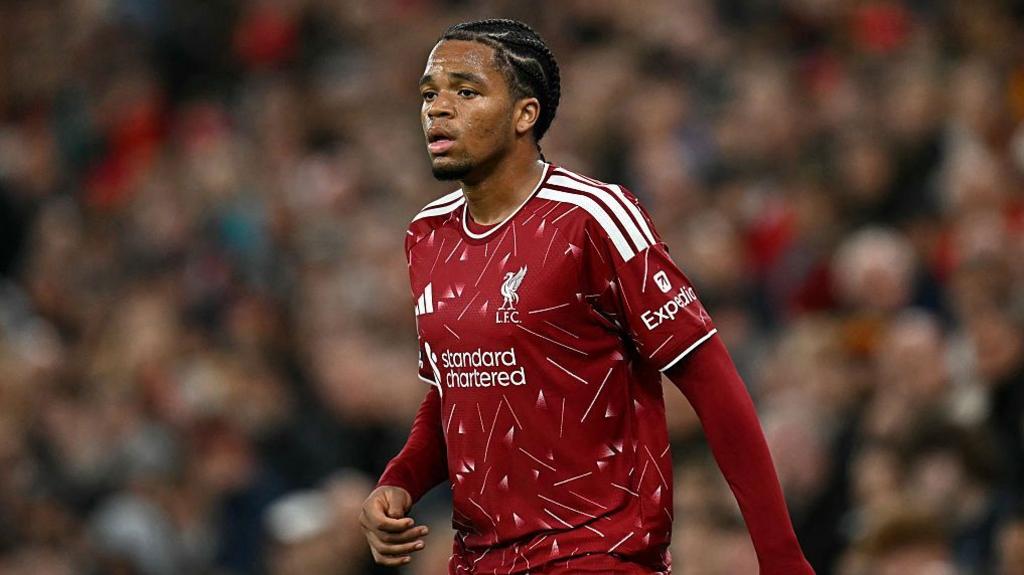
Image source, Getty ImagesImage caption,
Rio Ngumoha was one of the country’s highest-rated young prospects at Chelsea, and has now made 22 Premier League appearances for Liverpool
‘Money can mean agents or parents push a player to move’
Players can de-register from their academy at the end of their under-12, under-14 and under-16 seasons if they wish to explore options elsewhere.
They can be offered paid scholarship contracts from the season in which they turn 14, and can sign professional deals from the season in which they turn 16.
Some pundits and fans have criticised Gabriel’s family over the controversy in recent weeks.
Gabriel can potentially join clubs in Europe because he has an Irish passport.
“It’s a really tough world – players and families want the best for their kids and you can’t give them stick without knowing what their motivations are,” says Phil Jagielka, whose son Zac left Liverpool in 2024 and signed a scholarship deal at Hull City at 16.
“The harsh reality is that if a young player fails to progress, or gets a bad injury, teams will stop being interested in them. So there is an element of strike while the iron’s hot.”
When a club signs a player from a rival academy, they pay a set compensation fee based on how long they had been trained there.
Depending on the player’s age, the fee can reach millions of pounds.
The increasing allure of signing young academy players from rivals means some parents are now compiling data packs on their sons to give to potential clubs, and more and more children are represented by football agents.
“There are good agents and bad agents,” Cardwell says.
“You certainly speak to some and think ‘that’s completely the wrong idea’, or, ‘this player is going to be misguided’. Sometimes they push for a move when a player isn’t ready.
“The contracts can be enormous and [money] can be a huge motivation to move. It could set a young player’s family up for life.
“I would quite like to see some form of financial cap. My fear for some of the young players is they’re on the biggest salaries they’ll ever have, because if they don’t make it at the top level, they can go from being on tens of thousands (of pounds) a week to one or two thousand lower down the pyramid.”

Image source, Getty ImagesImage caption,
Football academies in England are graded between 1 (the highest) and 4 (the lowest). There are 31 Category 1 academies, including Manchester United, and the competition between them is significant
‘Far more people are prepared to rock the boat’
In decades gone by, development of academy players would be combined with menial tasks around the training ground.
The idea was to keep young footballers grounded and make them feel a part of the wider club.
But the Gabriel case demonstrates the significant changes football has undergone.
“We would clean boots, sweep floors, tidy the changing rooms,” says Jagielka, who came through Sheffield United’s academy in the late 1990s.
“I fully back that system. It taught us responsibility and discipline. It was a way of getting to know the first-team players, and you would get a proper telling off if you didn’t do your jobs properly.
“There was nowhere near as much outside influence on young players back then. Now there is an entourage, people wanting to play the long game with, 9, 10, 11-year-olds because of the millions of pounds of commission if they turn out to be a superstar.
“There are far more people out there now who are prepared to rock the boat between the different clubs.”
The public scrutiny on young players has increased significantly, and the elite clubs’ desire to succeed in the market means that high-profile youth transfers involving big money seem to be here to stay.
“Young players now have such a big platform on social media that intrigue is part of day-to-day life for them,” says Cardwell.
“When you’re in elite sport you have to grow up really, really fast. Teenagers are expected to cope with the pressure and naturally some people fall into the trap of thinking ‘well, he’s a young man already’ and forget about everything else.
“The race for talent is never, ever going to change.”
-
Youth star JJ Gabriel, 15, on brink of leaving Man Utd
- Published15 September
-
‘I never looked back’ – Ngumoha on his rise over the past year
- Published1 day ago