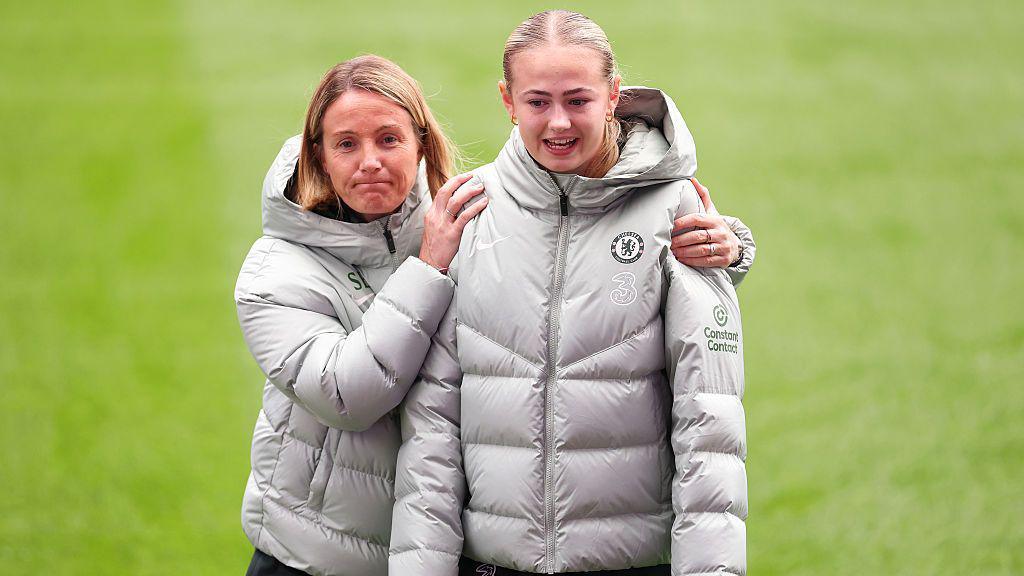
‘Alarming’ decline: Does the WSL have a homegrown talent crisis?
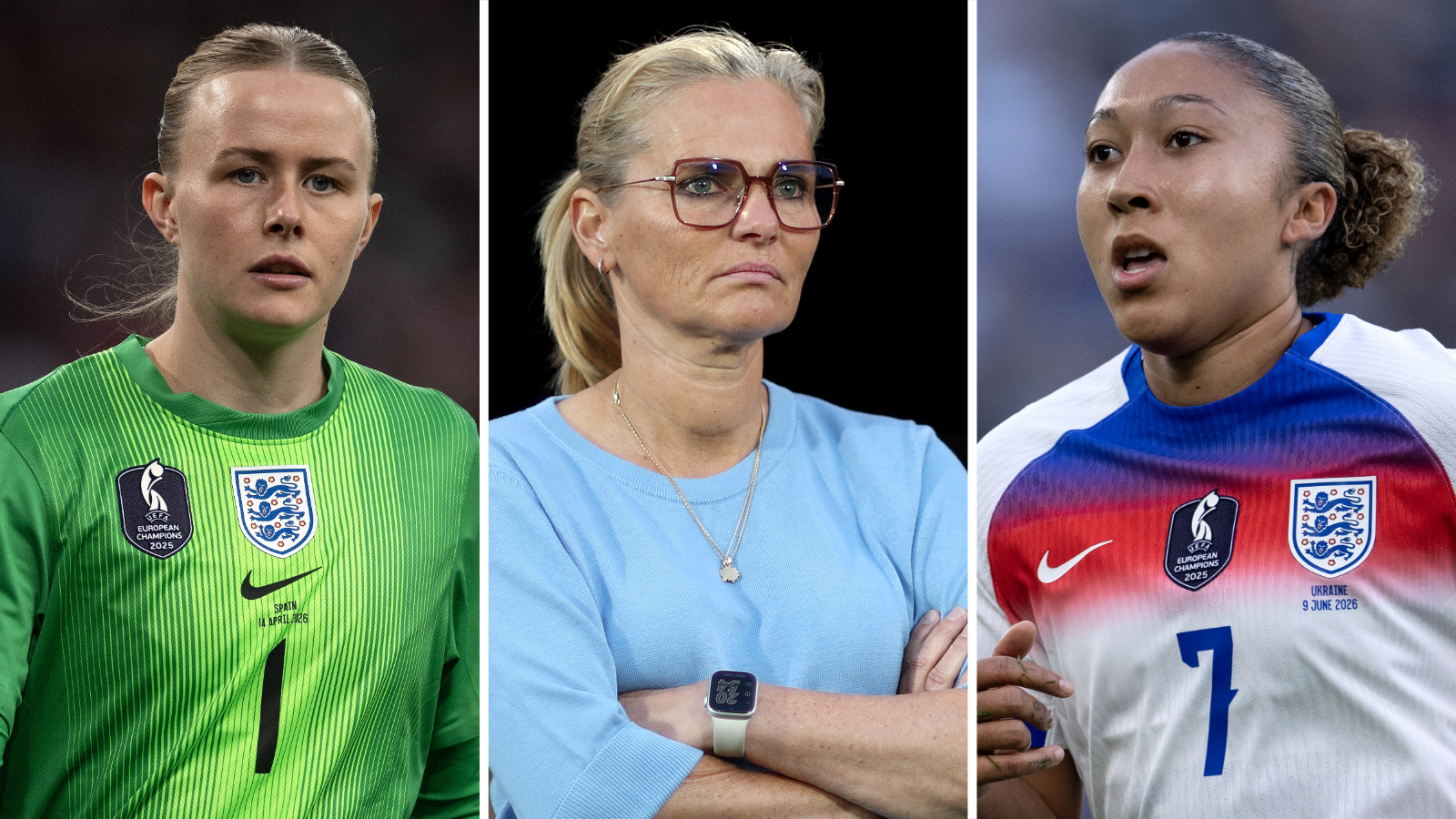
Image caption: Hannah Hampton and Lauren James are two players that have established themselves in the England starting XI under Sarina Wiegman (centre)
Looking at the proportion of homegrown players (English, Scottish, Welsh and Northern Irish) to start 11 or more matches, half of a WSL season, the data shows a steady decline over the past three seasons to under a third.
The first three weeks of 2026-27 have offered a bump on last season, but that can partly be attributed to the WSL’s expansion from 12 teams to 14 teams and the greater proportion of homegrown talent in the promoted trio of Birmingham City, Crystal Palace and Charlton Athletic.
It is a downward trend that is not mirrored across other major European leagues.
For 2025-26, 61% of those to start half or more of Premiere Ligue matches in France were French, 63% of those in Frauen Bundesliga games were German, and 69% of Liga F players in Spain were Spanish.
And, while WSL managers say they appreciate the importance of cultivating homegrown talent, the reality of the job ensures it is not their first priority.
“The club has a responsibility to raise young players, give our own talents possibilities to be in the squad and compete every week,” says Manchester City boss Andree Jeglertz.
“But when it comes to team selection, I always need to pick the team that gives us the best chance of winning the game. If that contains eight young and promising English players or zero, I don’t care. I just want to win the game.”
-
Ellen White and Ben Haines discuss homegrown WSL players on the Women’s Football Weekly
-
Superstar-led London City live up to hype as Man Utd suffer
- Published4 September
What is the potential impact on the national team?
Image gallery
Skip image gallery
1 of 4
Previous image
Next image
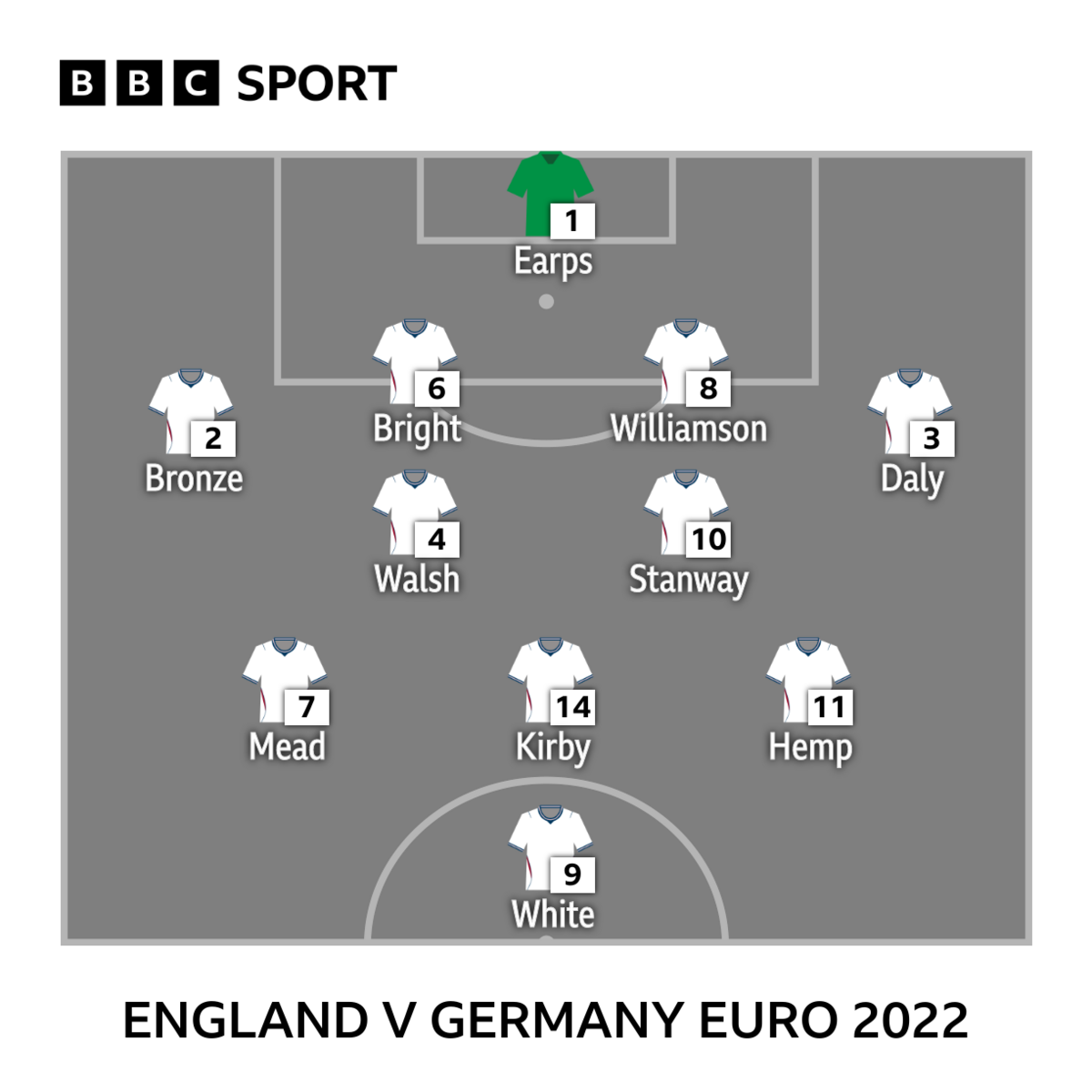
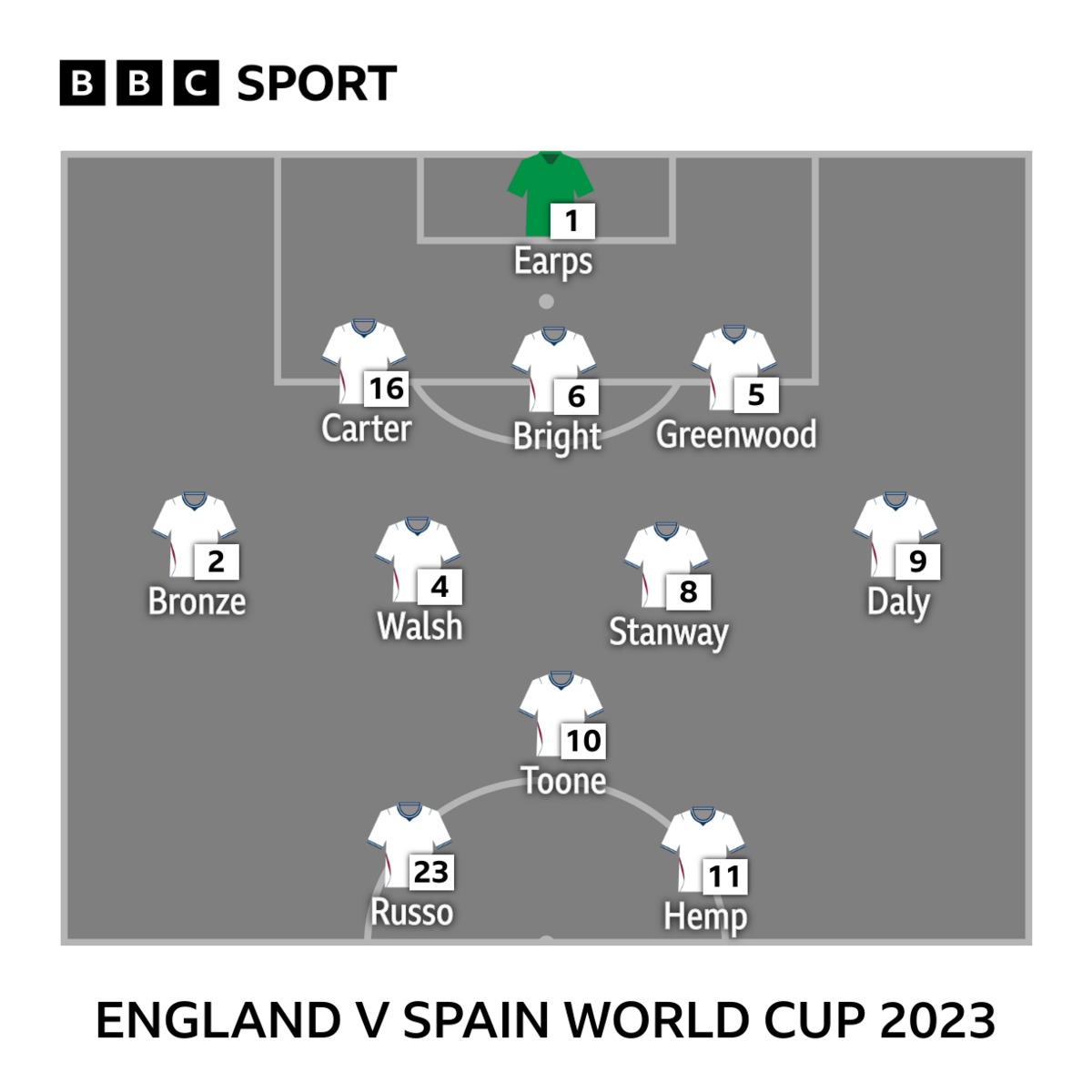
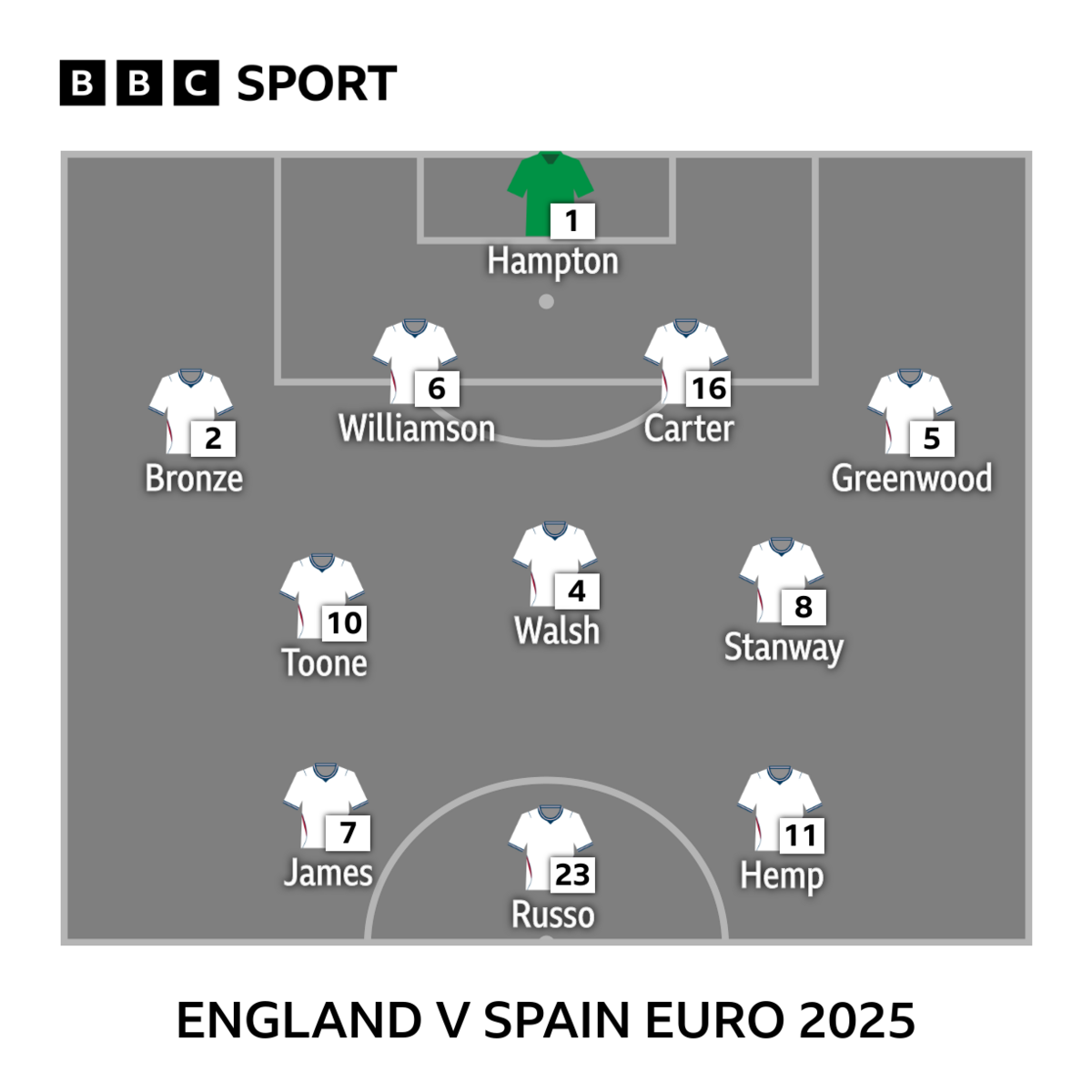
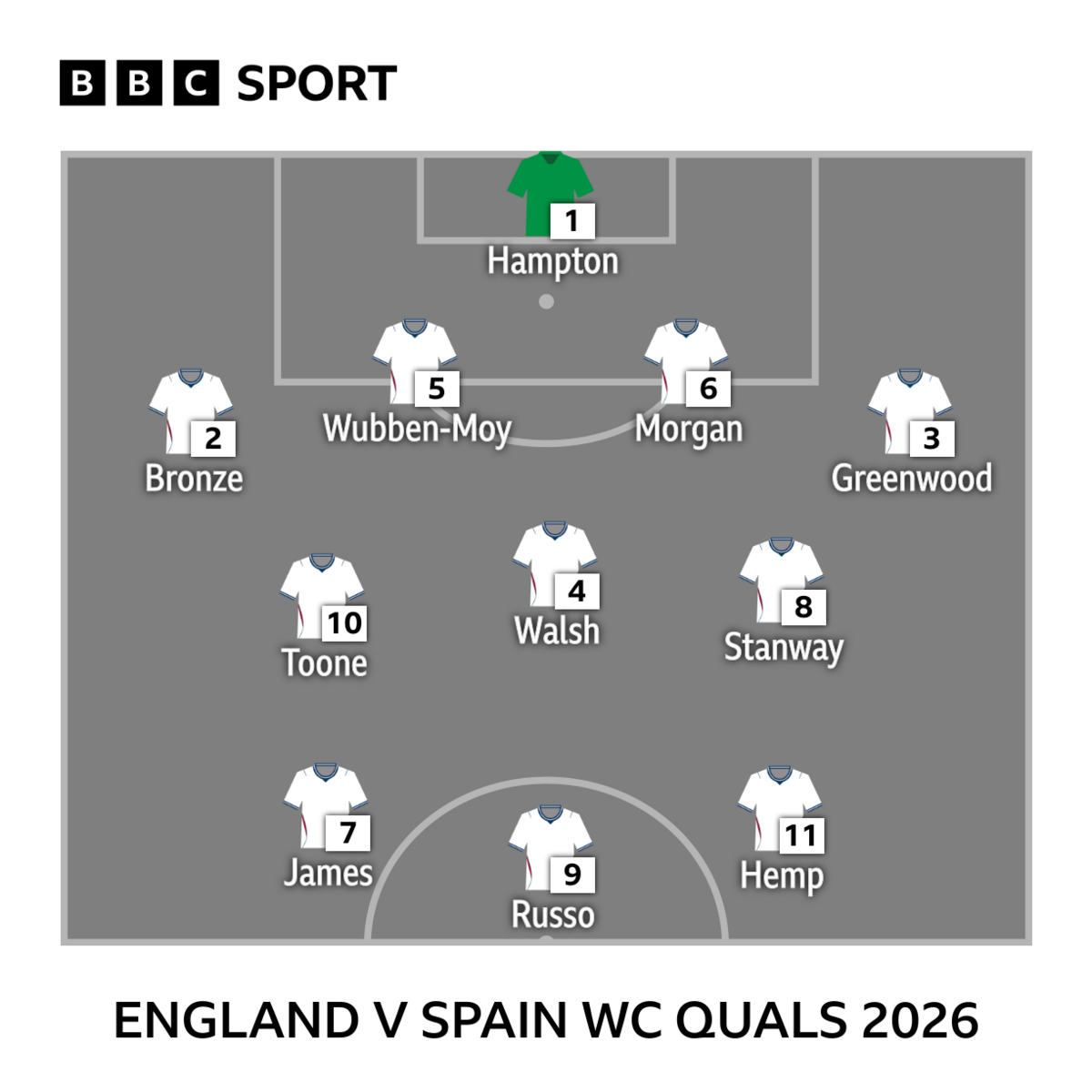
Slide 1 of 4, Squad graphic against Germany in Euro 2022: Earps, Bronze, Williamson, Bright, Daly, Walsh, Stanway, Mead, Kirby, Hemp, White, End of image gallery
It feels like a crossroads has been reached between clubs wanting to be competitive, the WSL continuing to grow, and the need to regenerate an England squad that has not changed much over the past three major tournaments.
After all, England are the two-time European champions but seven of the team that started against Spain in June also played in the Euro 2022 final against Germany – while two of the remaining starters in this year’s game were on the bench four years ago.
Sarina Wiegman’s side were outclassed in Majorca, losing 4-0 to miss out on automatic qualification for the 2027 Women’s World Cup in Brazil. They must now navigate two rounds of play-off matches, starting against Greece next month.
Discussions on England’s future is pertinent given the biennial Women’s Under-20s World Cup is ongoing in Poland.
Last Thursday, Lydia Bedford’s young side were dismissed 3-0 from the last 16 by Nigeria, albeit with the caveat a number of players such as US-based Erica Meg Parkinson and Laila Harbert were not released by their clubs to play.
Nevertheless, in 2022 and 2024, like the other home nations, they did not even qualify.
It is a far cry from the class of 2018 where the likes of Alessia Russo, Lauren Hemp and Georgia Stanway led the Lionesses to third place in the Under-20s World Cup, setting the tone for the incredible subsequent success.
Wiegman has handed debuts to 21 players since her arrival in September 2021, but only Lauren James, Hannah Hampton and Lucia Kendall have become established starters.
When England kick off in Crete on Friday, 5 October (20:00 BST), it is likely to be the same faces once again.
-
Young Lionesses win European trophy
- Published17 April
To try and facilitate the pathway to top level football for young academy players, Football Association rules require WSL sides to include eight homegrown players in their squad lists.
The quota for WSL 2 clubs is higher and works on a sliding scale depending on squad size.
Former England striker Ellen White told the Women’s Football Weekly podcast this was insufficient, saying: “We should be updating that quota of eight players, tweaking it to best help and complement our international structure, our homegrown talent.”
“I would love to see them go much further – something mandated, a minimum on the pitch at any one time,” the Guardian’s Garry told BBC Women’s Football Weekly. “London City’s line-up was alarming.
“It’s great for the product over here, but will we see pain in 15 years’ time if England are struggling to go deep in major tournaments because we’re not developing players?”
Last month, the FA approved a controversial plan to allow some WSL academy sides to play in the National League from 2027-28, saying it would “strengthen the women’s football pyramid, raise standards across the league, and improve the development pathway for young players”.
The FA believes this reform will address the relative lack of competitive minutes young English players receive.
Chelsea have already confirmed they plan to enter an academy side in the third tier and Manchester City women’s managing director Charlotte O’Neill has previously said she would want to enter a team too.
-
FA approves WSL academy sides in National League
- Published25 August
-
How WSL aims to bridge academy gap – and why it needs to
- Published8 April